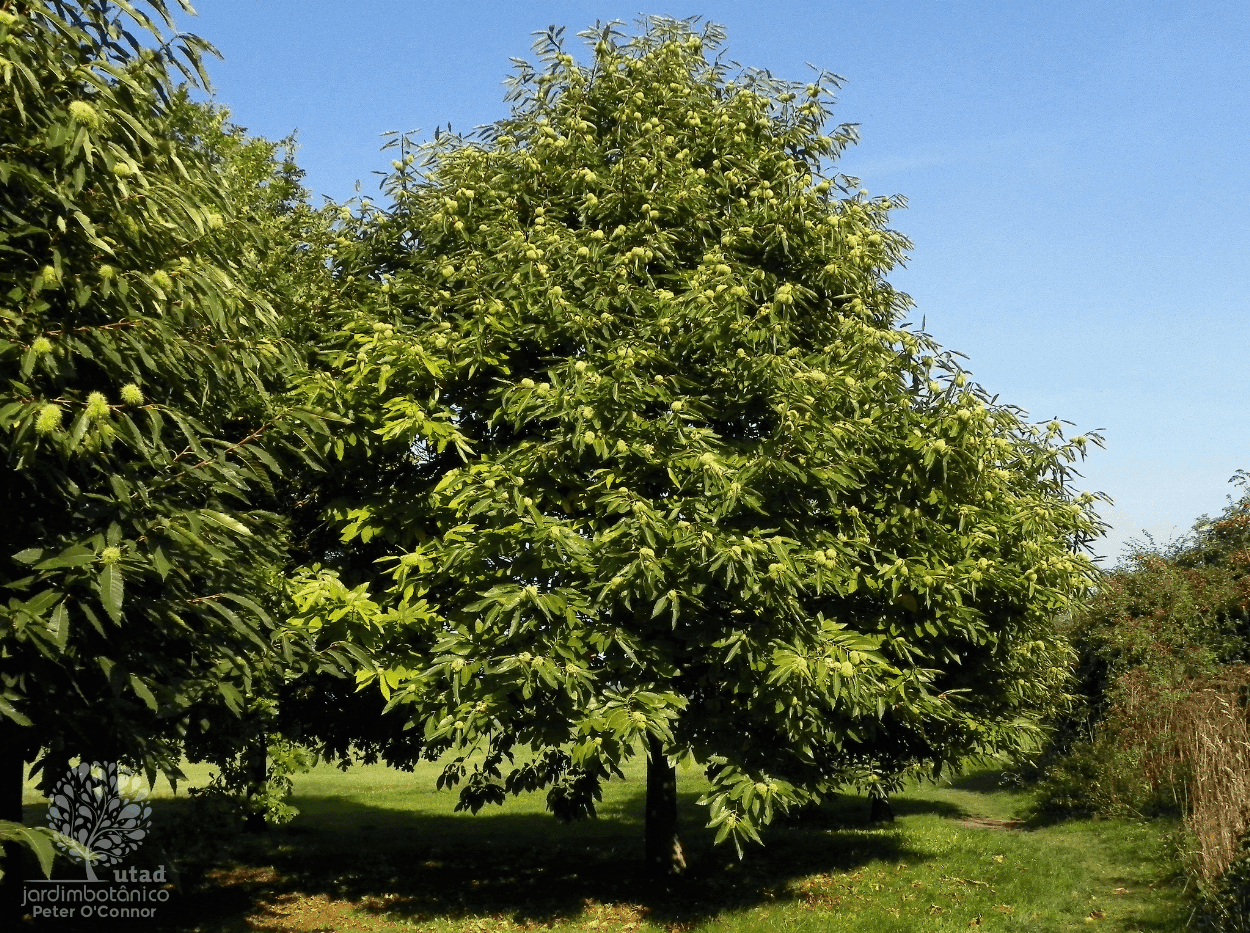
The European chestnut, a species of the Fagaceae family, is a large deciduous tree which, when fully grown, can reach a height of up to 35 metres and a diameter of around 12 metres, and can live for over a thousand years. Its fruit, the chestnut, develops inside a burr (bracts) and reaches maturity in autumn.
It is found more extensively in the Lousã, Açor and Estrela mountain ranges and in the rainiest areas of Beira Baixa, Beira Alta and Minho, and, at medium altitudes, in Trás-os-Montes. It is found in lower densities in the south of the country, in the São Mamede and Monchique mountain ranges (SILVA, 2007).
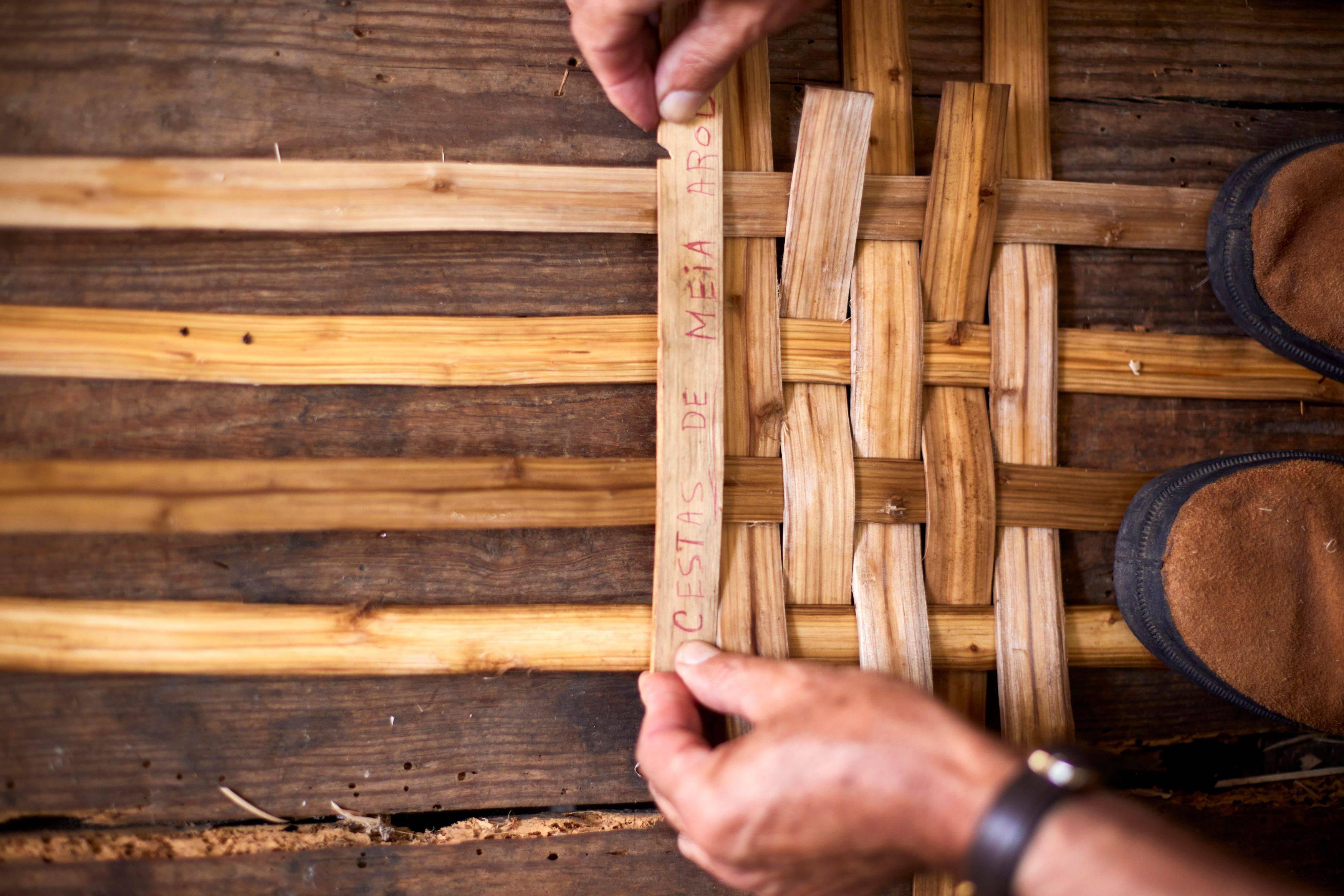
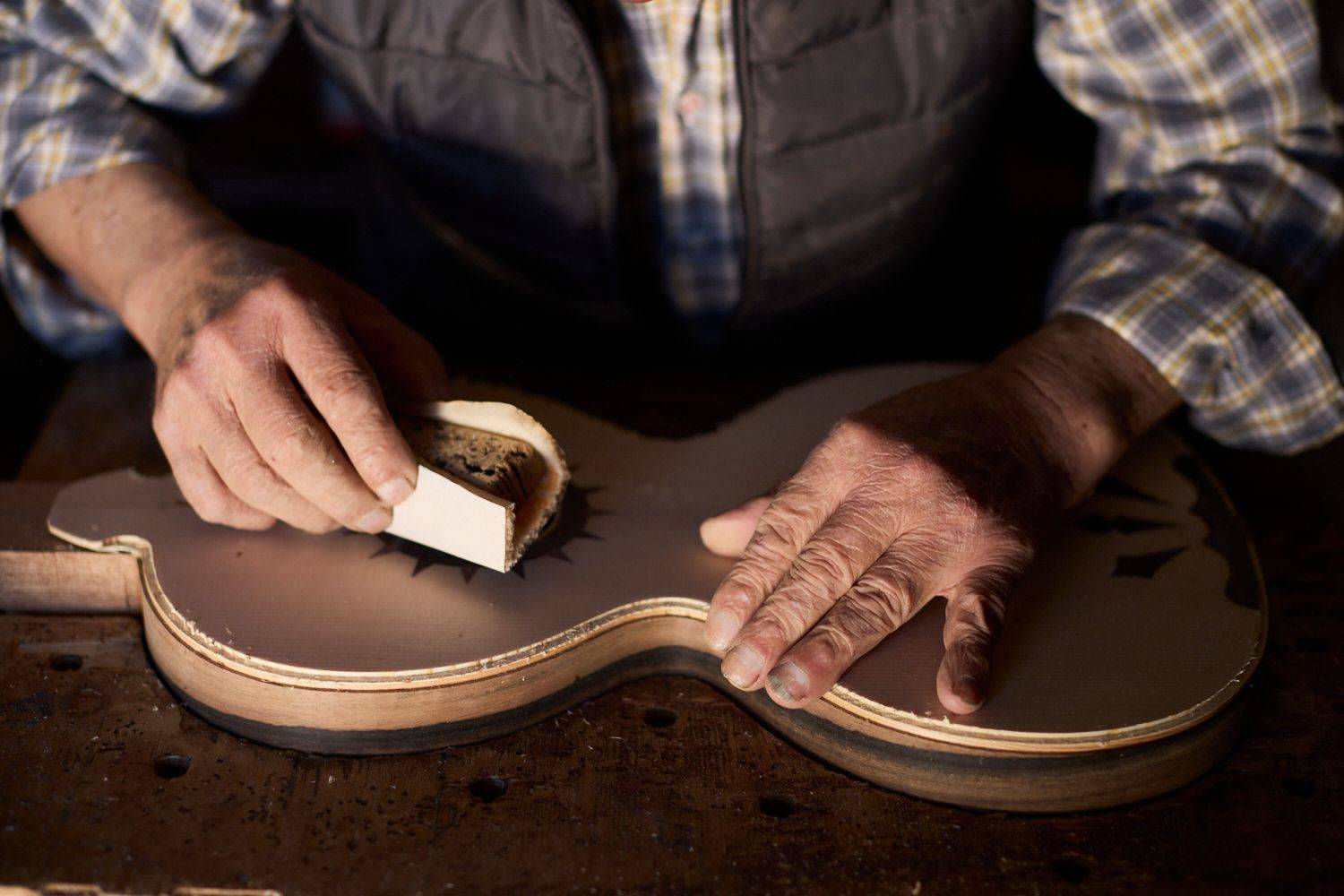
The chestnut tree produces high-quality wood. Its distinctive characteristics lie in its uniformity, lack of knots and exceptionally abundant heartwood. Easy to shape, it is used in the production of furniture, footwear (clogs), joinery, cladding and flooring, laminates, cooperage and household utensils. In traditional crafts, it is used to make split-wood basketry.
For many centuries, dating back to Roman times – until it was replaced by cereals and, later, by the potato – the chestnut played an important role in the Portuguese diet, and was even recognised in the Middle Ages as the ‘fruit tree par excellence’. They formed the staple food of people living in the most mountainous areas: rich in nutrients (carbohydrates, fats, protein, vitamins and minerals), they were served alongside meat or fish, and were also used in bread-making. Lower-quality chestnuts were used as animal feed.
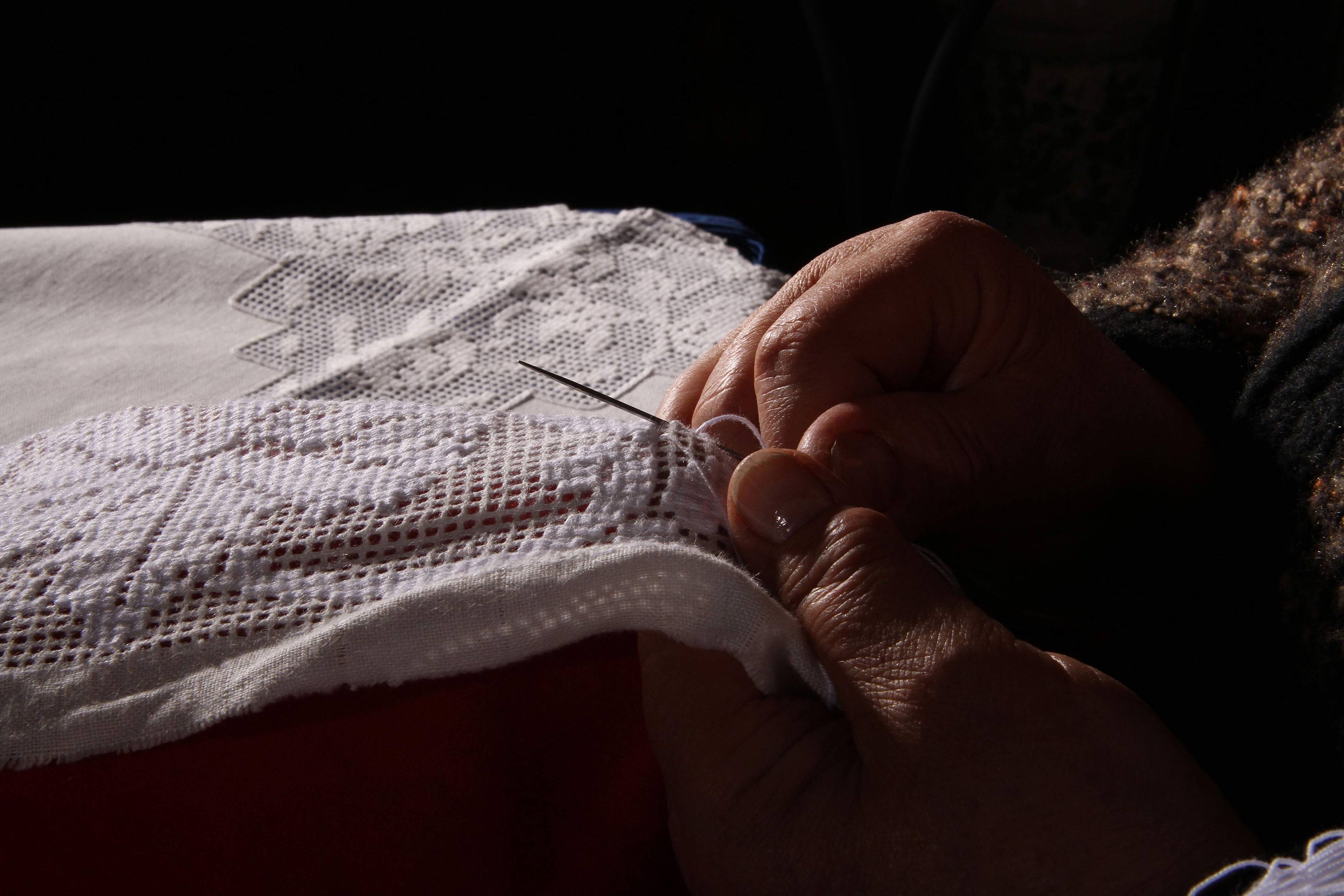
Associated with the popular festivals of Magusto and São Martinho, which are celebrated on 11 November, they are traditionally eaten boiled or roasted during this period. In the Marvão region, there is a tradition of using chestnut shells to embellish cotton and linen embroidery.
Bibliography
- Silva, Joaquim Sande
(coord.). Do castanheiro ao teixo: as
outras espécies florestais (Árvores e florestas de Portugal, 5). Lisboa:
Público / Fundação Luso-Americana para o Desenvolvimento, 2007
Webgrafia