map of Crafting of Wire-strung Guitars
Crafting of Wire-strung Guitars
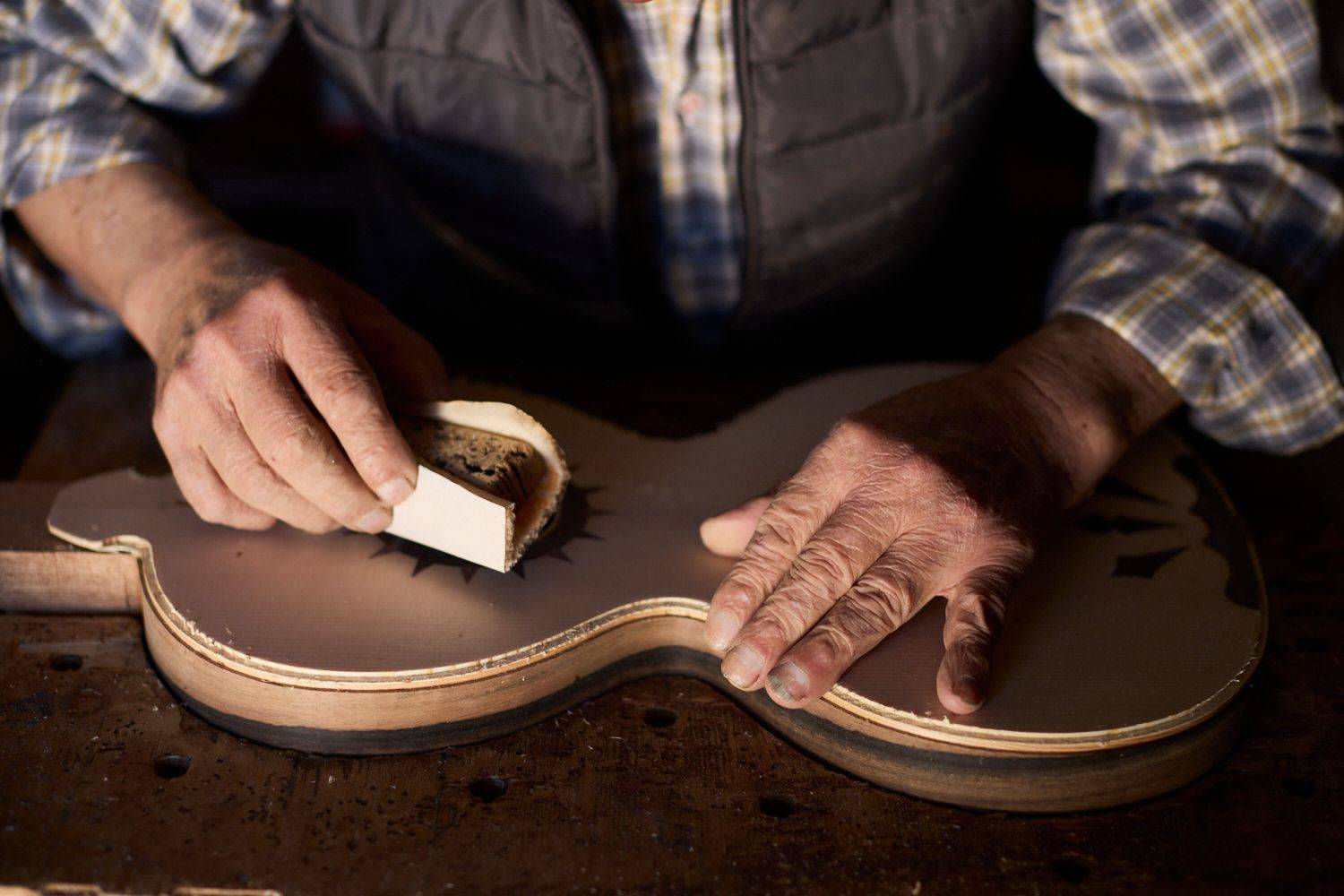
Wire-strung guitars – Amarantina, Campaniça, Beiroa, Braguesa, Toeira, and from the Azores and Madeira – express the cultural wealth, both material and intangible, of the different places where they are made
The careful choice of woods for the different components of the wire-strung guitar determines the quality and sonority with which they accompany folk traditions in each region.
The first reference to the ‘Portuguese guitar’ appeared in the 16th century, in the Regimento dos Violeiros de Lisboa (Statutes of the Lisbon Luthier's Guild, 1572), which established the manufacture of guitars. Two centuries later (1719) the statutes for the guitar-making industry in Guimarães, under which violeiros (luthiers) were ‘obliged to accompany processions (...) under penalty of a fine’. Records also show violeiros in Porto at that time. A century later, Barcelos and Viana do Castelo were still well-known for their violeiros. Veiga de Oliveira, in the book Instrumentos Musicais Populares Portugueses (1964), mentions that the ‘industry completely disappeared from all those places, only surviving, with the typical characteristics of a traditional craft, in the outskirts of Braga and also of Porto’, and it was from those two places that the whole country was supplied.
Mentions of the wire-strung guitar started to appear in the last quarter of the 19th century, associated with use at popular festivals. In the northeast, it emerged as a ‘basic accompaniment instrument, in the rusga and chulada festivities of the region’; in Beira Litoral, the rural region of Coimbra, it was the ‘instrument people used to accompany their festive descants and dances’, in ‘Coimbra at the São João celebrations’, and in the late 19th century, ‘the guitar was one of the favourite instruments of the city itself and the Academy, and was played in serenatas and songs’, until it was replaced by the standard guitar; in Baixo Alentejo, the region of ‘campaniça’ guitars, it was associated with ‘a special type of modas (songs) and despiques’ (improvised sung duels).' In the interior Beira regions, in the district of Castelo Branco, the guitar was ‘linked to a playful and festive genre, "cantares ao domingo" (Sunday songs), “felicitations” and serenatas for newlyweds’; in Beira Baixa, the Alentejo and the island of São Miguel, it was sometimes used for ‘ceremonial functions and revelries of the Holy Spirit’; in the archipelagos of Madeira and the Azores it provided ‘music of a playful and lyrical nature, traditional festive songs and dances’ (Veiga de Oliveira, 1964).
Portuguese guitars are all of the same genre, ‘with the soundbox composed of two flat and almost parallel body sections, with a waist spreading into two bouts, the upper smaller and the lower larger’ (Veiga de Oliveira, 1964). The Enciclopédia da Música em Portugal no Século XX also mentions the existence of some similarities between the various regional models, such as morphological characteristics that identify them: waist, soundhole, neck, fretboard, head, tuning pegs, strings and dimensions.
Within Portugal, we find the following models of regional guitars:
- Viola Braguesa, Minho and Douro Litoral.
- Viola Amarantina, Amarante area, including part of Baixo Minho and Douro Litoral.
- Viola Beiroa, interior of the Beira region.
- Viola Toeira, Beira Litoral.
- Viola Campaniça, Baixo Alentejo.
- Viola de Arame, Madeira Archipelago.
- Viola dos Açores, Azores Archipelago, also known as Viola Micaelense and Viola Terceirense. The Caderno de Especificações Técnicas, 2024, classifies them as Violas da Terra - Açores.
One of the distinguishing elements of the Portuguese wire-strung guitars is, for example, the soundhole, the opening on the top of the soundboard situated at the narrower bout of the soundbox, above or near to the waist line, which can be circular (Braguesa, Beiroa, Campaniça, Terceirense and Madeirense), oval (Toeira and old Braguesa model), ‘ray’s mouth’-shaped (Braguesa), or heart-shaped, pointing outwards (Amarantina and Micaelense) (Enciclopédia da Música em Portugal no Século XX).
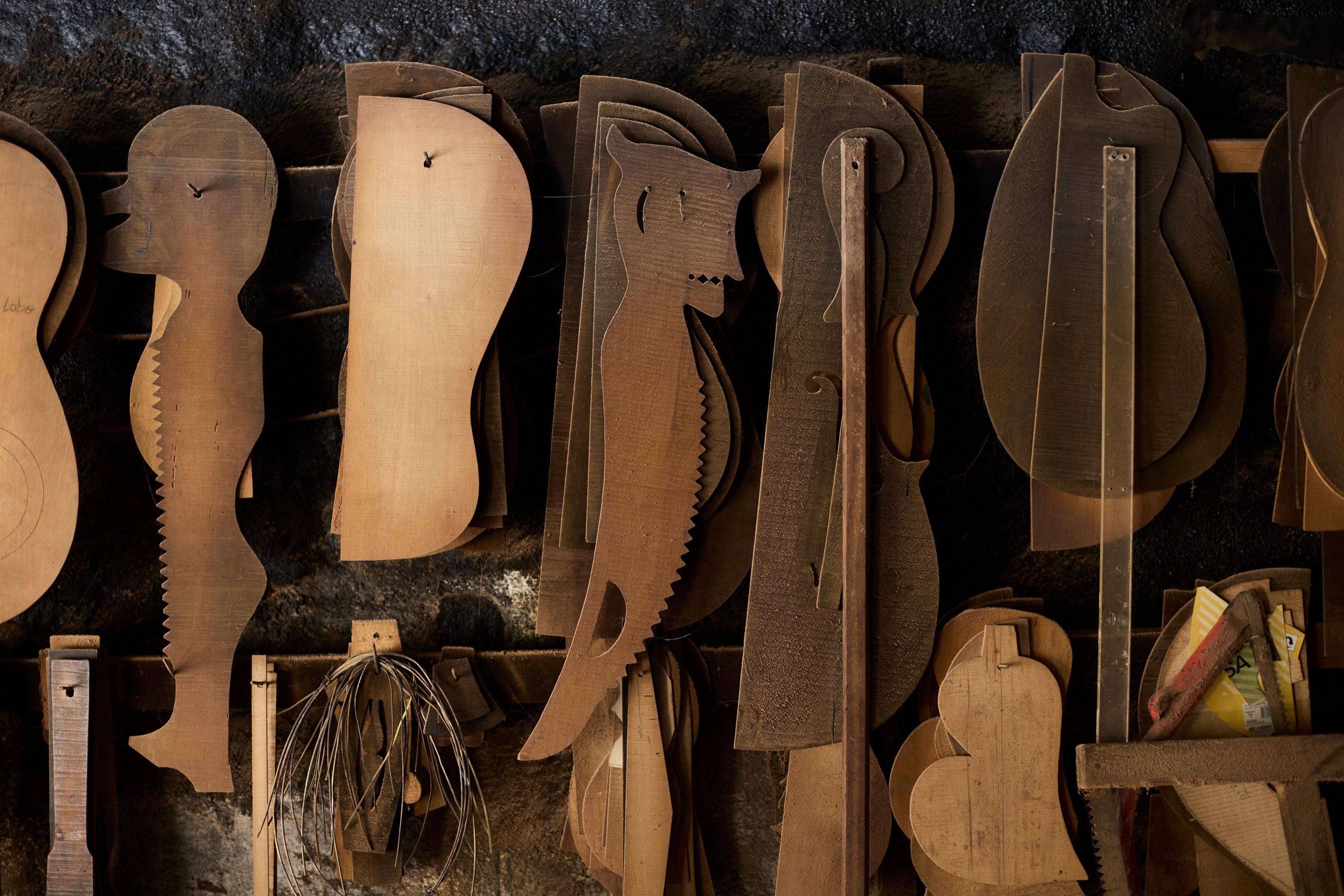
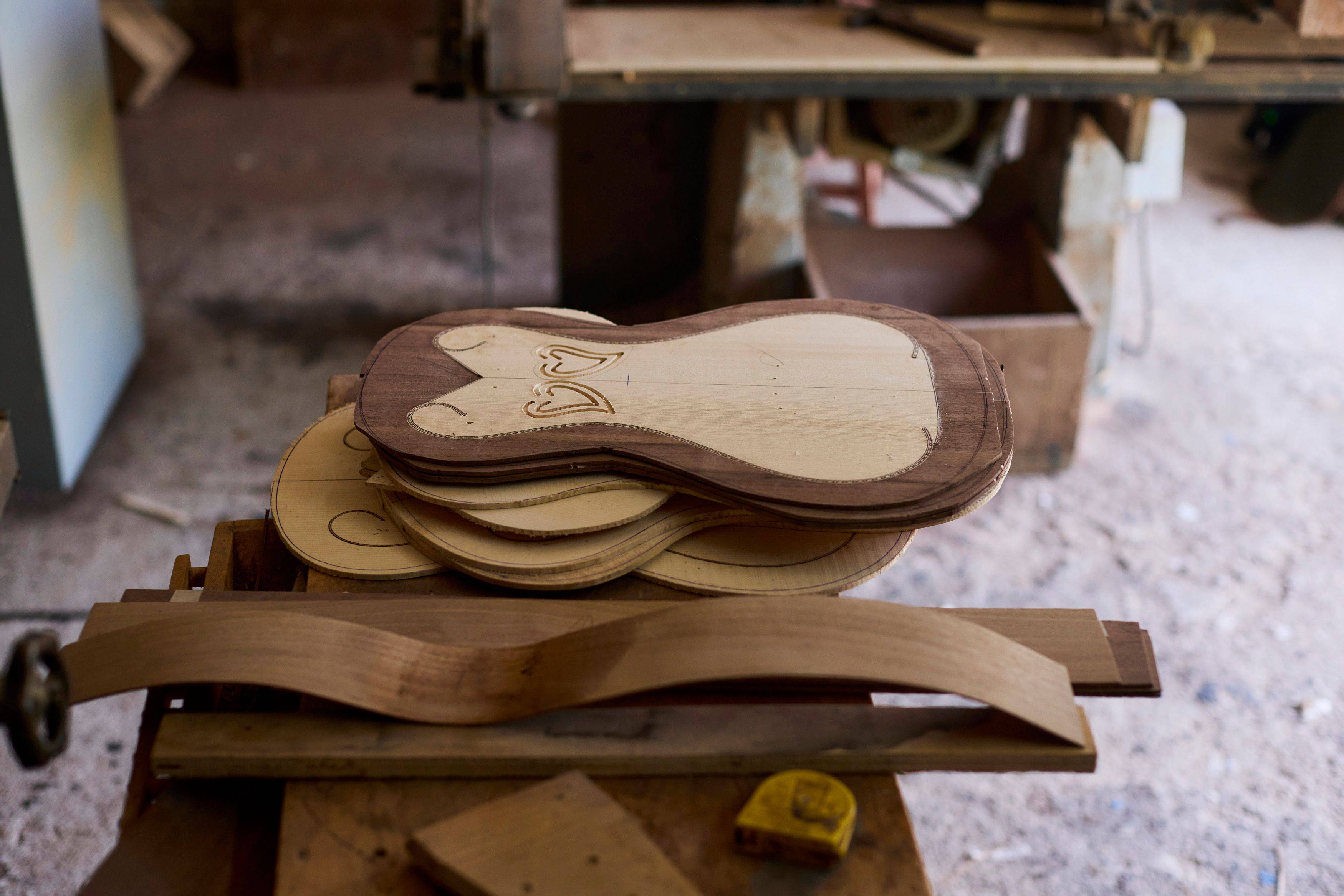
To craft the guitars, the woods are selected carefully, according to the way in which the pieces have been cut, the degree of drying, the arrangement of the veins, the texture and quality of the different parts of the instrument. The types of wood used are chosen according to their acoustic and aesthetic properties and economic value. Violeiros prefer ‘wood without knots, with fine and regular veins – for the top board of the soundbox: white pine, spruce and lime; sides and back: plane, rosewood, mahogany, walnut and cherry; neck: plane, alder, lime, chestnut, Scots pine, mahogany (Madeira) and cedar (Azores); fretboard: ebony, blackwood, rosewood, or any other wood with a dark tone; bridge: walnut, rosewood, ebony or pear; edges of soundhole and top soundboard: commonly decorated with inlays of dark wood or painted by hand’ (Enciclopédia da Música em Portugal no Século XX).
The makers themselves have been responsible for the evolution of these popular musical instruments, given that some, also players, were well acquainted with the traits, potentials and fragilities of the instruments. Sometimes, it was the musicians who, ‘faced with the sound and/or technical limitations of the instrument, advised the maker to try new solutions and different woods, to correct defects and improve the quality of the instrument’ (Caderno de Especificações para a Certificação, Viola Braguesa).
The construction process for Portuguese guitars adapted according to the cultural and musical needs of the regions, as well as the demands of its players, ‘which led to transformations in terms of construction techniques, namely the volume of the soundbox, improvements to the neck with adjustment of its measures’ (Violas da Terra – Azores, Caderno de Especificações Técnicas).
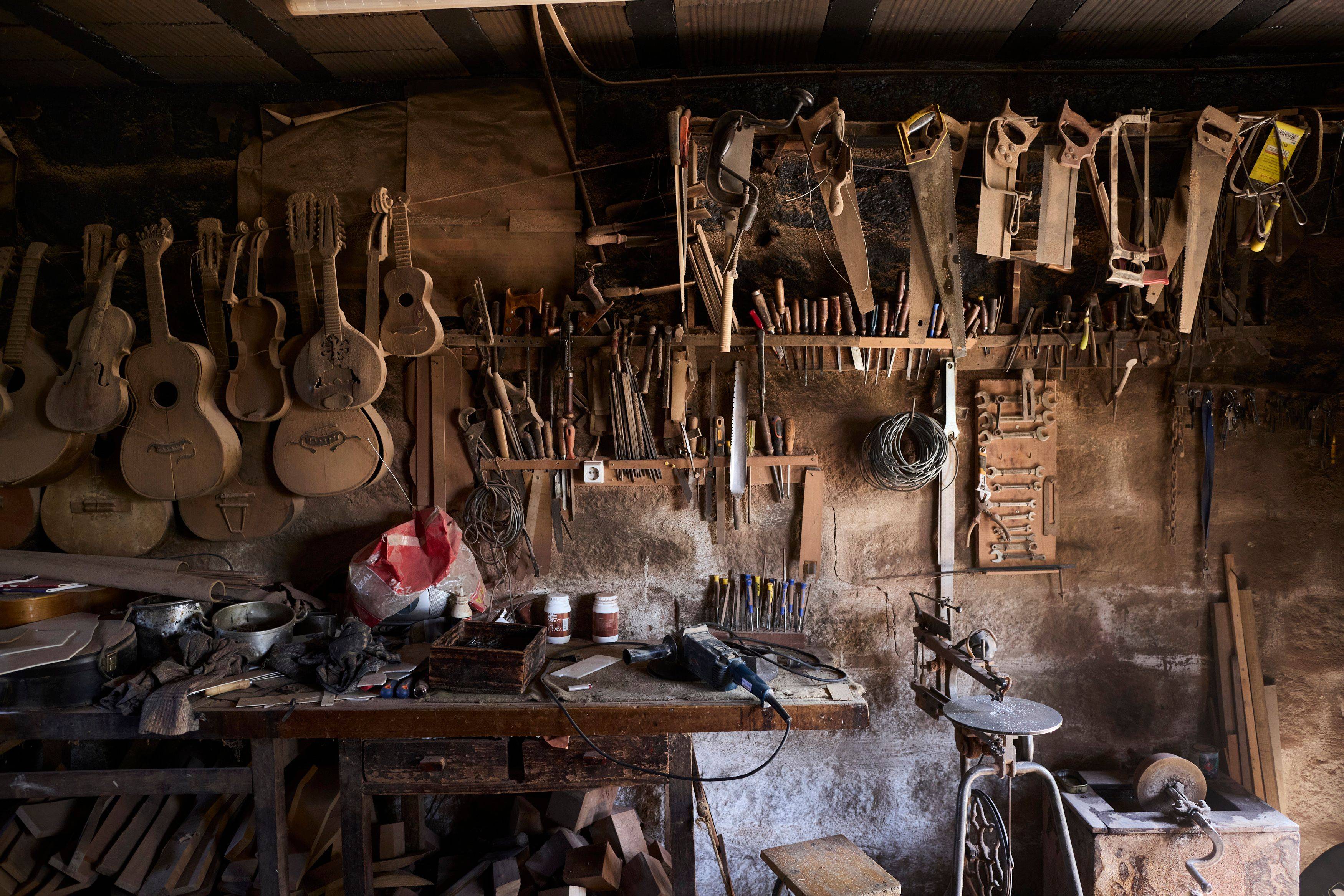
Various tools are used: saws and jigsaws, planes, chisels, sanders, cramps, compass cutters, a rag for varnishing and three machines – drill, side-bending iron and electric sander (Caderno de Especificações para a Certificação, Viola Beiroa).
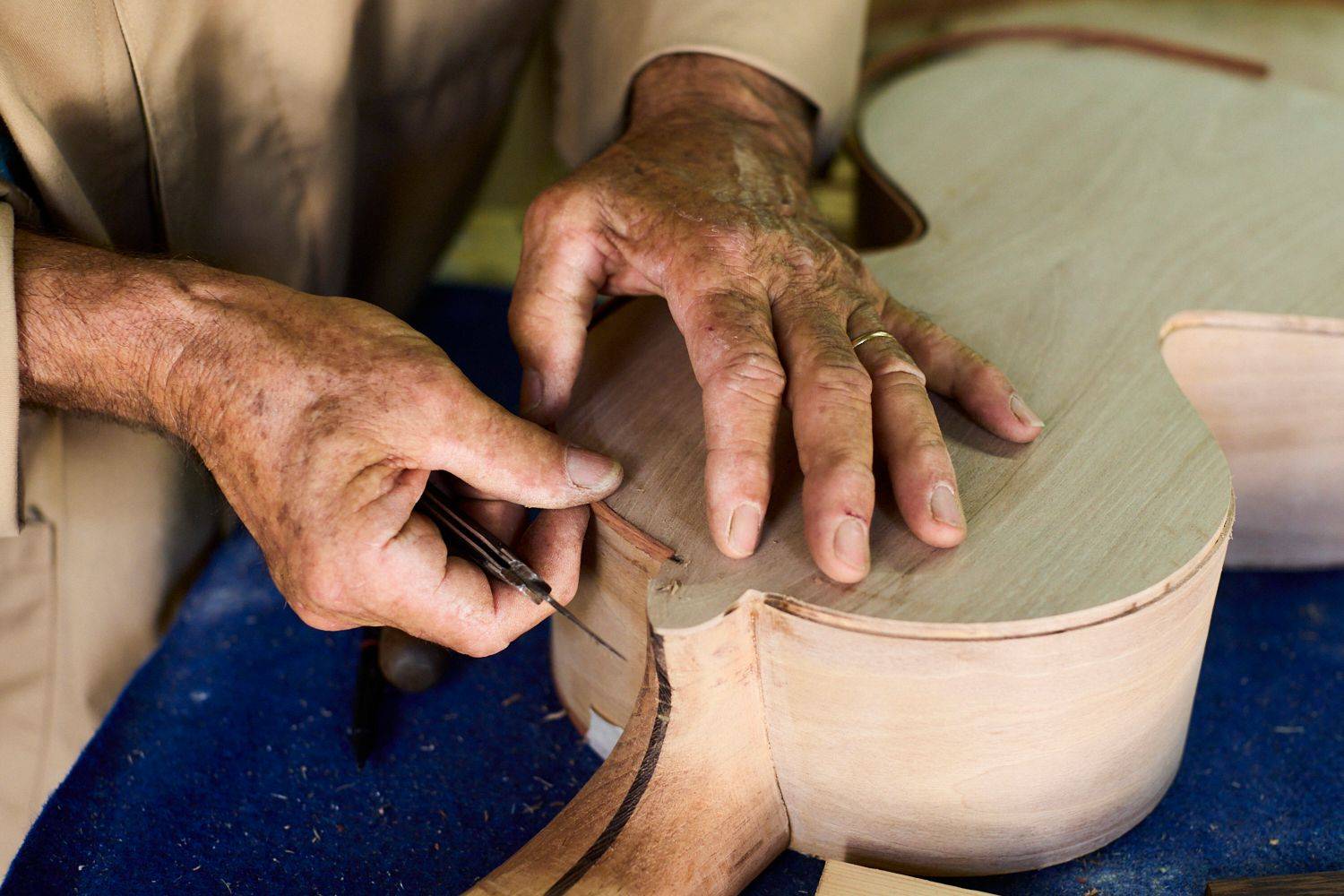
The construction steps for wire-strung guitars are similar across the different models and regions. The following example is given in the Caderno de Especificações para a Certificação, Viola Braguesa Portugal (2017):
- Carefully select and prepare the woods for the various elements of the guitar;
- Prepare the tools and utensils needed;
- Mark out the wood for the top of the soundbox;
- Saw the top;
- Mark out the soundhole of the instrument (round, sideways oval or ray's mouth);
- Apply inlays (if any) around the soundhole;
- Cut away the soundhole;
- Glue the alpatilha (heel block) to the neck;
- Glue the vergueiro (strengthened section where the sides join) to the top ;
- Glue the neck to the top;
- Prepare and align the sides; these are bent with heat;
- Glue the sides to the top;
- Glue in the various internal braces: travessas, sanefas and estantilhões;
- Glue on the back;
- Place in a mould so that the instrument takes on the desired shape, binding it with strings and wedges to put pressure on the wood (the process known as ‘founding’ the instrument);
- Glue the remaining inlays onto the top, match up the fretboard with the neck, gluing it immediately and gluing the lining to the head;
- Round off the heel block and the back of the neck into an oval shape;
- Straighten;
- Position the frets;
- Finishings: remove the sharp edges, glue on the saddle; correct the tuner; shave, sand and polish;
- Glue on the bridge;
- Varnish;
- Position the carillon, fan or pegs;
- String the guitar;
- Tune and assess the sound quality of the guitar.
In his study on Portuguese Popular Musical Instruments, Veiga de Oliveira, in 1962, states that Campaniça and Beiroa guitars were ‘very rare and at risk of complete extinction’; while in the book Tesouros do Artesanato Português, Teresa Perdigão, in 2001, mentions that ‘among mainland guitars, only the Braguesa and Amarantina are known with any vitality at present (...) the Beiroa is almost extinct and the Toeira has completely disappeared’.
In recent years, however, wire-strung guitars, regarded as disappeared by the authors mentioned above, are undergoing a revitalisation. The Beiroa guitar, for example, was certified in 2017, the revitalisation process having been led by the Associação Cultural Viola Beiroa (a group of guitarists and luthiers who also collect and compose repertoires). The Toeira has been recognised as an instrument with expressive potential by academic and musical communities (Núcleo de Estudos da Viola Toeira). In addition to the Beiroa, recent years have also seen the certification of the Viola Amarantina (2023), the Viola Braguesa (2017) and the Viola da Terra Açores (2024).
Bibliography
- ANDRADE, Alexandra (Coord.) (2024) Violas da Terra - Açores - Caderno de Especificações Técnicas. Ponta Delgada: Secretaria Regional da Juventude, Habitação e Emprego, Centro de Artesanato e Design dos Açores
- CASTELO-BRANCO, Salwa (Direção) Enciclopédia da Música em Portugal no Século XX (P – Z), Temas e Debates – Círculo de Leitores, 1.ª Edição: julho de 2010, Instituto de Etnomusicologia – Centro de Estudos de Música e Dança
- MENDES, Carolina (Coord.) (2023) Viola Amarantina Portugal - Caderno de Especificações Técnicas. Amarante: Câmara Municipal de Amarante
- OLIVEIRA, Ernesto Veiga de (1964 - 1ª edição) Instrumentos Musicais Populares Portugueses. Lisboa: Fundação Calouste Gulbenkian
- PERDIGÃO, Teresa e Calvet, Nuno (2000) Tesouros do Artesanato Português - Madeiras, Lisboa: Ed. Verbo
- RAMOS, Graça (Coord.) (2017) Caderno de especificações da Viola Beiroa. Castelo Branco: Câmara Municipal de Castelo Branco
- RAMOS, Graça (Coord.) (2017) Viola Braguesa - Portugal - Caderno de especificações para a certificação. Braga: Câmara Municipal de Braga
Webgrafia:
- Garcia, Thomas George Caracas e Loio, Eduardo – A Viola Toeira: História, Desenvolvimento, Revitalização e Construção https://veduta.aoficina.pt/14/a-viola-toeira/, consultado a 15 de dezembro de 2024
- Marques, Rui e Meireles, Fernando – Um artesão em busca de um instrumento esquecido: Fernando Meireles e o processo de revivalismo da viola Toeira https://veduta.aoficina.pt/14/um-artesao-em-busca/, consultado a 15 de dezembro de 2024