map of Black Clay
Black Clay
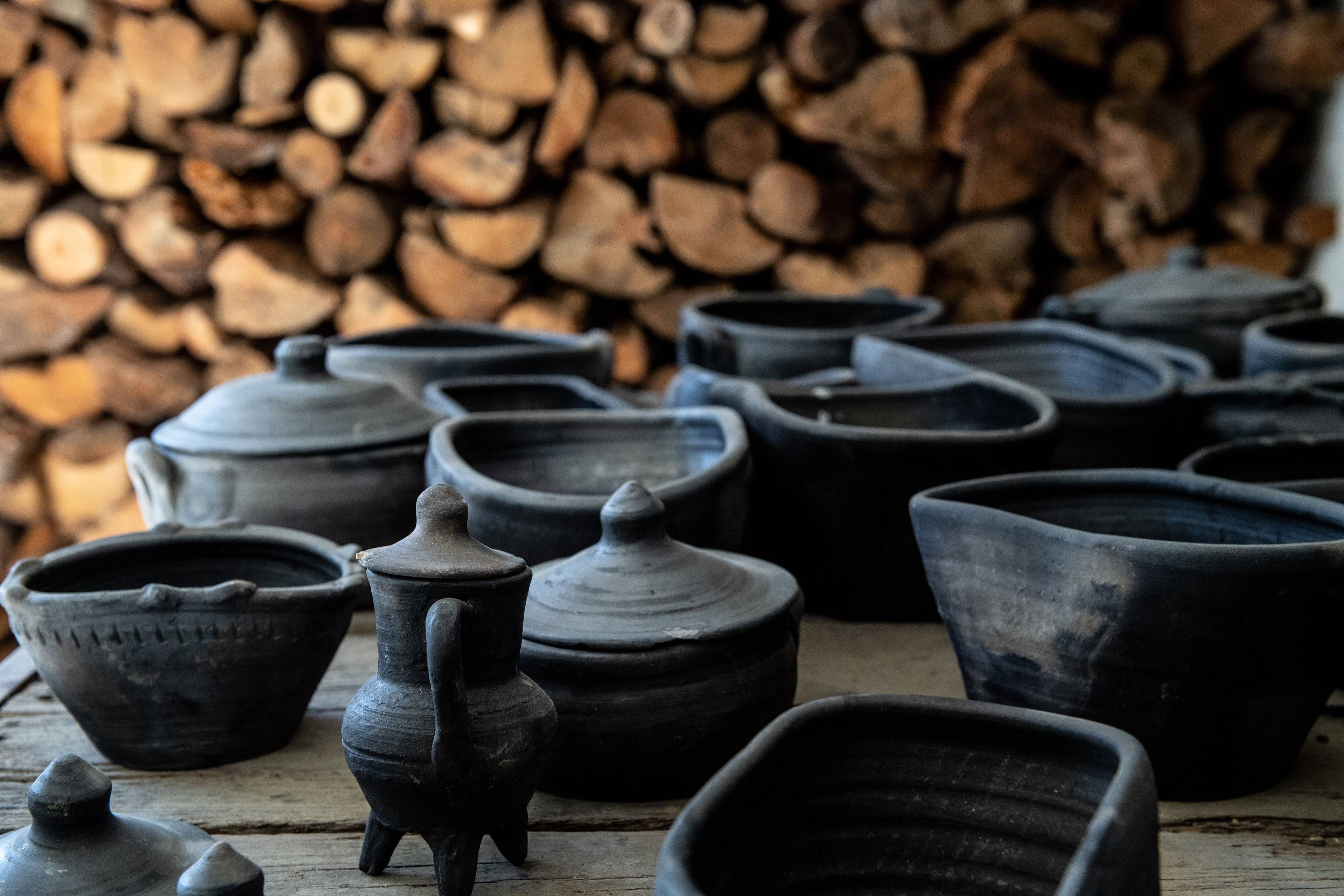
Black clay pottery is a specific type of pottery production. The term covers a wide range of creations with distinct characteristics, rooted in diverse geographical contexts, and resulting in an array of pieces that can be very different from one another, ranging in colour from metallic light grey to black. The raw material and production process are similar in every respect to other pottery traditions; the reduction firing is the distinguishing feature and gives the pieces their final colours.
In Portugal, black clay pottery is produced across the central and northern inland regions of the country. Between the 17th and the 20th century, 53 black clay potteries have been identified. In the early 20th century, records show that hundreds of people worked in some of these potteries, especially in Molelos, where pottery was an important economic activity involving whole families in different tasks. Traditionally, the potter’s wheel was only used by men. Women were responsible for preparing the clay, finishing the pieces and selling them. As well as selling their pieces at fairs, many potter families also exchanged them for flour, wine and oil. There are also two potteries in Spain, in Quart and Verdù in Catalonia. In 2010, there were 11 potters producing black clay pottery in these two villages.

Potteries were usually located near clay pits, where the raw material was extracted and prepared. Next to the clay pits, there were often sheds where large quantities of clay could be prepared and where the potters went to obtain the material required for their work. In other cases, the potters themselves extracted the clay. In some pottery centres, clay collection was a communal activity, with the heavy labour of extracting, transporting and preparing the material shared across the group.
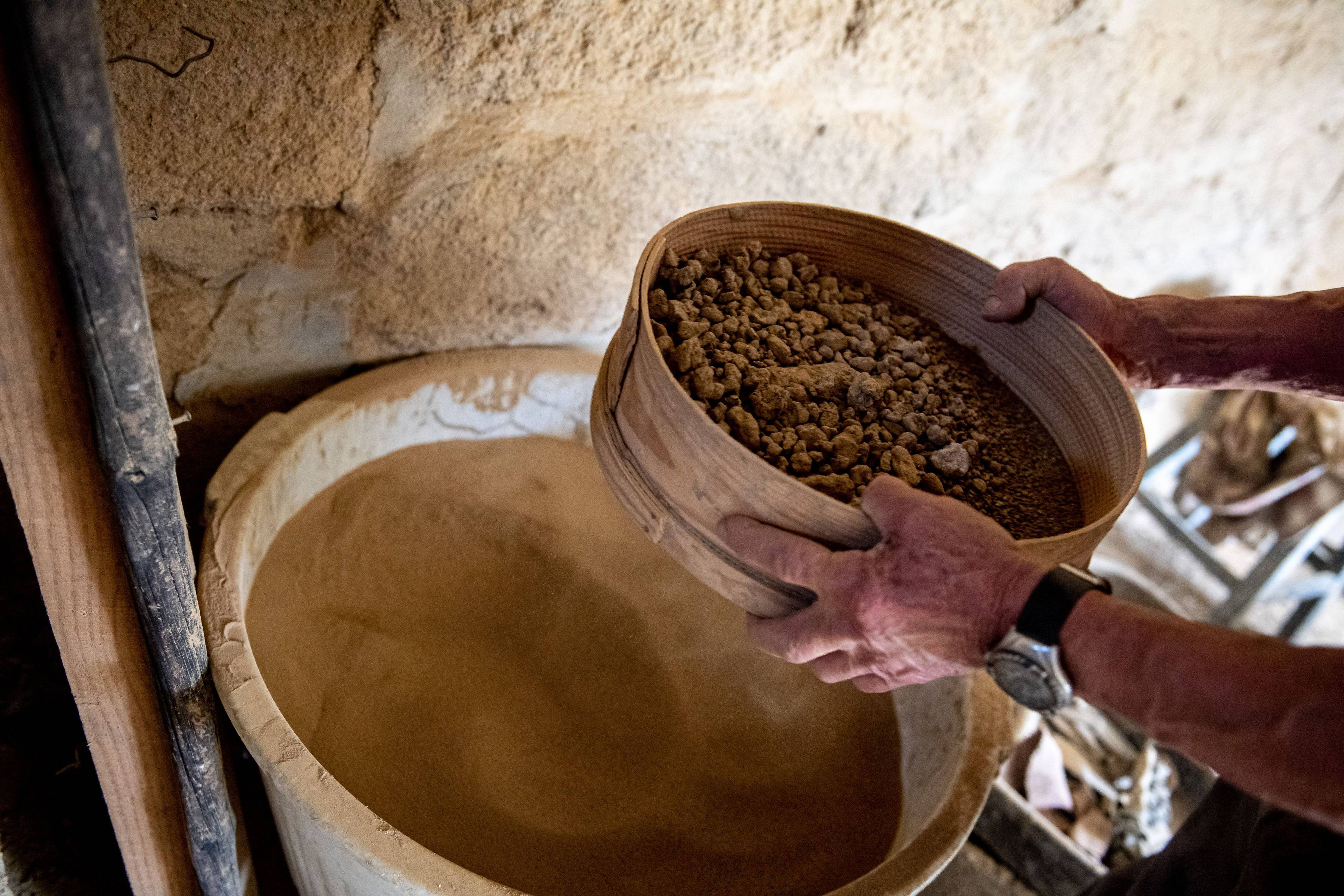
Following extraction, the material is prepared from clay ground by hand while dry using a wooden mallet. This task is carried out on a stone slab or basin, depending on the location. The clay used in this style of pottery tends to be a mixture of lean (or weak) clays and fat (or strong) clays, sometimes combined with fillers to ensure good workability during shaping and good resistance to the temperature range to which it is exposed during firing. The powdered clay is then kneaded with water to produce a paste free from impurities, with the ideal consistency for throwing on the wheel. Nowadays, mechanical clay mixers make it easier to prepare the clay.
Potteries were traditionally located on the ground floor of the potter’s home. Pottery production was almost always a supplementary activity to farming or stonemasonry and workshops intended solely for pottery were rare.
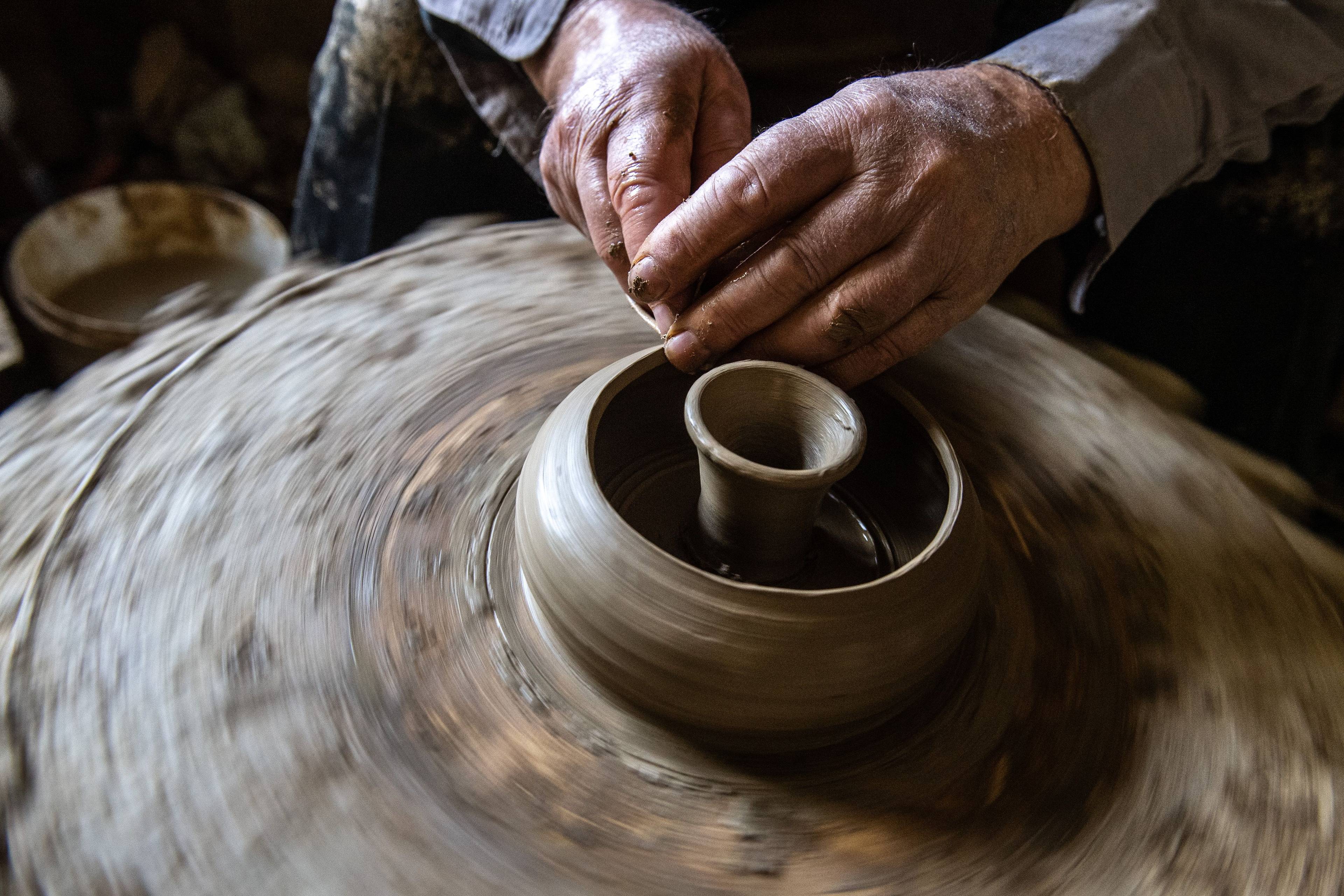
In the regions north of Castro Daire where black clay pottery is made, the traditional manual wheel is a low structure built by local carpenters and handed down from father to son. It comprises a wooden structure with two discs linked by a vertical shaft around 80 cm tall. The lower disc is larger and is known as the ‘campo de roda’ (wheel base). The upper disc, used by the potter to shape the clay, is known as ‘rodalho' or 'cabeça da roda’ (wheel head) (IEFP 2019). In Bisalhães, bearings were added to the traditional wheel to make it easier to turn. The potter sits on a wooden board attached to the wheel or on a potter’s stool. In other traditional black clay pottery production areas, the traditional wheels were tall structures powered by the potter’s foot. These traditional wheels have been replaced by electric wheels in places such as Olho Marinho and Molelos.
In locations where traditional production continues to take place, most of the tools used have been adapted and improvised using local materials. Round pebbles (‘gogos’) are collected from rivers to create a smooth, glossy finish or to be used as decorative motifs. The potter always keeps a water bowl (‘aguaceiro’ or ‘caco da roda’) nearby while working at the wheel to wet their fingers (IEFP 2019). Well-finished sticks and canes, rags and plastic tubes are also used to shape the clay. The pottery is usually finished by polishing it with a stone halfway through the drying process, when the clay has hardened to some degree but the surface is still soft enough to be polished and decorated. This final stage is known as ‘gogar’ or ‘brunir’ (burnishing) and it lends the pottery a shine while reducing its porosity. Decorating the pieces with leaf motifs, wavy lines and perforations was traditionally a task carried out by women. Male potters also burnished the more utilitarian pieces.
In Molelos, great care is taken with the decoration of the pieces and a series of tools are used, including wooden dowels, toothed wheels and metal stamps to make incisions.
The pieces must be dried slowly and thoroughly before they are fired. When freshly made, the pieces are considered ‘green’. The drying process must take place indoors, sheltered from sun and wind, to prevent cracking. Once some time has elapsed, the piece may be placed outdoors. Drying can take up to two weeks, depending on the size of the piece and the weather conditions in the particular location, especially the level of humidity.
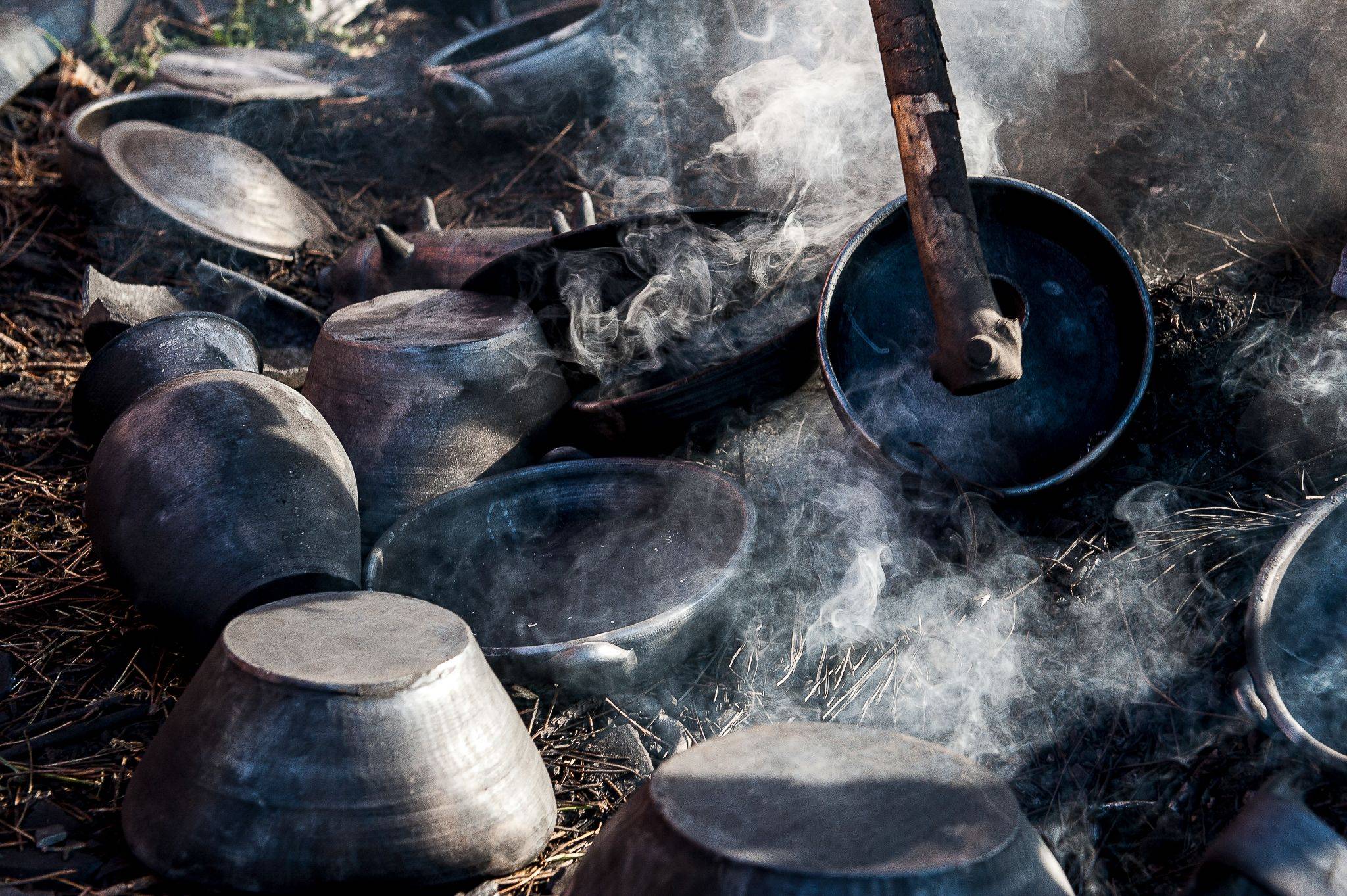
Firing marks the end of the process of transforming clay into ceramics and plays a key role in ensuring the quality and durability of the piece and its unique black colour. Traditionally, two different firing methods are used: the most ancient, known as soenga (Bisalhães), and the forno de poço or pit kiln (Vilar de Nantes). The soenga and the pit kiln may be used to fire the pieces of a single potter, but in many villages they are communal and the soenga firing is carried out collectively. Nowadays, wood-fired kilns (Molelos) and gas kilns (Olho Marinho and Carapinhal) are used, both of which employ the reduction firing technique that gives the pieces their characteristic black colour.