map of Pottery
Pottery
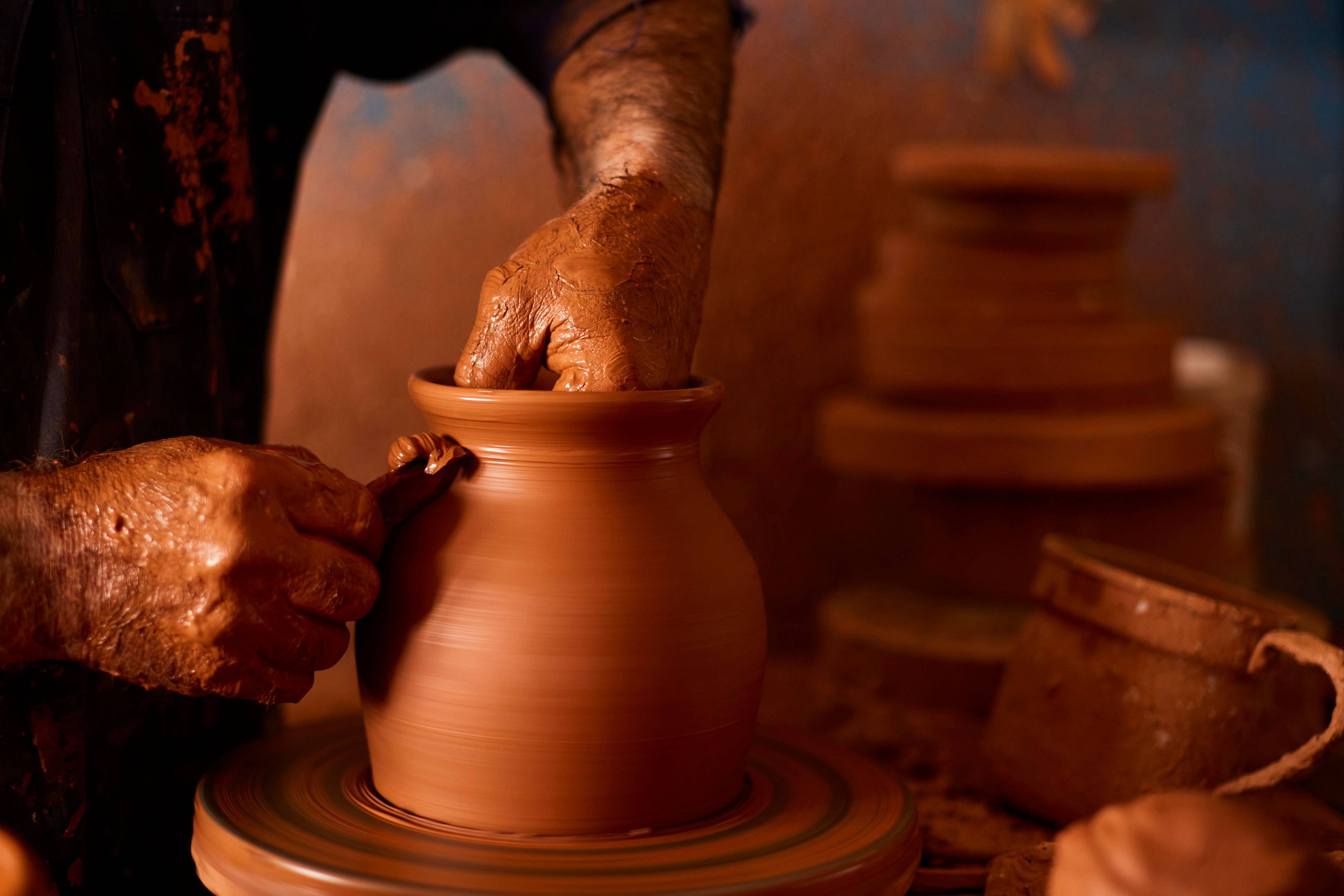
The word olaria (pottery) derives from the Latin word olla, meaning a cooking pot. This ancient art dates back to prehistoric times, when humans began to extract clay and put it to practical use. From the earliest hand-moulded clay pieces – created even before the firing process was known – pottery has undergone constant reinvention, adapting to the demands of each era and the pace of technological development. The potter’s wheel was a major milestone in the history of pottery, although clay pieces are produced in many parts of the world without the use of this technology.
The evolution of pottery has gone hand-in-hand with societal transformation, encompassing changes in usage and form, as well as in technique and aesthetics. Nevertheless, it is remarkable how certain designs have endured for centuries, right up to the present day, and how traditional processes continue to be used. The production of functional clay items over time – from hand-modelling to 3D printing – tells the long story of humankind’s close relationship with clay, in all its utility, symbolism and beauty. That story holds potential answers to many contemporary issues, such as environmental sustainability and local, circular economies.
Utilitarian pottery is found across various centres throughout Portugal, with similar underlying techniques and processes. The characteristics that distinguish regional styles stem from variations in local raw materials, production methods, and the shapes and decoration of the pieces. Our definition of utilitarian pottery encompasses items for domestic use or work-related activities, including the talhas, large vessels used for wine production. We have also included specific pieces that serve symbolic, festive or decorative functions, such as bilhas de segredo (‘secret jugs’ featuring hidden openings), cantarinhas dos namorados (lovers’ pitchers) from Guimarães, louça empedrada (quartz-inlaid pottery) from Nisa, and anthropomorphic and zoomorphic jugs from Mafra.
Centres producing utilitarian pottery made from red clay – unglazed, matt or glazed – have been identified and characterised by a number of authors. At different points in history, such centres have come to prominence due to the quality and quantity of their output. Some remain active and thriving, representing a living cultural heritage that spans the country from north to south. Among the most notable for their current vitality and past heritage are the pottery traditions of Barcelos, Bajouca, Carapinhal, Mafra, Nisa, Redondo, São Pedro do Corval, and Viana do Alentejo.
The radical transformation in ways of life brought about by the introduction of amenities such as mains water, electricity and gas, along with the widespread use of items made from lighter, more durable materials (first tinplate, then plastics and industrial ceramics) – rendered many pieces traditionally crafted by potters obsolete. In response, potters often adapted their output to focus on decorative and/or symbolic pieces.
Records of pottery production in the area that is now Portugal mark out the 1st millennium BC as a pivotal period in the development of this craft. This was driven by contact with styles brought in via Mediterranean trade routes, particularly vessels used to transport and store goods on maritime voyages between different places and cultures (SILVA, 2003). The production of amphorae and other types of vessels fostered the growth of pottery-making hubs near waterways and major ports. During the period of Islamic rule, production techniques evolved to include the use of coloured glazes and decorative painting. As regions and urban centres became established during the medieval period, hubs of pottery production inherited a rich and diverse multicultural tradition.
Driven by the cultural, social and economic dynamics of the Portuguese Discoveries, pottery experienced a long period of robust growth, during which it absorbed a wide range of technical and aesthetic influences from abroad.
Alongside more sophisticated, artistic ceramics – where stylistic influences are most apparent – the forms and functions of hundreds of other artefacts remained virtually unchanged for centuries. Until the second half of the 20th century, pottery production served a wide range of uses, from household items to vessels for transportation or agricultural purposes. In the final decades of the 20th century, these objects were relegated to the status of handicrafts, catering to tourism and the growing demand for souvenirs. Once utilitarian items used day to day in rural locations, they now came to serve decorative and symbolic functions, acting as reminders of a bygone age – yet one close enough to embody the ideas of origins, roots and identity.
For a long time, and right up until the end of the 20th century, particularly in rural areas, pottery was a family activity that supplemented farming work. It encompassed the entire production cycle, from collecting clay from the pits and preparing the clay for moulding to shaping the pieces, firing them, and ultimately selling the finished pieces. In urban centres, pottery workshops became increasingly professionalised, sometimes employing several salaried potters and being subject to taxes, local ordinances and regulations. Apprentices began working in the workshops while still very young (ten to twelve years old). They would work alongside master potters, family members or neighbours, and were only considered fully qualified after many years of practice. During the 20th century, such training largely shifted to the formal education system with the establishment of schools offering specialised instruction in ceramics, including pottery.
João Eugênio from Estoi – himself the son and grandson of potters – remarks: ‘To be a potter, you have to start young and let the movements become second nature as you grow up’ (BRANCO; SIMÃO: 31).
Pottery workshops vary widely in terms of location and type, depending on the historical period and region. They range from family-run enterprises – where space for the potter’s wheel is set aside within the family home – to professional workshops originally established near urban centres. Changes in production techniques and processes also led to shifts in the organisation of workshops, which gradually became separate from the home as the number of potters, the scale of production and the demands of managing operations grew. Many workshops came to include a shed for preparing and storing clay, a designated area for the potter’s wheels, a drying area for pieces to sit before firing, and the kiln itself.
The potter and their family would often sell the wares themselves – either door-to-door on arduous journeys between villages and towns, or at seasonal markets and fairs. Pedlars also handled sales, paying a portion of the proceeds to the potter. For many years, it was common for pottery pieces to be ‘sold’ in exchange for foodstuffs, sometimes measured by the quantity that would fit inside the vessel itself. Workshops with high output volumes shipped large orders by train for resale in warehouses and shops in major urban centres. In the second half of the 20th century, profound economic and commercial changes, easier product transport and greater access to channels for showcasing work completely transformed this market. Pottery workshops gained greater visibility and access to a wider audience.
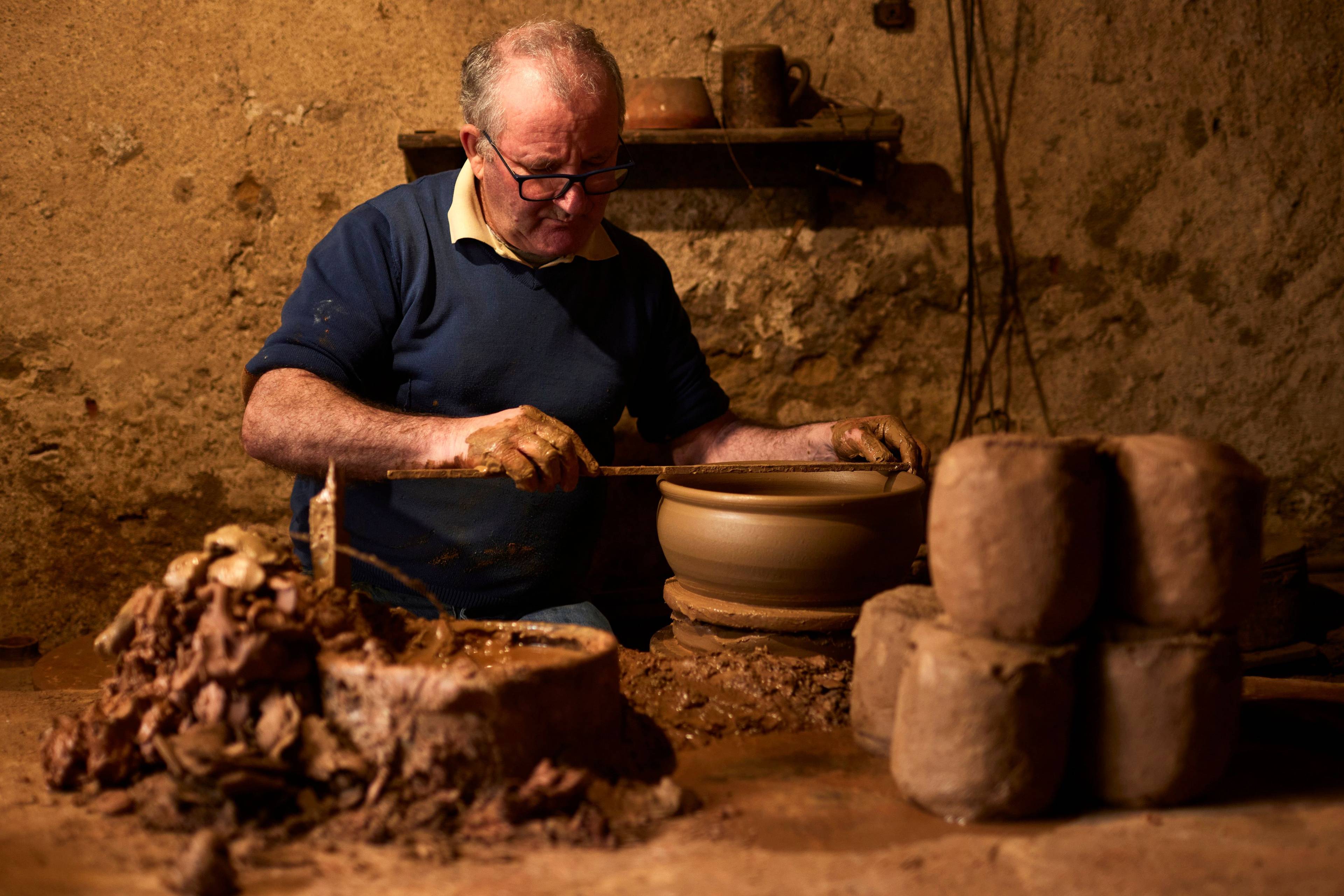
The reason this practice spread to all regions of Portugal – to varying degrees – is that clay, the raw material for pottery, is abundant across almost the entire country. Generally, centres of production were established near clay pits, where the raw material was extracted and prepared. Often the potters themselves extracted the clay. There were pottery centres where clay collection was a communal activity, with the heavy labour of extracting, transporting and preparing the material shared across the group. Larger centres had a greater specialisation of tasks: clay extractors handled the collection and preparation of the clay, while potters or throwers were responsible for turning the clay on the wheel and the other production tasks (FERNANDES: 442).
The wheel is the potter’s main piece of equipment. Different types of wheels have coexisted over time. Today, some ceramicists work on a low, hand-turned wheel (the most traditional kind) or the high, foot-operated wheel. The electric wheel is powered by a motor that allows the potter to focus their efforts on shaping the piece.
In addition to the wheel, the potter uses other tools: a bowl of water, a piece of cloth or a sponge, a polished wooden tool, a piece of cane for shaping, gauges and a wire cutter.
Once finished, the piece is left to dry slowly and thoroughly before the firing process. When freshly made, the pieces are considered ‘green’. The drying process must take place indoors, sheltered from sun and wind, to prevent cracking. Once some time has elapsed, the piece may be placed outdoors. Drying can take up to fifteen days, depending on the size of the piece and local weather conditions.
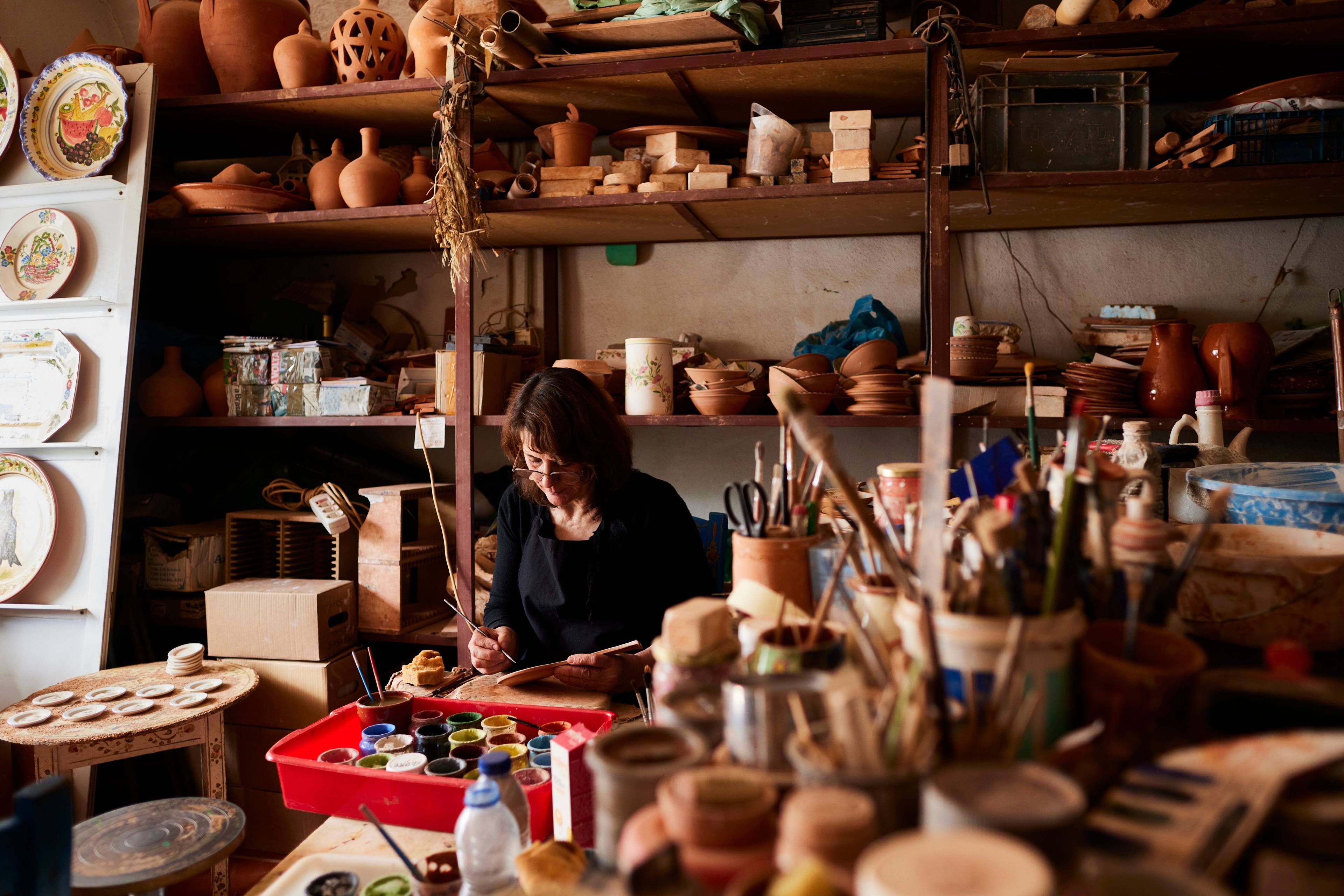
Traditionally, work at the potter’s wheel was done by men, while women assisted them with preparing the clay, polishing the pieces and decorating them with sgraffito and paint. The 20th century saw an increase in women working at the wheel.
Utilitarian pottery can be categorised into two main groups, based on finish and decoration: ‘rough’ or ‘porous’ ware and glazed ware. ‘Rough’ ware may be red (the natural colour of fired clay) or black (black clay) and is fired only once. Known as chacota (bisque firing), this takes place at temperatures between 980°C and 1020°C. These unglazed pieces undergo a polishing process known as brunido (burnishing), performed using a smooth, hard pebble or another hard, smooth-surfaced tool. This is done midway through the drying process, when the clay offers some resistance but the surface is still soft enough to respond to the burnishing, resulting in a smooth, uniform finish that renders the piece more impermeable. Such pieces often bear simple decorative elements in relief, such as ‘fretted cords’, twisted patterns on the handles of large vessels and pitchers, or finger-pressed patterns along the rims of bowls. Incised and scratched designs featuring geometric and botanical motifs also feature, particularly on utilitarian black clay ware. These are created while the clay is still in its ‘green’ state – freshly thrown and unfired.
Glazed pottery, whether painted or unpainted, undergoes two firings. After the first firing (chacota), the piece is decorated using techniques and motifs that vary from region to region. It may then be decorated using clay-based paints (engobes), metal oxides or, more recently, industrial ceramic paints. White engobe or white paint is derived from kaolin. Particularly in the south of Portugal, it is used for simple decorations or to cover the entire piece, to be sgraffitoed or painted with figurative motifs, as seen in Viana do Alentejo, Redondo, and São Pedro do Corval). Red engobe or red paint – also known as almagre by potters – is made from bright red clay. The most common oxides are aqueous suspensions in yellow (antimony oxide) and green (copper oxide). Blue (cobalt oxide) and manganese oxide, which produces black or brown tones, are rarer; potters sometimes chose the latter for painting green over red paint. The use of yellow and green oxides is a defining characteristic of the potteries in Bajouca.
The simplest painting techniques include partially immersing the pieces to create basic effects (sometimes featuring paint drips), as well as sponging, spattering and painting lines with fingers or a brush. More elaborate techniques involve drawing or sgraffitoing complex designs and applying polychrome paint with a brush. A transparent glaze is applied at the end of the process by dipping the plain or painted piece, followed by a second firing at a higher temperature than the first (between 1020°C and 1080°C), which vitrifies the surface.
Firing, known as enforna or coacção, is the final stage in transforming clay into ceramics and is the key moment for ensuring the quality and longevity of the piece. The firing process varies greatly depending on the desired results and the available technologies, and involves a wide range of kiln types. This is one of the most demanding stages and requires extensive experience on the part of the potter. With wood-fired kilns, observing the fire, understanding its colours and controlling the intensity are all key factors in successful firing. Nowadays, gas and electric kilns are equipped with thermostats to regulate temperature and firing times, simplifying the process and minimising the risk of losses at this stage.
The study of the various types of utilitarian pottery has provided a wealth of valuable information that provides an insight into everyday life throughout history: what was produced, how items were stored, what and how people ate, and the domestic habits of each era. By examining the evolution of the shapes and types of objects that have surrounded people and formed part of their living environment, it is possible to identify pieces that have fallen out of use, as well as many others that have remained useful over the centuries without significant changes in form. While the decoration of these pieces reveals a long history of potters constantly adapting to the tastes and influences of each era, the relationship between form and function remains intact across a considerable number of artefacts.
Utilitarian pottery can also be categorised according to its use. There are vessels used for transport, storage and preservation, washing and domestic hygiene, cooking, serving dishes at the table, and agricultural activities. The names given to certain artefacts vary by region. Some reveal Islamic influences, while others – having fallen out of use – are virtually unknown today. Just a few of the many examples are cântaros (pitchers), cantarinhas (small jugs), barris (double-spouted jugs), tinocos (small tubs), talhas vinagreiras (vinegar jars), talhas para vinho (wine vessels), meleiras (honey pots), vasilhas (canisters), infusas (ewers), tarefas (large storage vessels), potes (pots), bilhas (water jugs), moringas and piporros (spouted jugs), pratos furados (perforated plates for draining fish), caçoilas (casseroles), panelas (cooking pots), frigideiras (frying pans), assadores de castanhas (chestnut roasters), fogareiros (portable braziers), chocolateiras (chocolate pots, also used for barley coffee), jarros (jugs), púcaros (small pitchers), cuscuzeiras (couscous steamers), escudelas (deep bowls), taças (cups), tigelas (drinking bowls), malgas (gourds), pratos (plates), copos (beakers), canecas (mugs), assadeiras (roasting pans), travessas (serving platters) and alguidares (mixing bowls) of various sizes, from the large barranhão to the small covilhetes used in cooking. For heating, there were the fogareiros (braziers); for lighting, lamparinas (oil lamps) and almotolias (oil burners); for cheese-making, ferrados (measuring vessels); for saving money, mealheiros (piggy banks); and for hygiene, penicos (chamber pots) and shaving basins. Over time, some of these everyday vessels took on decorative and symbolic functions, acquiring – through their scale or motifs – features that set them apart from the rest. Examples include the cantarinhas dos namorados (lovers’ jugs from Guimarães), pucarinhos de peito (miniature pitchers from Vila Real), louça empedrada (quartz-inlaid pottery from Nisa) and painted plates (from Redondo and São Pedro do Corval).
Remaining within the realm of utilitarian pottery, it is worth noting the vast output linked to construction – most notably curved roof tiles, guttering, plain or decorative eaves, handmade bricks and floor tiles.
Values centred on the importance of honouring the past and a sense of place, mindful eco-friendly consumption and the preservation of close-knit communities are gaining momentum in this day and age. In this, craftspeople serve as agents for a more sustainable future.
Pottery is one of the most dynamic fields of the arts and crafts, attracting new generations of ceramicists who have received updated training and are aware of both the heritage value and the contemporary relevance of their activity. Growing interest in the quality and authenticity of Portuguese pottery on the part of designers, creative sector professionals and national and international brands has led to greater recognition of the potter as a professional and an expanded market for these products, thereby strengthening the economic viability of the industry.
Nevertheless, traditional utilitarian pottery faces challenges. A decades-long decline in production, driven by a preference for low-priced, mass-produced goods, has resulted in a shrinking number of potters and an ageing workforce in many of the traditional centres of pottery production. Potters in these locations are greatly concerned about the lack of new apprentices. Many types of everyday pottery are no longer being produced, and the techniques and expertise associated with them is at risk of disappearing. Others have been adapted and are now sold as decorative pieces, often losing the very characteristics that made them functional. As with other forms of craft production, many potters struggle to compete in an open market flooded with extremely low-priced goods from other regions of the world.
The revitalisation of utilitarian pottery and the survival of this ancient tradition depend on highlighting the unique local characteristics of the craft and its connection to the region, preserving the cultural heritage that it represents and maintaining the high quality of artisanal craftsmanship.
Bibliography
- ALMEIDA, Ana João (2017) Manual de Iniciação à Cerâmica. Montemor-o-Novo: Oficinas do Convento
- BRANCO, Conceição; SIMÃO, Jorge (1997) Modos de Fazer. Guia do artesanato Algarvio. Faro: Região de Turismo do Algarve
- Feira Internacional de Artesanato de Lisboa (2003) As idades da terra : formas e memórias da olaria portuguesa / Feira Internacional de Artesanato - FIL. Lisboa: IEFP
- FERNANDES, Isabel Maria (2012) As Mais Antigas Colecções de Olaria Portuguesa – Norte. Barcelos: Câmara Municipal de Barcelos/ Museu de Olaria
- FERNANDES, Isabel Maria (2013) A loiça preta em Portugal: estudo histórico, modos de fazer e de usar, Vol I e II. Braga: Universidade do Minho/ ICS
- IEFP – Instituto do Emprego e Formação Profissional/ Delegação Regional do Algarve (2005) Artesanato da Região do Algarve. Faro: IEFP/ DRA
- IEFP – Instituto do Emprego e Formação Profissional (2019) Rotas da Cerâmica nas Beiras. Lisboa: IEFP
- LIMA, Rui de Abreu de; LIMA, Eglantine M. (1997) Artesanato tradicional português III: Algarve. Lisboa: Direção-Geral de Turismo/ Associação Industrial Portuguesa
- PAULA, Nuno Miguel Amaral de (2019) A produção oleira na Lisboa dos séculos XVI e XVII: Um forno cerâmico no Largo das Olarias (Mouraria). Dissertação de Mestrado em Arqueologia. Lisboa: UNL/ FCSH
- PERDIGÃO, Teresa; CALVET, Nuno (2003) Tesouros do Artesanato Português. Volume III: Olaria e Cerâmica. Lisboa: Editorial Verbo
- SILVA, Raquel Henriques; FERNANDES, Isabel Maria; SILVA, Rodrigo Banha (2003) Olaria Portuguesa: do fazer ao usar. Lisboa: Assírio e Alvim

