map of Soenga
Soenga
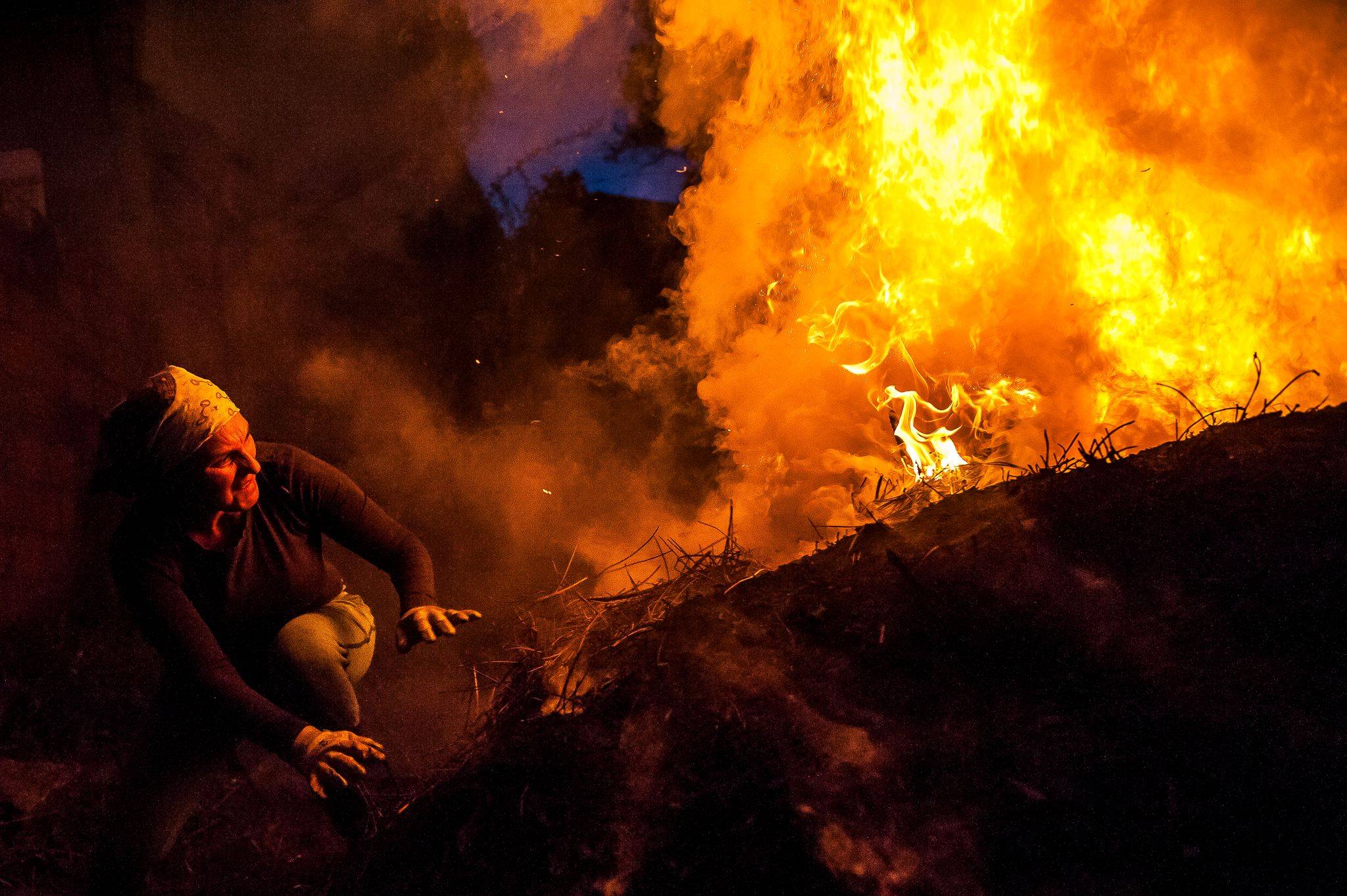
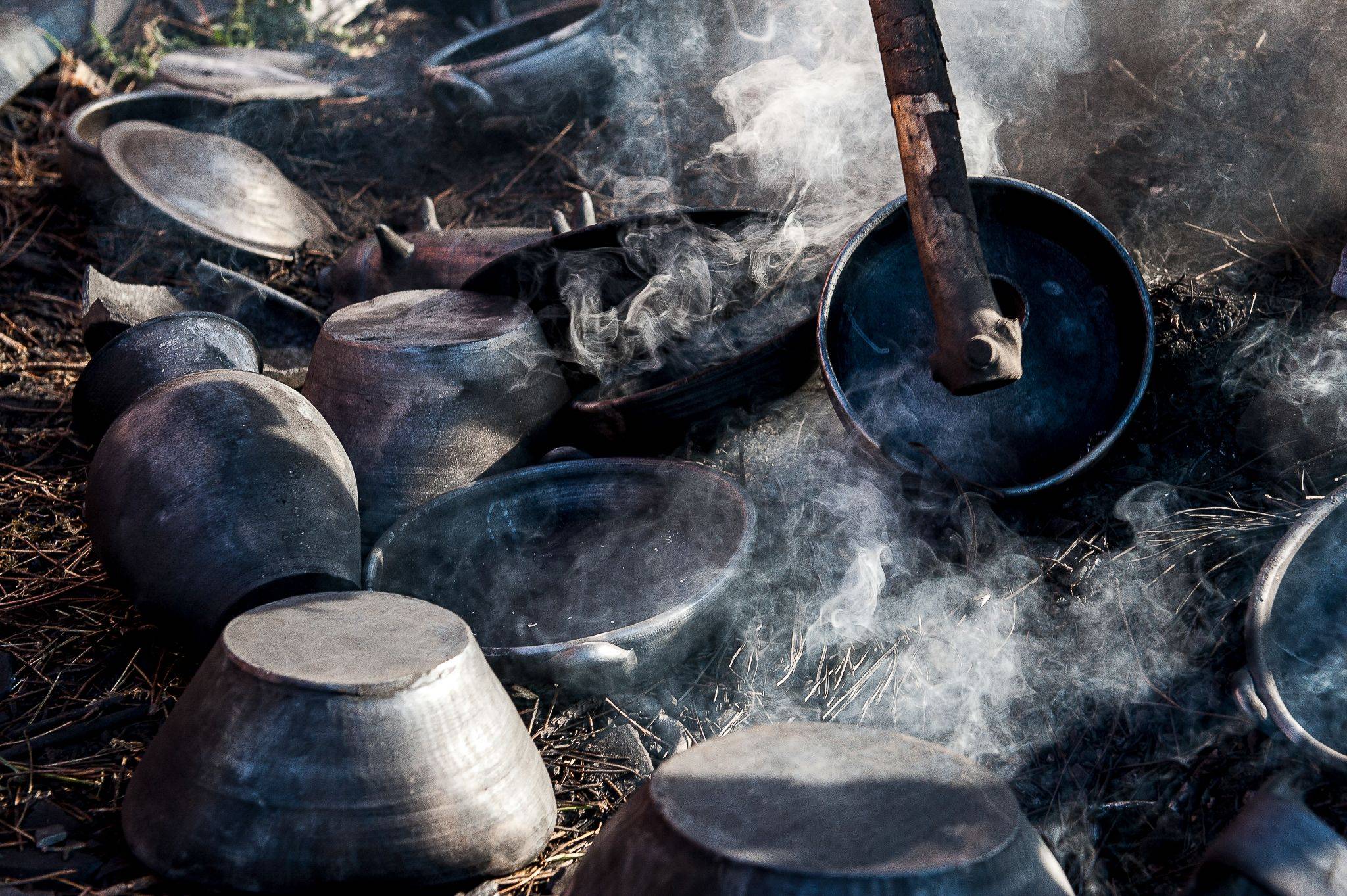
The ‘soenga’ is an open pit in a clearing, the size of which varies depending on the quantity of pottery to be fired in it. It can reach several metres in diameter, with room for firing more than a hundred pieces at the same time. ‘Lasting around two hours, the process has three distinct stages: heating ('aquecimento', to prevent the pottery from cracking due to a sudden rise in temperature), firing ('cozedura') and smothering ('abafamento').’ (IEFP, 2003).
The heating process lasts around 20 to 30 minutes. The estimated temperature at this stage is 450º; however, the entire process is based on empirical knowledge – interpreting the signs, the sound and the colour of the pottery, and the time – which one learns to gauge through repeated practice. The pieces are arranged in a circle, with the openings facing the centre, where the wooden fuel (known as ‘moínha’ or ‘argaço’) is lit (IEFP, 2003).
Once the first fire has gone out, it is time to assemble or arrange the 'soenga', which requires a great deal of expertise on the part of the potter in order to achieve as uniform a firing as possible and prevent the loss of pieces. In some places, the base of the 'soenga' is prepared with a bed of pottery shards to create an air chamber. The pottery is stacked, starting with the largest pieces in the centre, followed by the medium-sized pieces and with small pieces arranged in the gaps. The stack is covered with pine wood and pine needles or straw to ensure good combustion, which lasts around 45 minutes. When the pieces turn orange, this is when the 'soenga' reaches its maximum temperature of around 900º. This is the signal to begin the third phase, the ‘smothering’, in which the kiln is covered with large quantities of pine needles and then with ‘carvão enxuto’ (charcoal left over from the previous firing), compacting it very well to prevent any air from entering and ensuring the pit is completely sealed. For around 45 minutes, the decomposition of the organic vapours produced by the combustion of the resinous combustible materials causes the smoking process, which gives the pottery its black colour. The 'soenga' is dismantled around 24 hours later, so as to allow the pieces to cool gradually. Even so, the pieces are removed while still hot, using a cloth or ‘ranhão’. The pieces are now ready.
Bibliography
- ALMEIDA, Ana João. (2017). Manual de Iniciação à Cerâmica. Edição de autor.
- FERNANDES, Isabel Maria; MOSCOSO, Patrícia; CASTRO, Fernando. (2009). A louça preta de Bisalhães (Mondrões, Vila Real). Museu de Arqueologia e Numismática de Vila Real | Município de Vila Real; Museu de Olaria | Município de Barcelos.
- IEFP – Instituto do Emprego e Formação Profissional. (2003). As Idades da Terra – formas e memórias da olaria portuguesa.
- IEFP – Instituto do Emprego e Formação Profissional. (2019). Rotas da Cerâmica nas Beiras.
- Museu do Douro. (2021). Mãos que fazem Bisalhães.
- PERDIGÃO, Teresa; CALVET, Nuno. (2003). Tesouros do Artesanato Português. Volume III – Olaria e Modelação. Lisboa | São Paulo: Editorial Verbo.
- Processo de confeção da Louça Preta de Bisalhães. In Matriz PCI. http://www.matrizpci.dgpc.pt/MatrizPCI.Web/InventarioNacional/DetalheFicha/410?dirPesq=3 [Consultado em 16-11-2022]