map of Clay
Clay
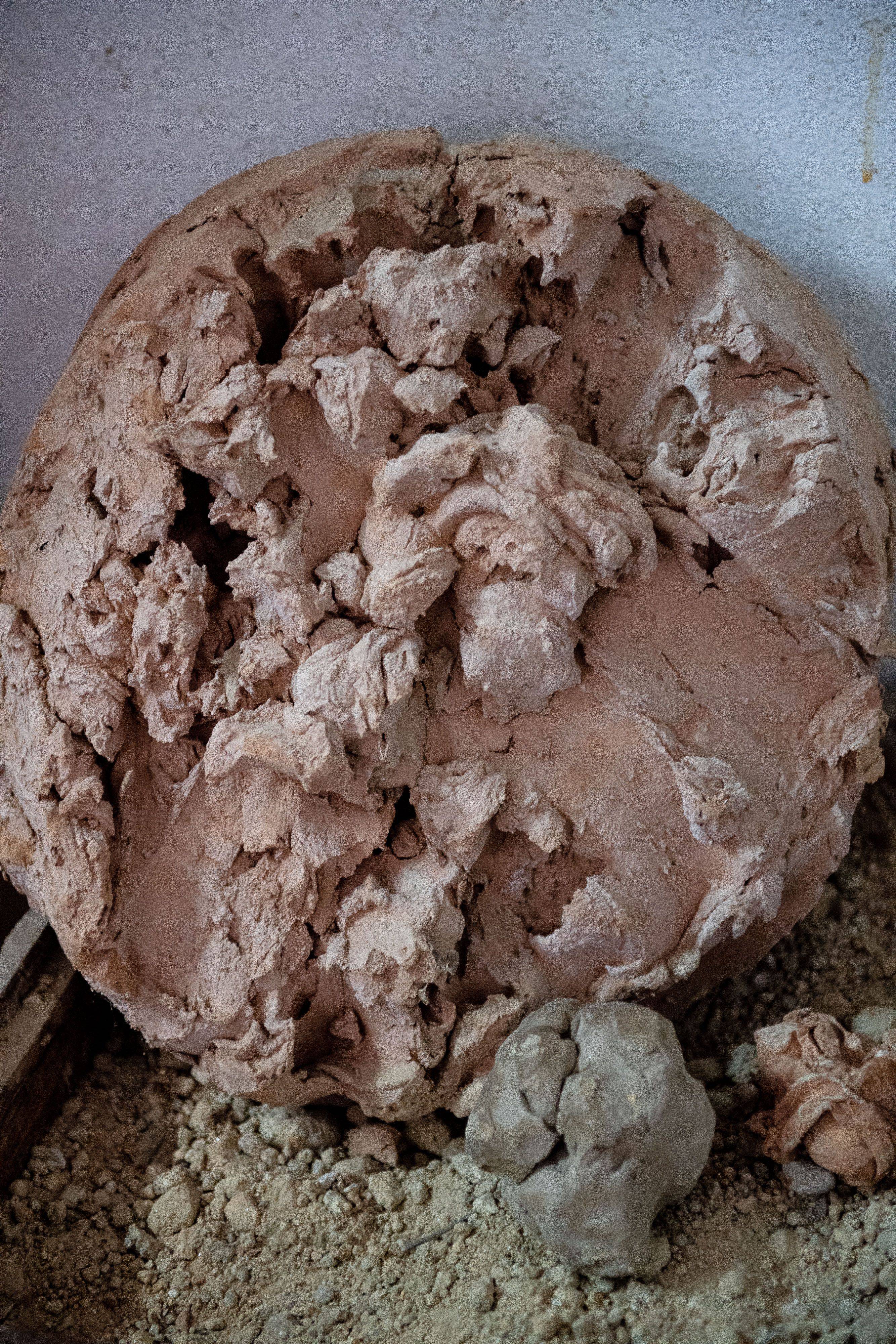
‘Clays are found all over the world and make up the majority of the Earth’s surface. They consist of fine-grained sedimentary rock that originates from the chemical decomposition or erosion of feldspar rocks such as granite or porphyry. Their main constituent elements are silica and aluminium. The combination of oxygen with these elements produces silica dioxide and aluminium oxide, which chemically combine with water to form clay.’ (FRICKE, 1981).
Clay is a formation consisting of minerals known as ‘clay minerals’. As sedimentary rocks that form in aquatic environments (rivers, lakes, lagoons, seas), they generate stratigraphic sequences typical of these and other rocks of sedimentary origin. The common limestone we all recognise in the landscape is a good example. The minerals in these rocks result from the erosion of other rocks, which, through accumulation in strata or layers, form benches in the landscape.
‘Clay originates from the decomposition or metamorphosis of parent rocks, which takes place over millions of years through chemical processes (for example, by carbonic acid) or physical processes (erosion, volcanism, pressure, etc.) that break the rocks down into very, very small particles (measuring around 2 micrometres, or 0.002 millimetres in diameter). These particles are extremely light and are eventually carried by water currents and deposited where the hydrodynamic force (the movement of fluids) is no longer sufficient to move them. Thus, the heavier particles settle first; the others settle according to their weight as they travel along the path; and the lightest settle closer to the surface, in places known as clay deposits.’ (ALMEIDA, 2018). These are identified as secondary clays. Primary clays, such as kaolin, are found in deposits in the very places where they were formed.
Clay comes in a variety of colours, from white, grey, yellowish and reddish, to brownish, purple and even greenish. The differences between different types of clay, apart from colour, lie in their plasticity, shrinkage, porosity, and their behaviour during drying (or hardening) and firing (sintering).
The ‘common clay’ used for red earthenware is characterised by a high iron content and high plasticity. This type of clay is found in numerous deposits throughout the country. Despite the abundant local supply of raw materials, it has become common practice in recent years for many potters and ceramicists to use industrial clays produced in other countries, such as Spain.
Preparation
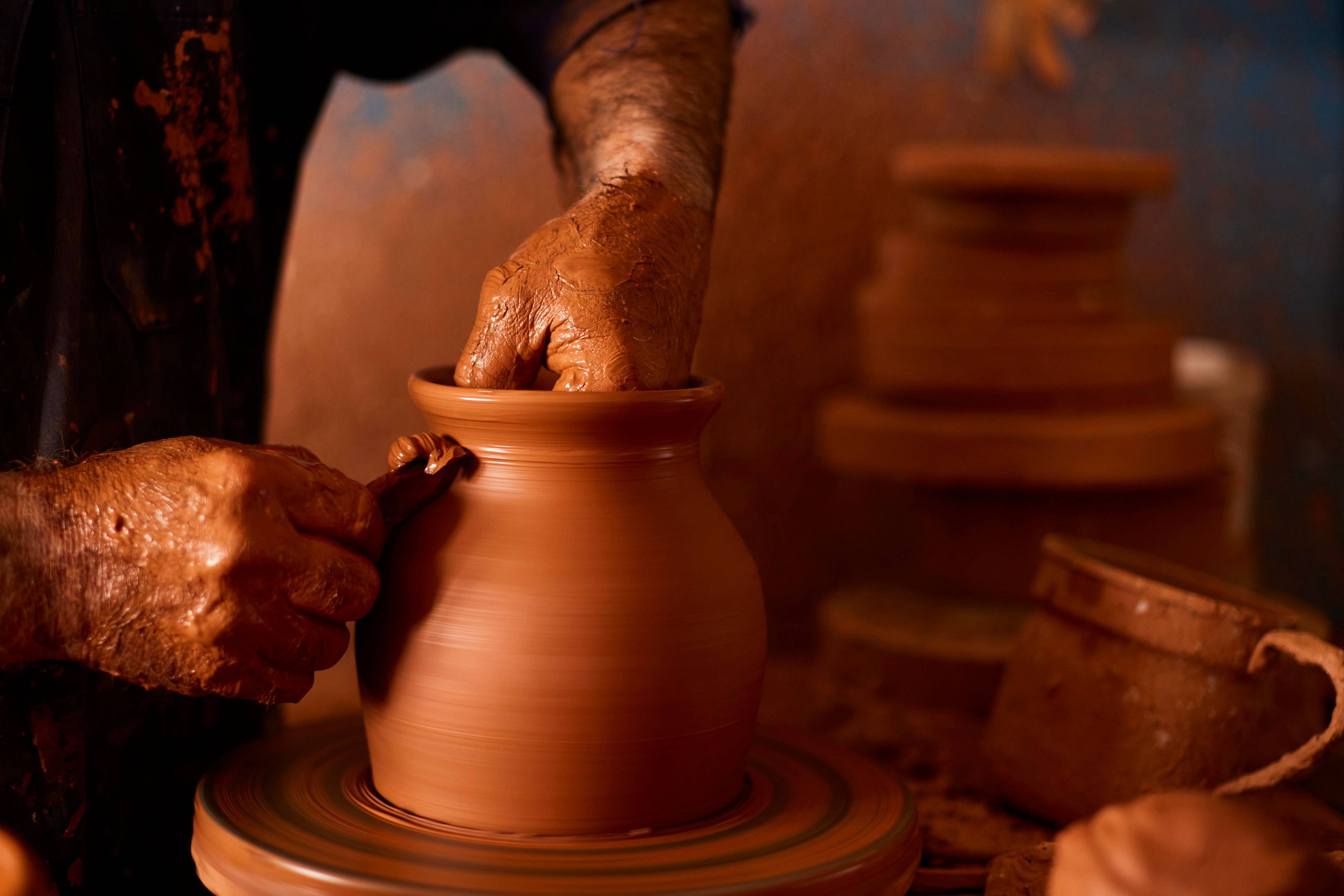
Clay can be extracted from both surface layers and deeper layers underground. Once dug from the ‘clay pit’, the clay usually contains stones or roots which must be removed before use. The method of removing impurities from the clay and the way in which the clay is prepared varies from region to region. However, all procedures involve ‘cleaning’ the clay by separating out the impurities, usually by sieving. The material is then transferred to a container – the name of which also varies geographically, such as a ‘tanque’ or ‘fieira’ – where it is then kneaded. When dispersing in water, the aggregates are separated and the mixture to be worked is homogenised. To alter the consistency of the clay bodies from which the pieces are produced, various types of clays and fillers are often mixed together in order to achieve the best performance from the material, depending on the type of work to be carried out.
Fillers are minerals without plastic properties that reduce the shrinkage of the clay bodies during drying. Typical fillers include: silica, chamotte, sand, molochite, ash, shale and talc.
Fluxing agents such as calcium, sodium, feldspar and boron may also be used, resulting in vitrification or altering the melting point of the clay body.
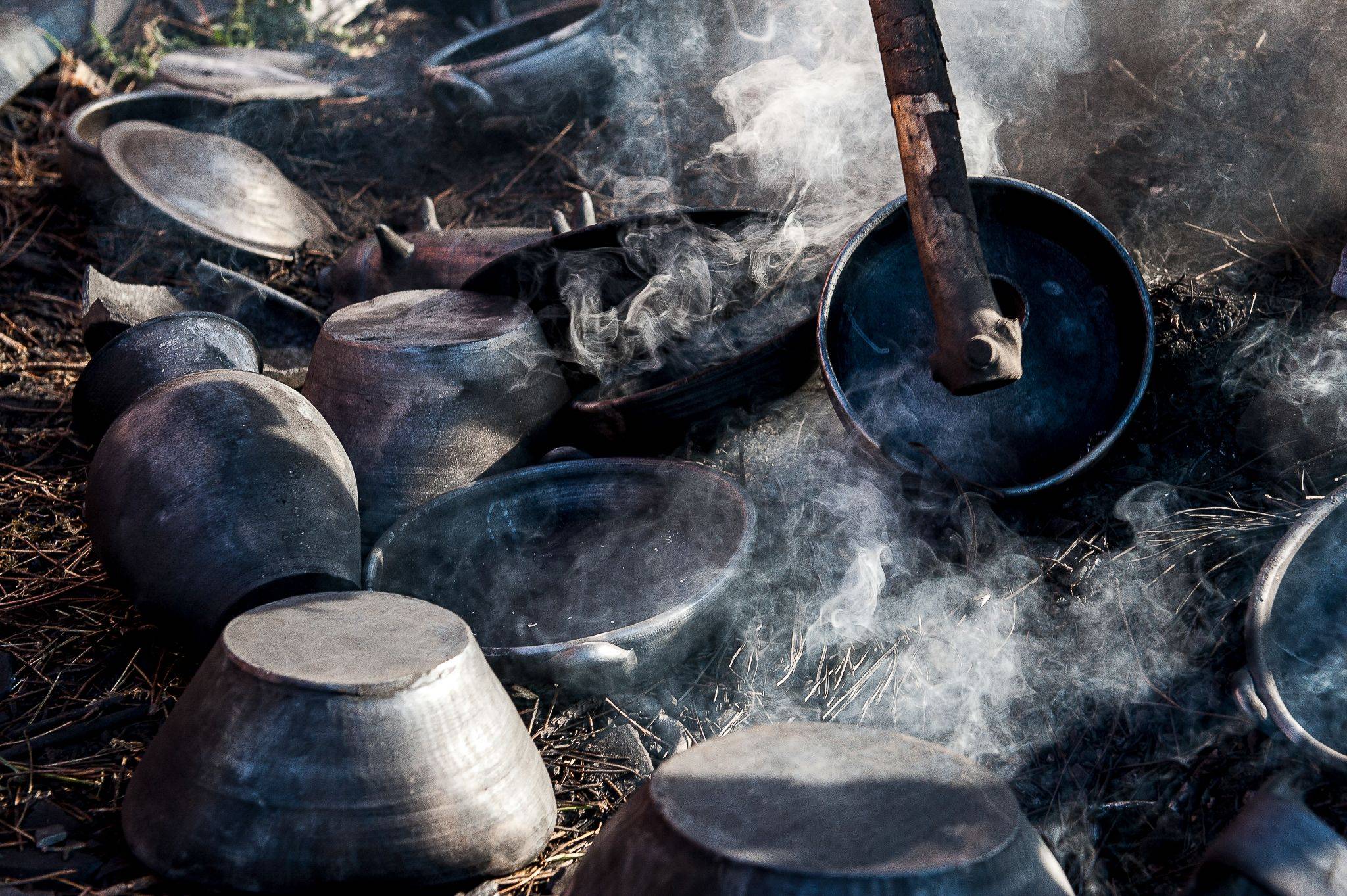
Firing conditions also influence the final results, depending on the type of kiln or firing methods used and the temperature. Various techniques are applied to achieve different finishes, such as using sawdust or firing in an oxygen-reduced atmosphere. In addition to gas kilns, electric kilns, wood-fired kilns of various designs, the ‘soenga’ – firing in an an open pit dug in a clearing – is the traditional method of firing clay. Black pottery is an example of the reduction firing technique, which involves combustion in an oxygen-deficient environment, leaving the pieces with shades ranging from black to grey.
Bibliografia
- ALMEIDA, Ana João. (2018). Manual de Iniciação à Cerâmica. Edição de autor.
- FRICKE, Johann. (1981). A Cerâmica. 2ª edição. Editorial Presença: Lisboa.
- MOREIRA, José Carlos Balacó. (1990). “Matérias primas não-metálicas para o abastecimento da indústria cerâmica” in Cerâmicas nº5, P. I-XII. Caldas da Rainha.