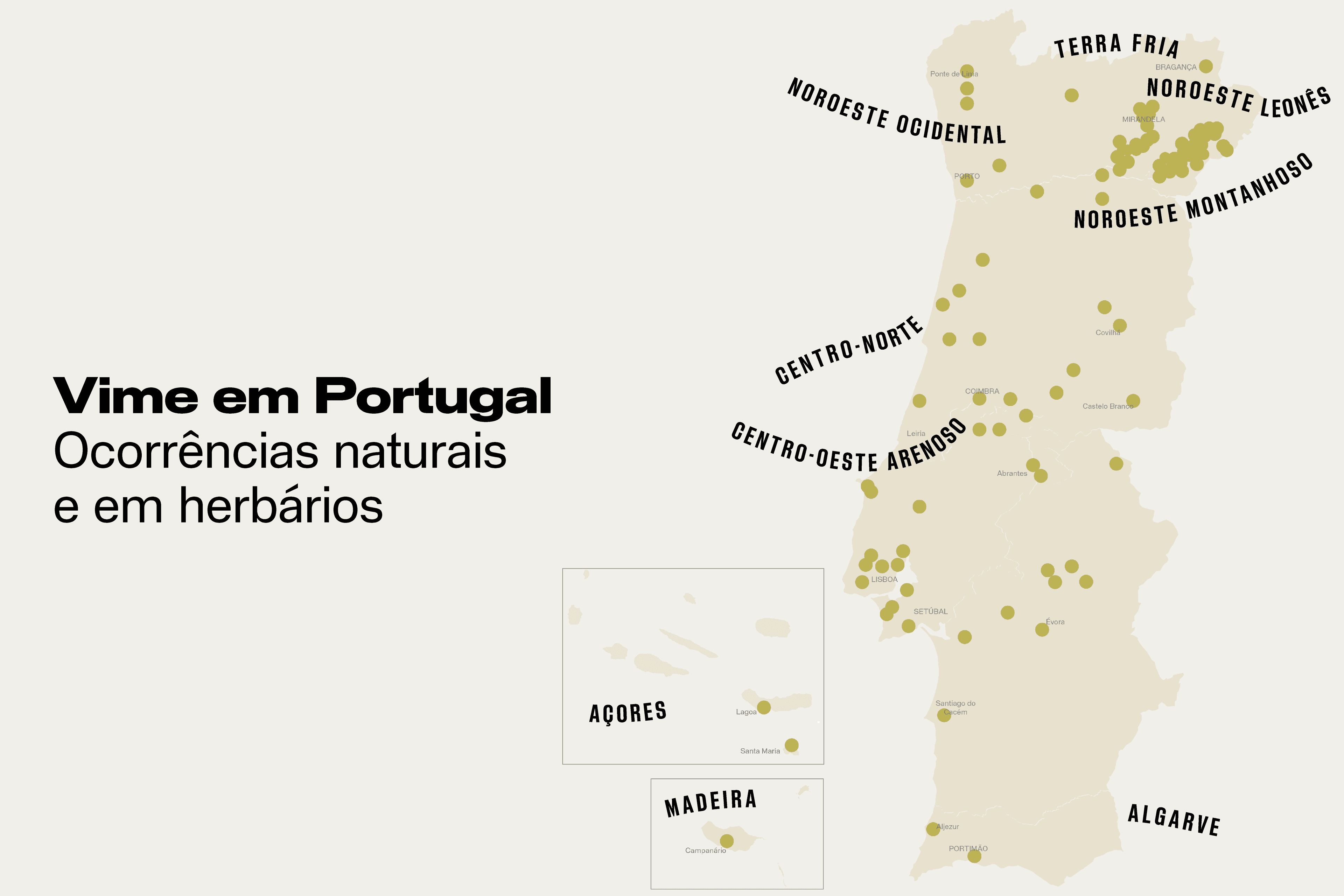
Osier is a plant fibre that comes from willow trees. These trees or shrubs with flexible branches generally grow near water on the banks of rivers and streams. The term ‘salgueiro’ (willow) refers to the general wild plant, while ‘vimeiro’ refers to the plant when it is cultivated for basketry. (Fernandes, 2019). There are several species of willow, with around 70 identified in Europe. In Portugal, 12 native species are found alongside 5 exotic species introduced to the territory, as well as several hybrid varieties, totalling 57.
Identification of the varieties used in basketry on the Iberian Peninsula** indicates the presence in Portugal of the wild willows – Salix triandra L. and Salix purpurea L. – and, among the willows cultivated in wicker groves or wicker plantations, the one most frequently used in basketry is Salix fragilis, which produces wicker rods with a dark reddish hue. Salix viminalis L. is also frequently cultivated, providing straight, long and very flexible rods. The stems of Salix triandra L. are used either stripped of their bark while still fresh (resulting in white rods) or after boiling. Salix purpurea produces very slender rods, which are widely used in fine basketry and more complex work.
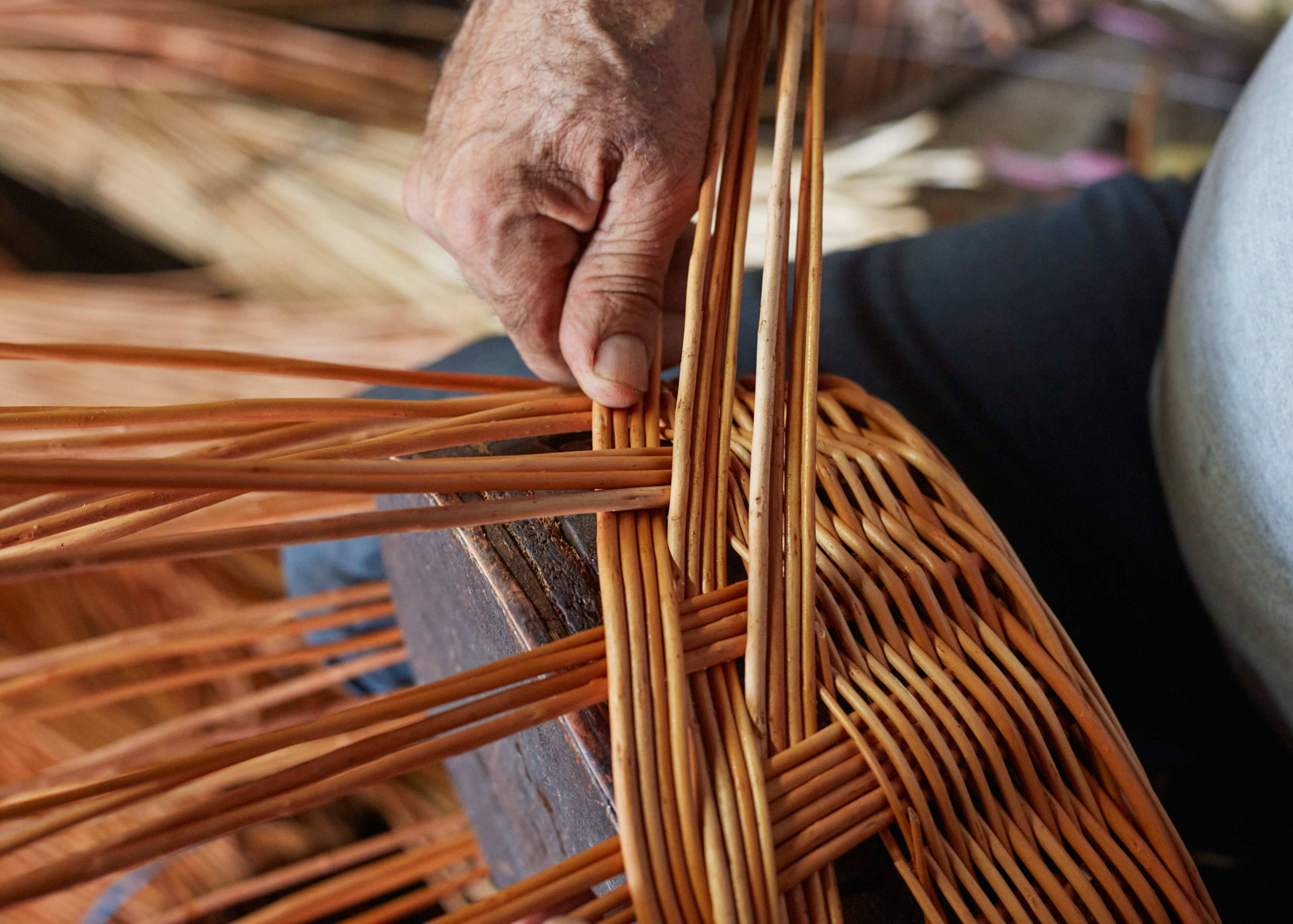
As the common names themselves suggest, this raw material is used in a variety of colours, but also in different lengths and thicknesses.
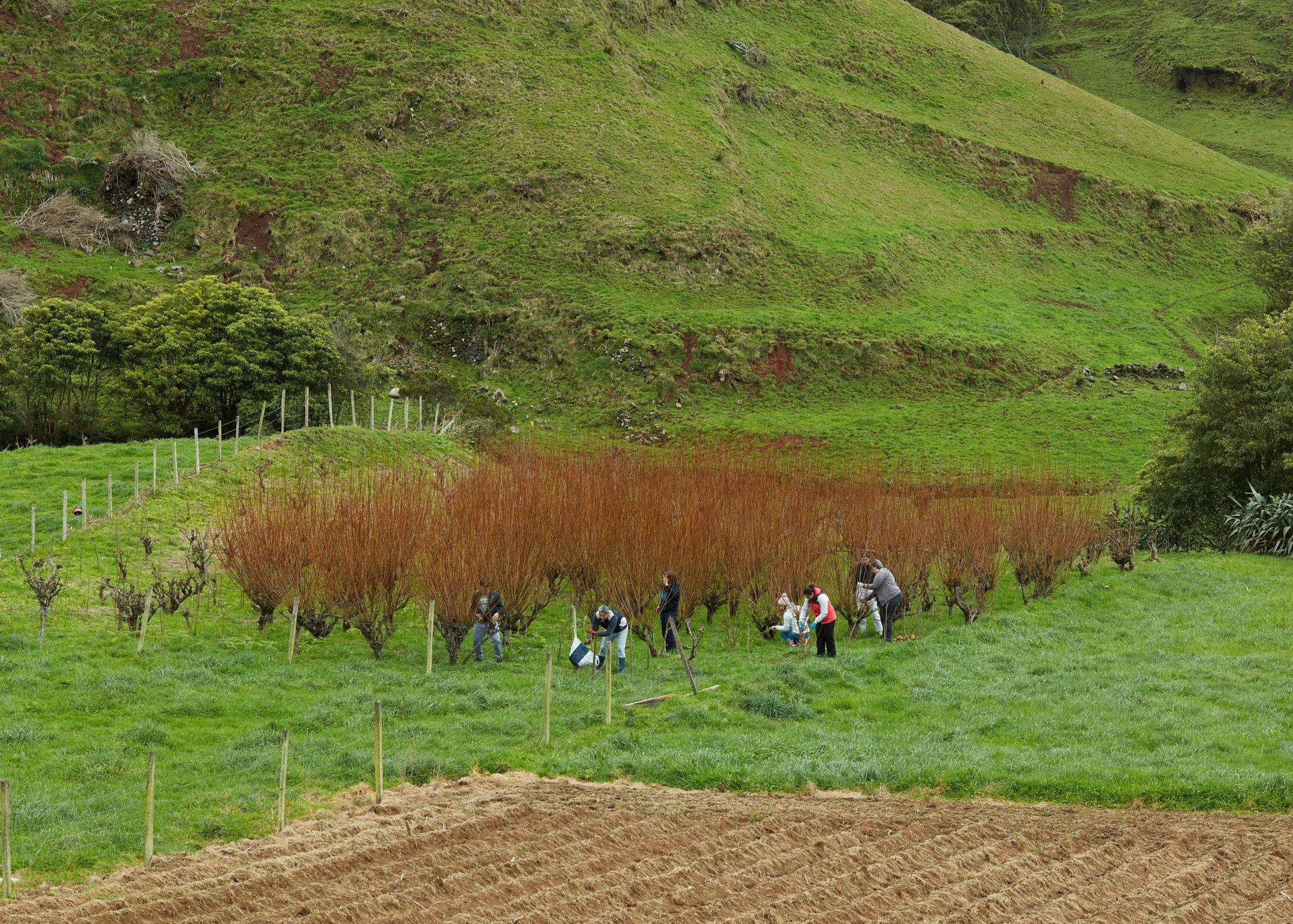
Cultivated wicker is grown in wicker groves (vimeiros), on alluvial soil, in rows of stumps from which the twigs used in basketry sprout. Controlled irrigation of the land is essential for the production of stiff wicker twigs. Excess water can cause the trees to produce very soft rods.
The season for cutting the rods varies depending on the geographical area, between November and February. The annual harvest in Gonçalo, in Guarda, takes place during the month of February, at a time when the rods do not yet contain sap. In Aljezur, in the Algarve, wicker is harvested ‘during the month of August, along the streams. It has to be done this month, when the grass is half-dry, ‘so that it doesn’t get eaten by worms’ (BRANCO and SIMÃO, 1997).
Craftspeople who grow their own willow trees sometimes shape the branches in specific ways, for example, giving them a particular curvature that makes it easier to construct objects such as baskets or furniture.
The willow rods are selected and bundled, to be boiled in large cauldrons of water, simmered over a low heat to impart preservative properties and make the material easier to work with. In the next stage, the drying is done naturally in the open air. During this process, the wicker takes on a dark brown colour. For the raw material to remain white, the material must not be boiled.
Bibliography
- BRANCO, Conceição; SIMÃO, Jorge. (1997). Modos de Fazer. Guia do artesanato Algarvio. Região de Turismo do Algarve.
- IEFP – Instituto do Emprego e Formação Profissional. (2013). Idades Entrelaçadas. Formas e memórias das artes de trabalhar fibras vegetais.
- FERNANDES, Manuel Miranda. (2019). Estudo etnobotânico da matéria-prima usada na cestaria de vime em Gonçalo (Guarda). Guarda Ninhos: Guarda.