
Dwarf palm

Material

Common name(s) in Portugal

Palma, Palmeira-anã, Palmeira-das-vassouras, Palmeira-vassoureira.

Scientific name

Arecaceae - Chamaerops humilis L.

Distribution across the national territory

Northern and southern south-east, with a high concentration in the Barrocal region of the Algarve, particularly in the Loulé area.
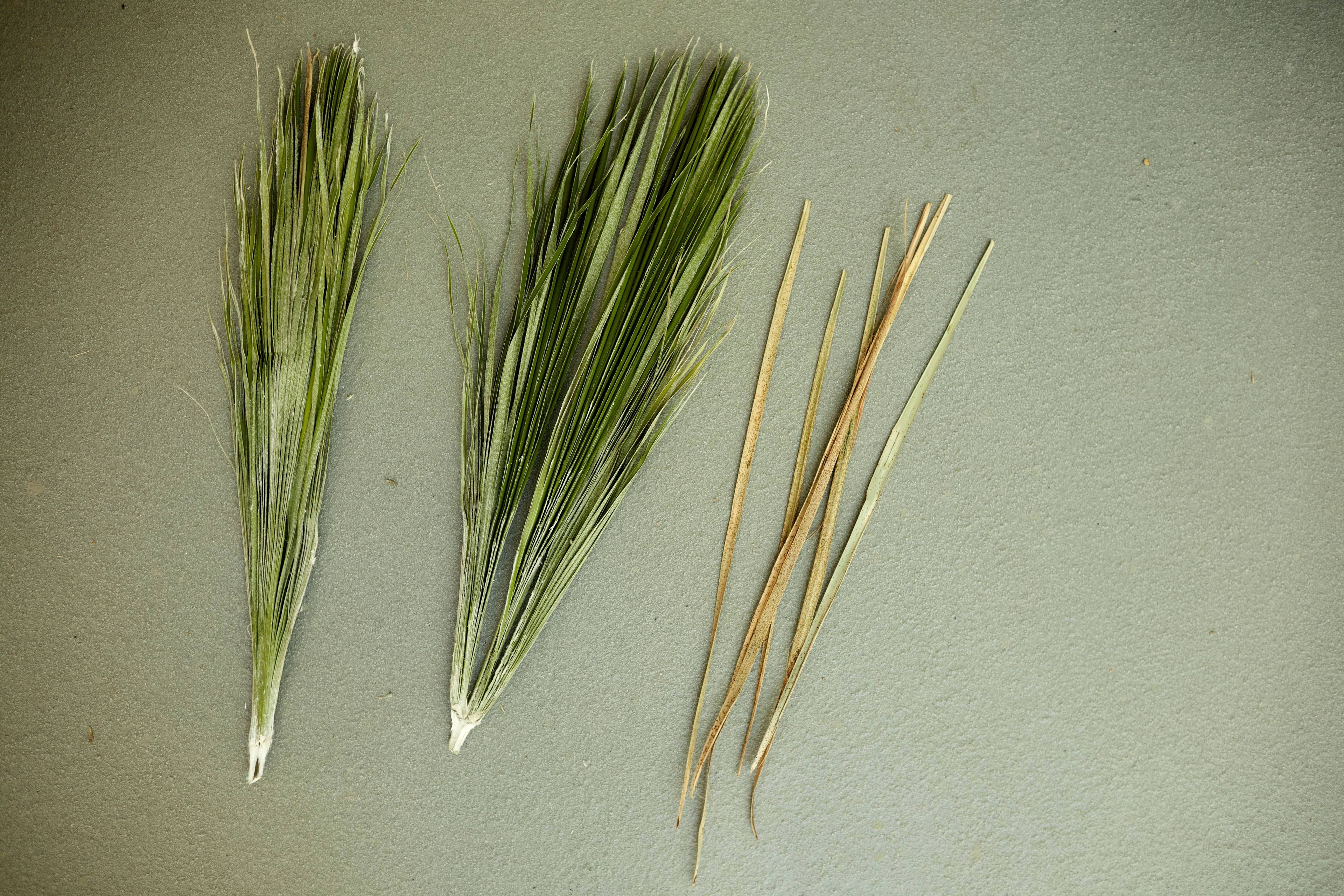
Folhas de palmeira anã. Mercado Municipal, Silves ©DGARTES/Vasco Célio-Stills/2022
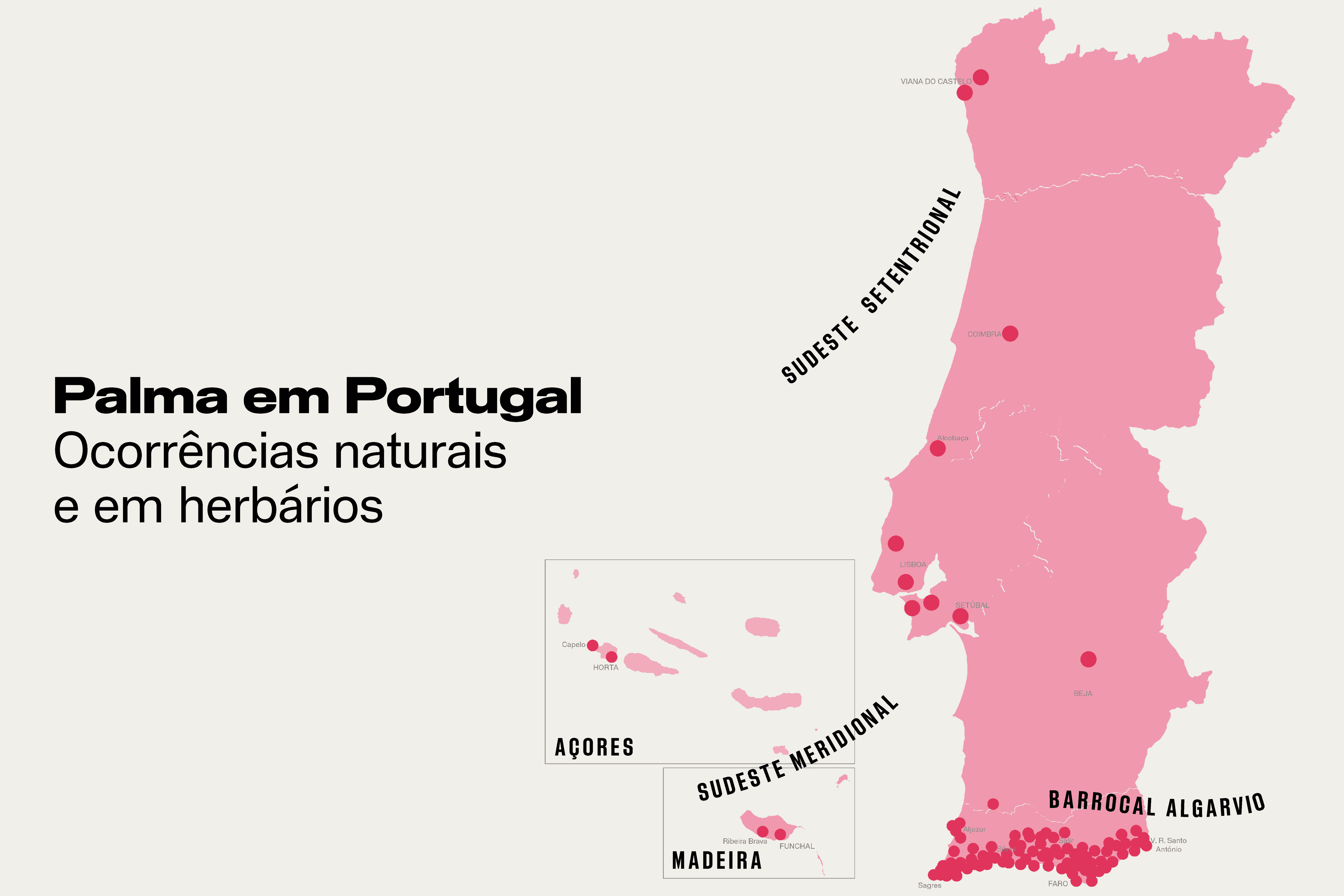
Found in xerophytic scrub and thickets, on sunny, stony slopes, and less frequently on coastal cliffs. Dwarf palm trees grow in dry, stony soils derived from sandstone, limestone or shale, whether acidic or basic. They are very abundant in the limestone soils of the Algarve barrocal (the sub-region of the Algarve situated between the coast and the mountains) and in Andalusia.


Flowering takes place in March and April. Harvesting takes place during the hottest part of the day, between June and September. As it is more tender, the inner part of the leaves is the part which is harvested and from which softer fibres are extracted. The leaves are separated along their natural divisions and left to dry in the sun during the day, while absorbing moisture at night. During the drying process, they must not be exposed to rain, as this causes the fibre to darken and reduces its durability. Drying must take place in the shade if maintenance of the green colour is desired.


Bibliography 

  • ABREU DE LIMA, Rui de. (1993). Cestaria tradicional portuguesa. Feira Internacional de Artesanato. IEFP – Instituto do Emprego e Formação Profissional.
  • ABREU DE LIMA, Rui de. (1997). Artesanato tradicional português. III – Algarve. Lisboa: Comissariado do Lisboa Capital do Artesanato.
  • BRANCO, Conceição; SIMÃO, Jorge. (1997). Modos de Fazer. Guia do artesanato Algarvio. Região de Turismo do Algarve.
  • IEFP – Instituto do Emprego e Formação Profissional / Delegação Regional do Algarve. (2005). Artesanato da Região do Algarve.
  • IEFP – Instituto do Emprego e Formação Profissional. (2011). Artes da Casa. Ambientes singulares.
  • PERDIGÃO, Teresa; CALVET, Nuno. (2001). Tesouros do Artesanato Português. Volume I – Madeiras, Fibras Vegetais e Materiais Afins. Lisboa | São Paulo: Editorial Verbo.
  • SCHMIDT, Luisa (coord.). (sem data). Arte Factos 2. O cesto. As peles. Expresso / IEFP – Instituto do Emprego e Formação Profissional.  
  • OLIVEIRA, Catarina. (2013). “Empreita e cestaria no Algarve a partir de palma, esparto e cana. Antigos saberes, novos fazeres.” in Idades Entrelaçadas. Formas e memórias das artes de trabalhar fibras vegetais. IEFP – Instituto do Emprego e Formação Profissional.

gallery

Learn more

Itinerary: Braided Palm Leaves

The versatility of a southern craft