map of Braided Palm Leaves
Braided Palm Leaves
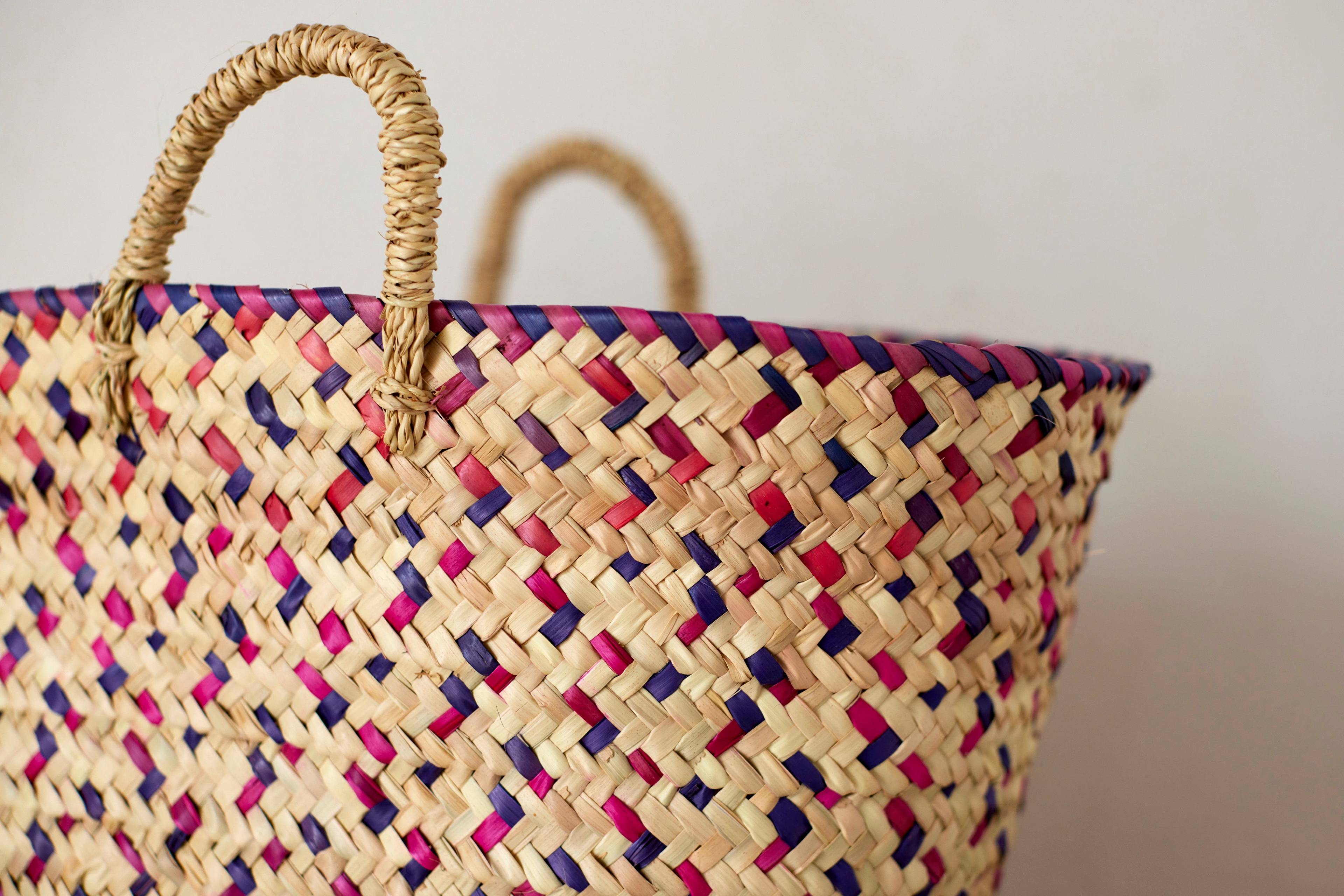
The art of braiding palm leaves – which involves plaiting strips of dwarf palm leaves into long ribbons – is deeply rooted in the material culture of the Algarve. The resulting products were used to craft everyday artefacts in rural life, such as containers for storing and transporting goods and food, household objects, receptacles for use in agriculture and fishing, and personal items.
It was a major economic activity in the Algarve from the 16th century until the mid-20th century, as evidenced by historical records and customs documents, which highlight its importance as an export product. At the same time, mass production also took place, geared towards tourism and the packaging and transport of foodstuffs for export, such as dried figs. ‘References to what was already a thriving industry in 16th-century Algarve appear frequently in various accounts of the region – memoirs, descriptions, chorographies and monographs – from that time onwards.’ (OLIVEIRA, 2013).
The raw material used in this craft (dwarf palm leaves) is abundant and grows wild in the region, which allowed the practice of palm leaf braiding to flourish. Initially, this activity supplemented agricultural work, alongside the production of esparto grass weaving, used for coarser items intended for more demanding tasks, such as work in salt pans or transporting heavy agricultural loads. Palm leaf braiding was carried out mainly by women alongside their domestic chores, with activity peaking during the winter months. The term empreita (braiding) became associated with this craft because it was once paid for in reference to the quantity produced daily – on a ‘piecework’ basis (empreitada) (BRANCO; SIMÃO, 1997).
This practice, which had started on a domestic scale, gradually became professionalised, and by the early 20th century, dedicated spaces had been established for the production and sale of braided palm leaf goods. One of the best-known examples is the Casa da Empreita in Estômbar, founded in 1916 by Margarida Vasconcelos (SANCHO 2011). This initiative became a key player in the production and innovation of the craft, continuously introducing new designs and even receiving an international award in 1926. Another example is Loulé, where braided palm leaf items were used for packaging dried fruits for export, and where the first wholesalers of these handcrafted goods emerged in the second half of the century.
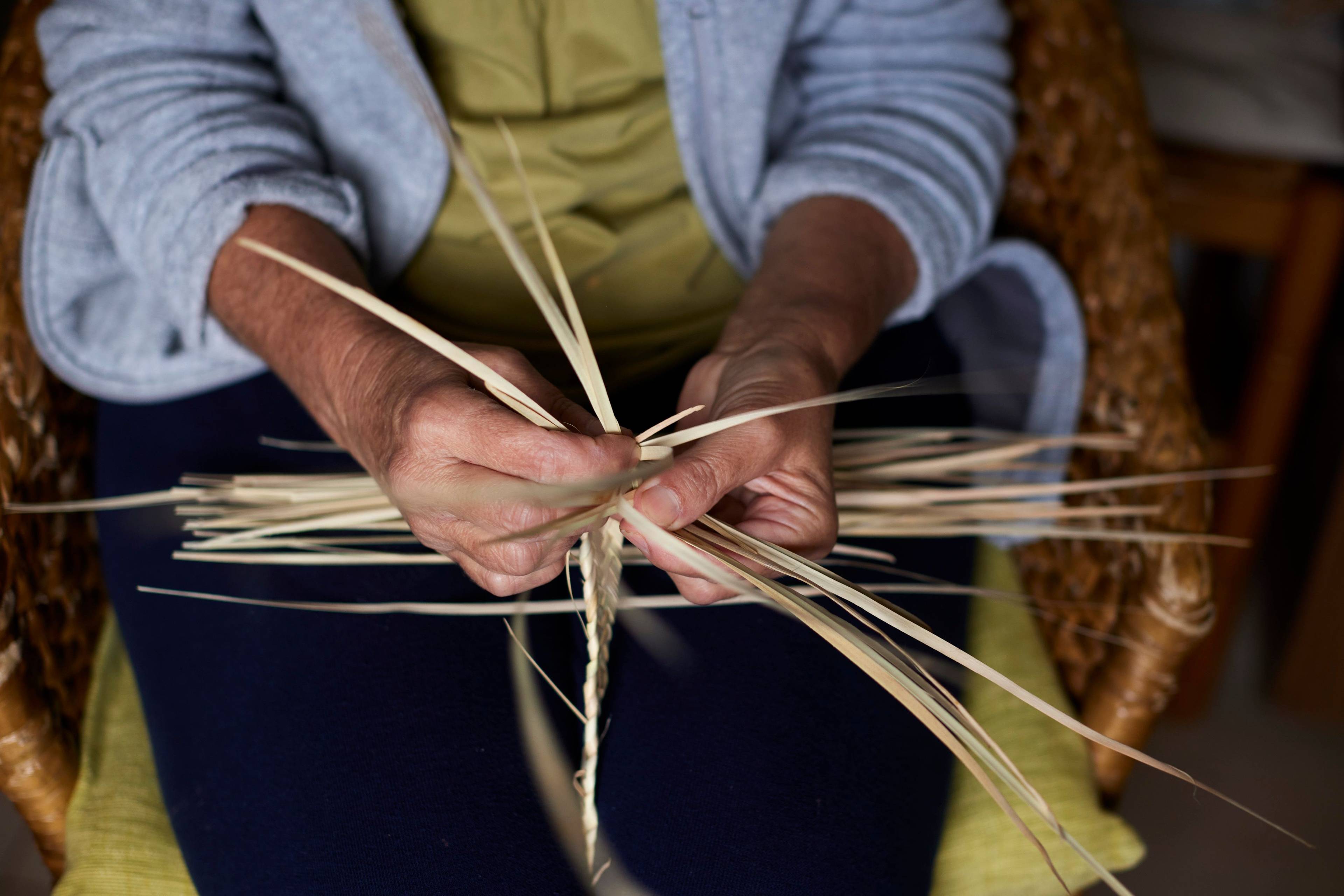
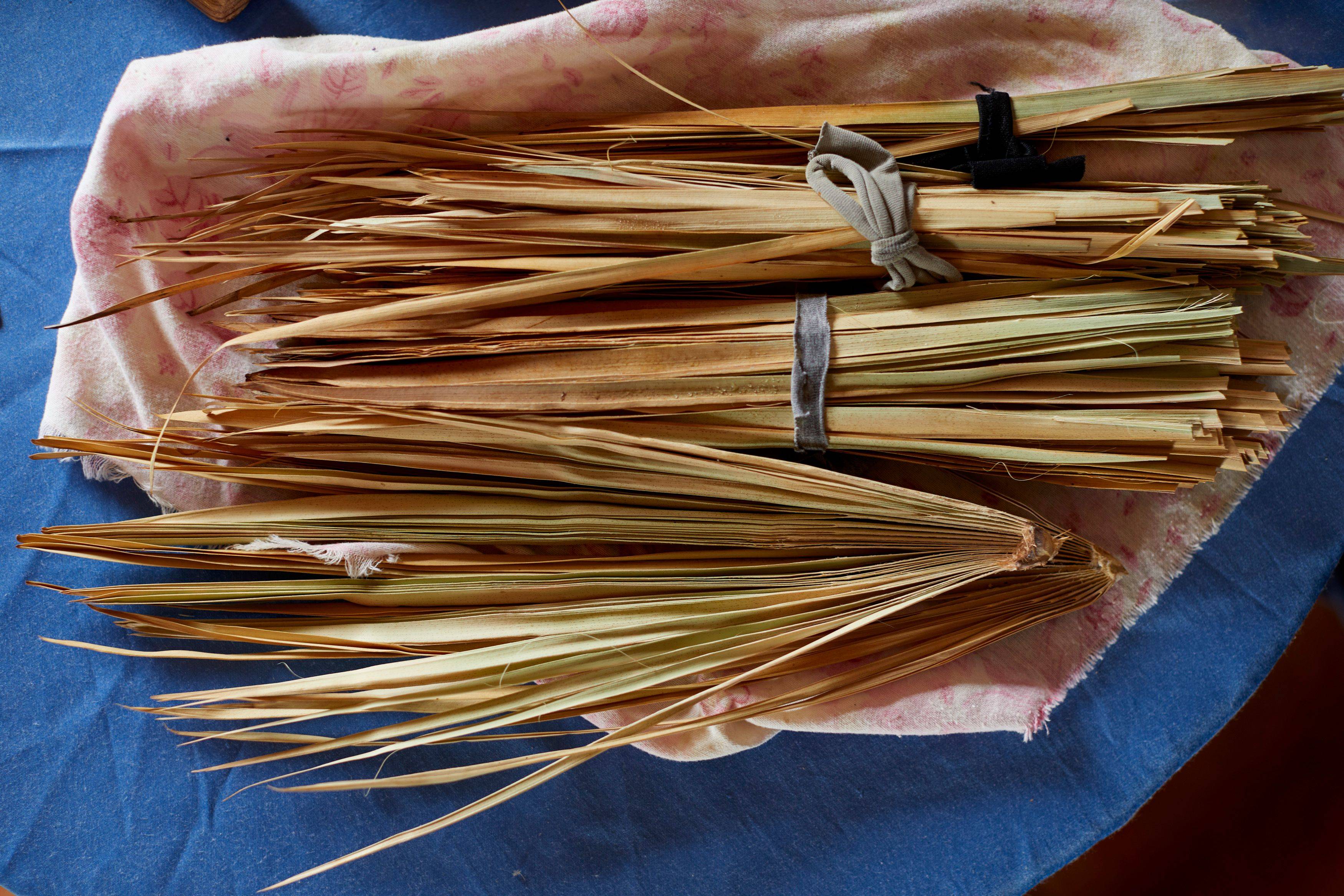
The principal production method has changed little over the years. At the start of the process, palm leaves are air-dried and then ripped along their veins, resulting in strips of varying widths, depending on the intended product. In the braiding process, craftspeople plait interlaced leaf strips to form long bands of various widths. Each band is coiled as it is produced, reaching several metres in length. Traditionally, the bands are sewn together using baracinha or tamissa (types of cord) or palm strips to form the intended object, creating a continuous fabric with a diagonal weave (BRANCO; SIMÃO, 1997).
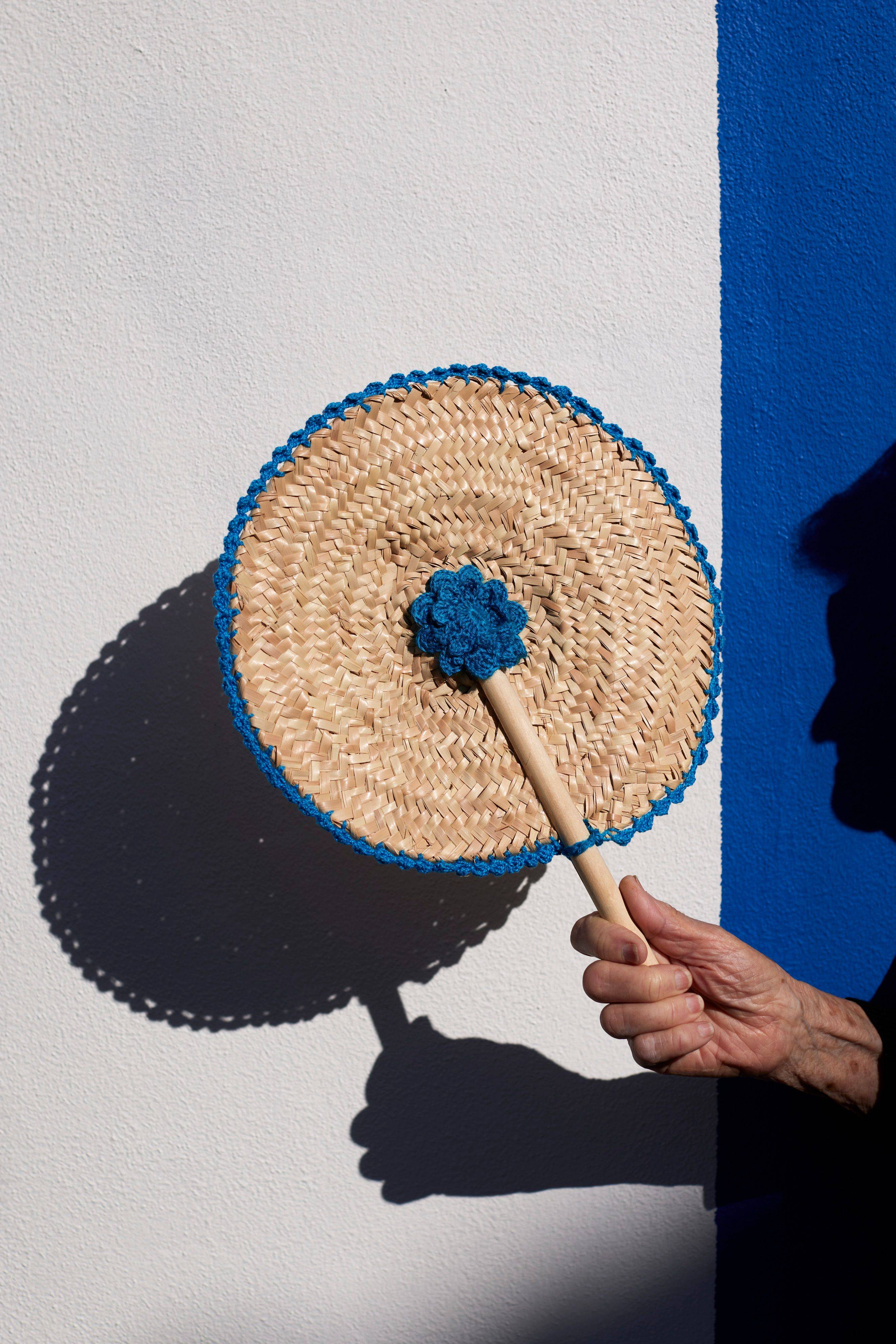
Baskets, mats and brooms are the items most frequently mentioned in historical records. There are also references to condessas (lidded baskets), alcoviteiras (small panniers), baskets for carrying lunch, gorpelhas (panniers for transporting goods on donkeys), seiras (baskets for pressing olives), straw hats, brooms for whitewashing, mats used for milling grain, and fans or mats for stoking the fire. The range of artefacts is vast, often linked to rural life or fishing. Many of these have fallen out of use and are no longer made.
Today, the art of palm leaf braiding is carried out primarily by women, as it always has been. Present-day production, driven by a growing interest in handcrafted goods, is attracting customers once again and encouraging craftspeople to experiment with new designs and uses. This has resulted in new products for domestic purposes, home decoration and personal use. This resurgence is due, in part, to the remarkable practical utility of such items, which are being rediscovered amid a growing environmental awareness and a greater tendency for consumers to opt for eco-friendly choices. Various efforts have been made by public bodies to preserve this craft by establishing dedicated spaces, hosting exhibitions and organising activities to promote arts and crafts.
Techniques
- Embrandecer (softening): Soaking the palm strips in water to make them pliable.
- Branquear or enxofrar (bleaching by sulphur-smoking): While still wet, the finest fibres are exposed to the smoke from a burning lump of sulphur within a closed space. The sulphur smoke removes the top layer of the leaf, making the surface both whiter and porous, so that it can absorb dye. This treatment also makes the fibres more flexible.
- Ripar (ripping): The leaves are torn into strips (fervas) of different widths, depending on how they will be used. The width of the strips determines whether the work is rated first, second or third in terms of quality.
- Tingir or pintar (dyeing): Some palm strips are dyed so that they can be interwoven with bleached strips to create geometric or figurative patterns. This is done by immersing the strips in a hot solution of aniline dyes dissolved in boiling water, followed by a saltwater bath to fix the pigment. The most common colours are bottle green, burgundy and purple.
- Entrelaçar (braiding): A few hours before they are to be braided, the strips are sprinkled with water to moisten and soften them. The palm strips are then braided to create bands, which are identified by the number (always odd) of strips used – typically between 5 and 11 – allowing for bands of any desired length. Split strips are also used to make a fine twisted cord for sewing – known locally as baracinha or tamissa, depending on the specific part of the region. In broom-making, this cord is also used for binding a bundle of leaves together or securing them to a cane handle.
- Coser (sewing): The strips are placed side by side and sewn together using a metal needle and the bracinha cord, creating a diagonal weave. This stitching technique can produce flat designs (for rugs or doormats) or tubular shapes (for containers or handles).
- Embroidery: Decorative wool embellishment (second half of the 19th century).
Bibliography
- BRANCO, Conceição; SIMÃO, Jorge (1997) Modos de Fazer. Guia do artesanato Algarvio. Região de Turismo do Algarve
- IEFP – Instituto do Emprego e Formação Profissional / Delegação Regional do Algarve (2005) Artesanato da Região do Algarve, Faro: IEFP/ DRA
- IEFP – Instituto do Emprego e Formação Profissional (2011) Artes da Casa. Ambientes singulares
- LIMA, Rui de Abreu de (1993) Cestaria tradicional portuguesa. Feira Internacional de Artesanato. IEFP – Instituto do Emprego e Formação Profissional
- LIMA, Rui de Abreu de (1997) Artesanato tradicional português III: Algarve. Lisboa: Direção-Geral de Turismo/ Associação Industrial Portuguesa
- PERDIGÃO, Teresa; CALVET, Nuno (2001) Tesouros do Artesanato Português. Vol. I: Madeiras, Fibras Vegetais e Materiais Afins. Lisboa: Verbo
- SCHMIDT, Luisa (coord.) (1994) Artefactos : o cesto e as peles. Cadernos do Expresso 2. Lisboa: Expresso / IEFP – Instituto do Emprego e Formação Profissional
- OLIVEIRA, Catarina (2013) “Empreita e cestaria no Algarve a partir de palma, esparto e cana. Antigos saberes, novos fazeres.” in Idades Entrelaçadas. Formas e memórias das artes de trabalhar fibras vegetais. Lisboa: IEFP – Instituto do Emprego e Formação Profissional.
- SANCHO, Emanuel (2011) “Uma casa voltada ao Sul” in Artes da Casa. Ambientes singulares. Lisboa: IEFP – Instituto do Emprego e Formação Profissional