map of Crivo Embroidery of São Miguel da Carreira
Crivo Embroidery of São Miguel da Carreira
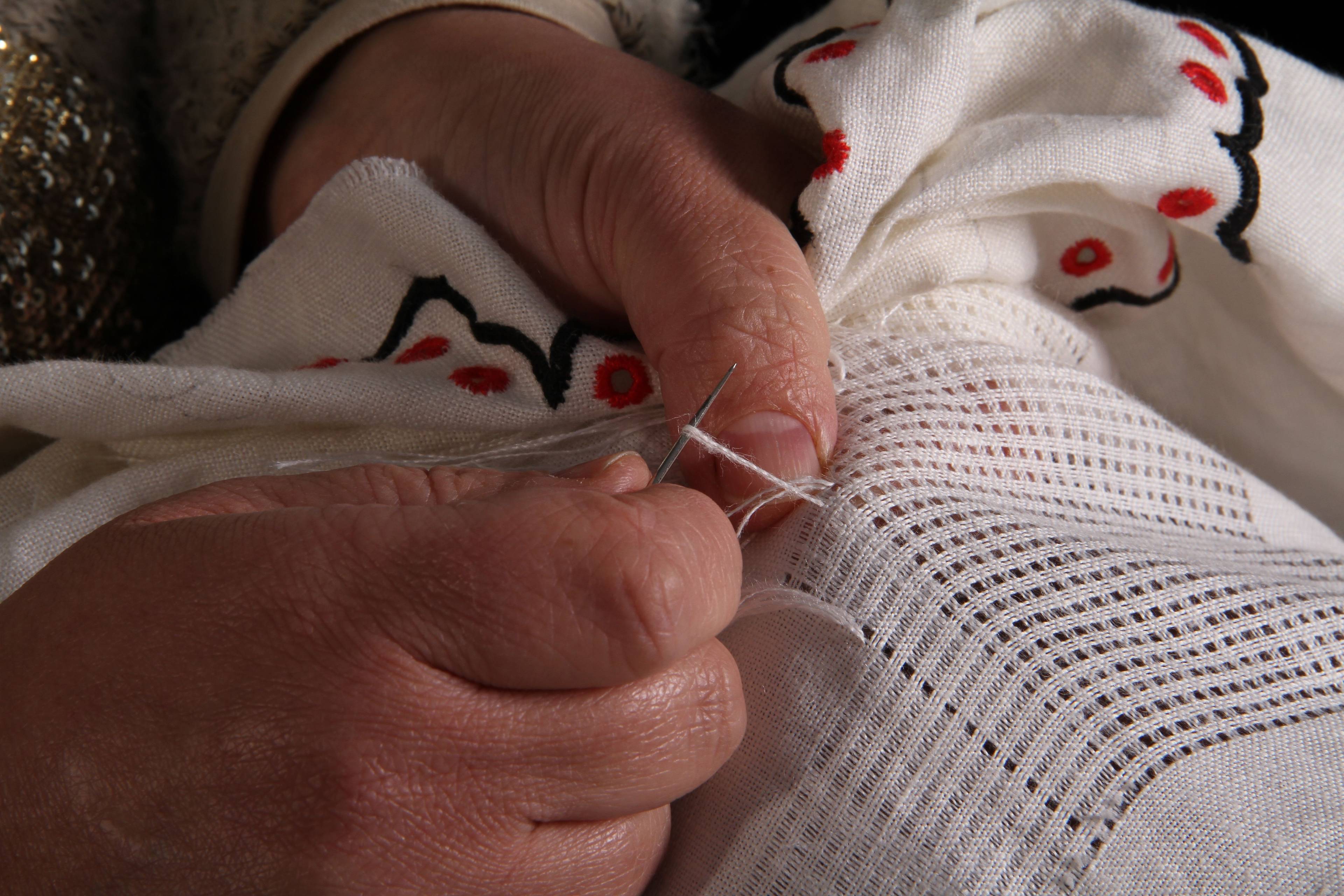
The art of embroidery and weaving is a tradition in the municipality of Barcelos, particularly in the parish of Carreira. The Crivo Embroidery of São Miguel da Carreira is an ancient tradition with distinctive characteristics that set it apart from other forms of Minho embroidery.
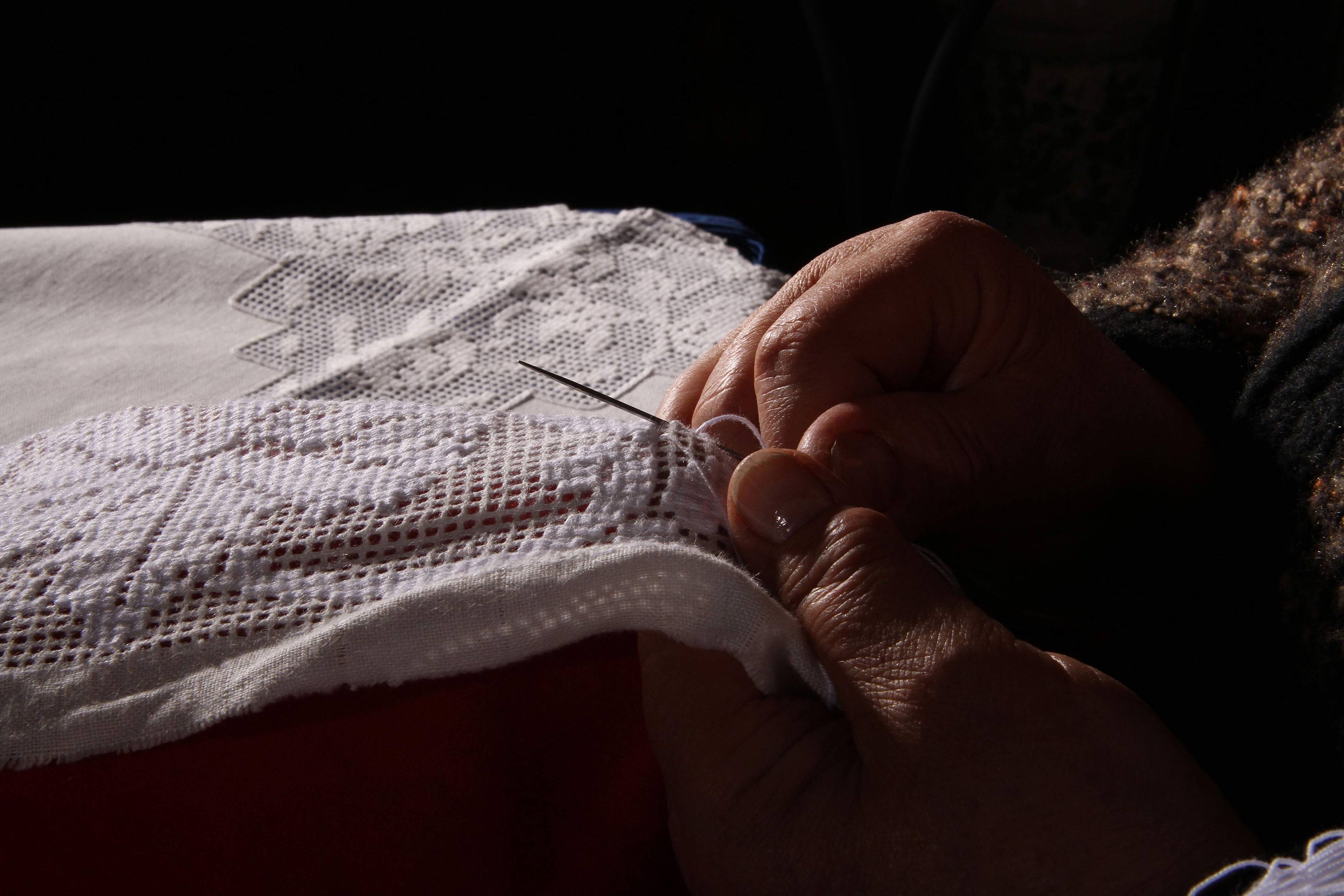
Crivo embroidery is a type of whitework embroidery characterised by its lightness, which is achieved by unravelling much of the base linen to form an open mesh, onto which the motifs are embroidered, resulting in pieces of great and rare beauty (LIMA, 1995: 99).
The linen that forms the basis of this type of embroidery has a very long history in the traditional societies of rural Portugal. It is in Barcelos, in the south-eastern part of the municipality, that ‘Crivo Embroidery’ is still deeply rooted, having been passed down through generations of families, particularly in the parish of São Miguel da Carreira.
The earliest reference to this craft in the parish of São Miguel da Carreira dates from 1886 in the form of a tablecloth created by the embroiderer Ermelinda da Silva Leitão, who died aged 68 on 11 November 1929 in this parish. Over 130 years old, this piece was bequeathed to a niece of the embroiderer and is an extraordinary example of the long history of this craft.
Many women in this municipality learnt to create this iconic embroidery during their childhood from their mothers, friends or neighbours – more experienced embroiderers – who would gather large groups of young women and ladies on their doorsteps. For them, this art was a way of earning extra income that provided some financial relief for their families.
São Miguel da Carreira’s Crivo embroidery gained national and international recognition when a number of craftswomen began taking part in the craft fair circuit in the mid-20th century.
This embroidery, known in Portugal as ‘Crivo’ (lit. sieve), is worked on unravelled fabric, creating a grid-like pattern with a net-like appearance. In this technique, the threads removed from the weft and warp are only cut or ‘shaved off’ once they have all been unravelled. Once the net or ‘grid’ has been created, each small square is finished off with a small stitch worked diagonally, a process known as ‘weaving the mesh’. In addition to the created mesh, this embroidery features a number of needlework stitches and decorative elements, such as: the corded edge stitch, the cutwork stitch, the roll stitch, the satin stitch, eyelets and the spider stitch. Motifs are varied, ranging from floral and botanical designs to geometric patterns.
Crivo embroidery from São Miguel da Carreira is widely used on items for home decoration, such as tablecloths, bed linen sets, christening towels and altar cloths for churches, but it is also applied to items of clothing such as aprons, cuffs, men’s shirts and women’s blouses.
Crivo embroidery is complex and its creation involves several stages. It begins by sketching with a pencil directly onto the fabric, which is then basted. Next, the outer edge is secured by stitching, and the pattern is marked by cutting and leaving threads. The threads are then removed, and the process moves on to the weaving and embroidery stages. The piece is finished once it has been washed, starched and the excess fabric trimmed away with scissors.
Crivo embroidery is mainly carried out on 100% linen fabric, and threads of various thicknesses are used to execute this embroidery technique. Pencils are also used, and sometimes stencils for the designs. To carry out the embroidery more effectively, the embroiderer pins the fabric to a rag pad using head pins.
Currently, São Miguel da Carreira Crivo Embroidery is a certified product and is undergoing a public consultation process for its classification as National Intangible Cultural Heritage.
The Municipality of Barcelos has been carrying out initiatives to promote Crivo Embroidery and encourage its continuation, such as organising training workshops. These activities are carried out by certified embroiderers based in the municipality of Barcelos.
The aim is also to promote innovation in this craft in a responsible and sustainable manner through initiatives that link the use of Crivo embroidery to the world of fashion, creating new decorative motifs and using colours other than the most common ones, while always maintaining a monochromatic approach.
Text provided by Barcelos Municipal Council
Bibliography
- CMB (2010). Exposição “Décadas Marcantes da Moda no Século XX – 1910-1979”
- CUNHA, Manuel Celso da Silva (1961). Minho – Cartaz Típico (Prosa e Verso). Barcelos: Tipografia Gil Vicente, p. 171
- Escola Preparatória de Barcelos/ Centro de Estágio de Educação Visual (1979). Artes e Tradições de Barcelos. Coleção Arte e artistas, n.º 1. Lisboa: Terra Livre
- FIGUEIREDO, Maria do Pilar (2000). Cambeses e o seu couto. Apontamentos para uma monografia. Barcelos: Papelmunde, p. 15-111
- FONSECA, Teotónio da (1987). O Concelho de Barcelos Aquém e Além-Cávado, volume II, p. 91-98
- Grande Enciclopédia Portuguesa e Brasileira, vol. IV. Editorial Enciclopédia, p. 913
- LIMA, Eglantine Morais, LIMA, Rui de Abreu de (1995). Artesanato Tradicional Português: Costa Verde, Vol. 1. [Lisboa]: Direcção Geral de Turismo/ Assoc. Industrial Portuguesa, p. 26
- MAGALHÃES, M. M. Calvet de (1995). Bordados e Rendas de Portugal. Coleção Educativa, série N.º10. Lisboa: Vega
- PIRES, Ana et al. (2009). Fios, Formas e Memórias dos Tecidos, Rendas e Bordados. Lisboa: IEFP, p. 151-159
- VIEIRA, José Augusto (1886). Minho Pitoresco, 2 Vols. Lisboa: Livraria António Maria Pereira