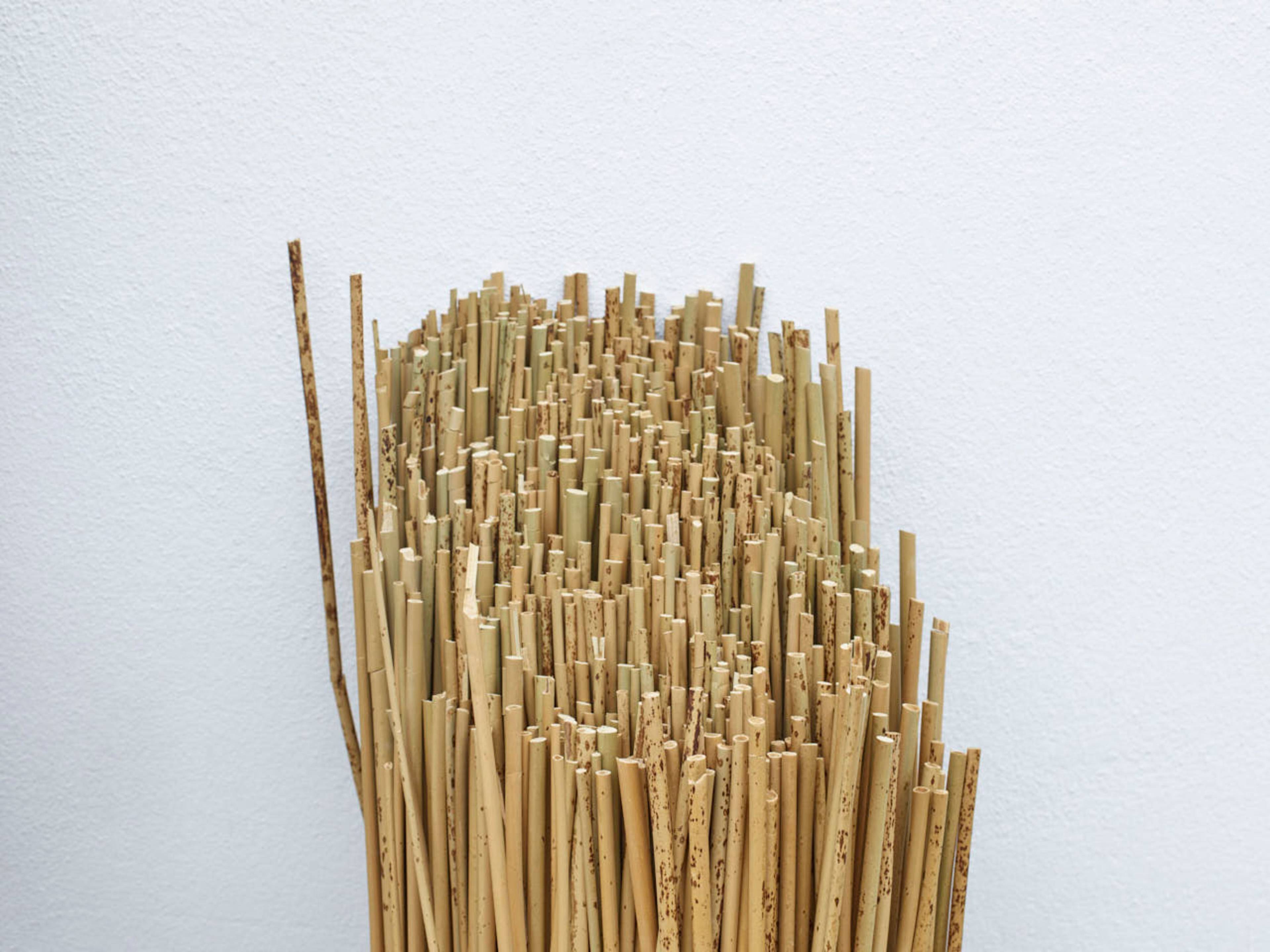
Bulrush is a species of giant reed, similar to the cattail or marsh reed. It has ornamental potential due to its size, robustness and the beauty of its inflorescences (the structure of the plant itself). It helps to control erosion in riverside areas and purify water.
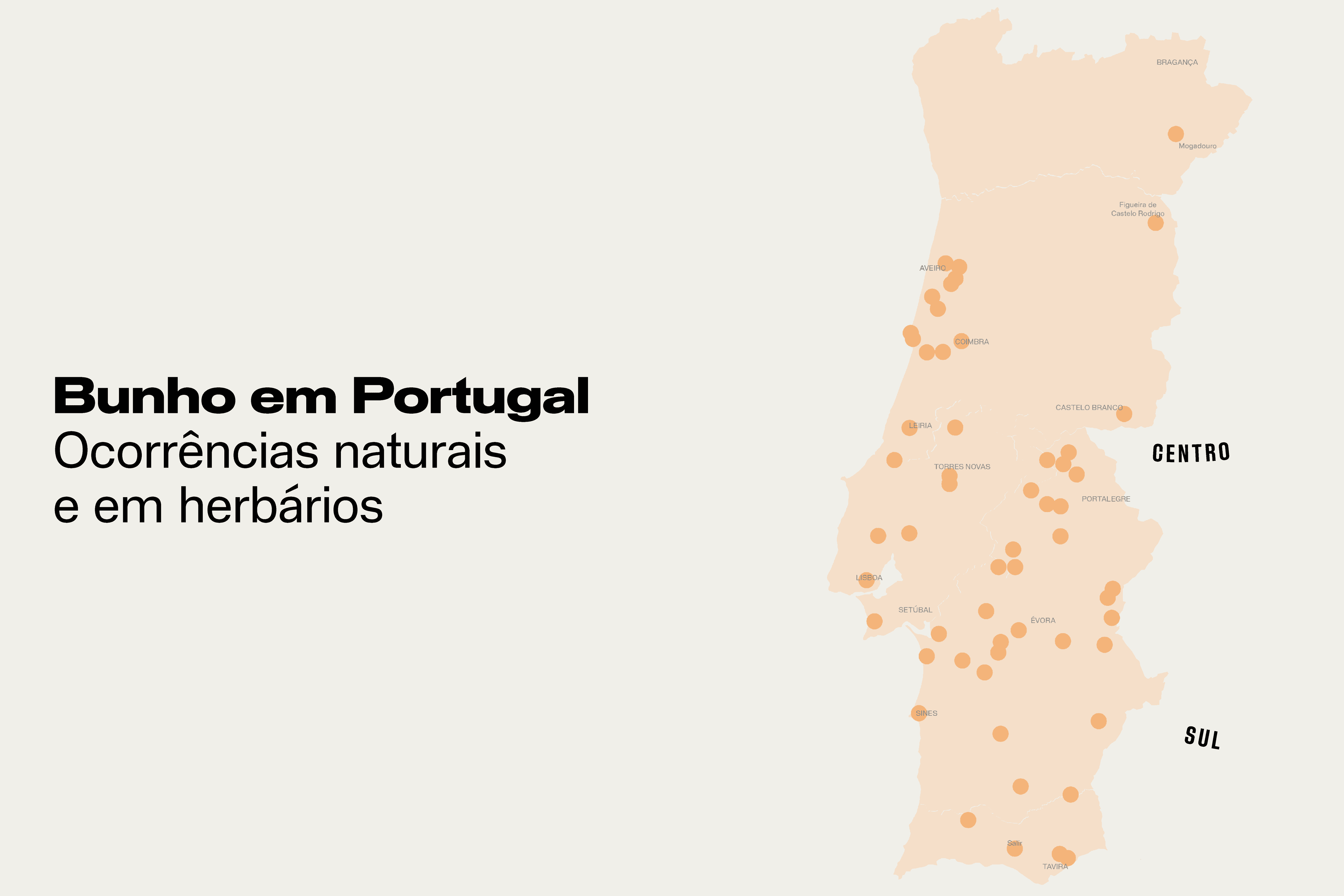
It grows in dense clumps, ‘on the banks and, more rarely, in the beds of ponds, reservoirs, ditches and lentic watercourses (still waters). Preferably in fresh, permanent water.’ (Flora-On Mainland Portugal website). A perennial grass, it has round, green, smooth, leafless stems. It can reach a height of 3 metres. It thrives in permanently flooded environments, but can also withstand droughts. The flowers appear in loose clusters of oval spikelets of a brownish-red colour, near the top of the stems. Flowering takes place between June and September. Harvesting takes place in June, July and August, while the leaves are still green.
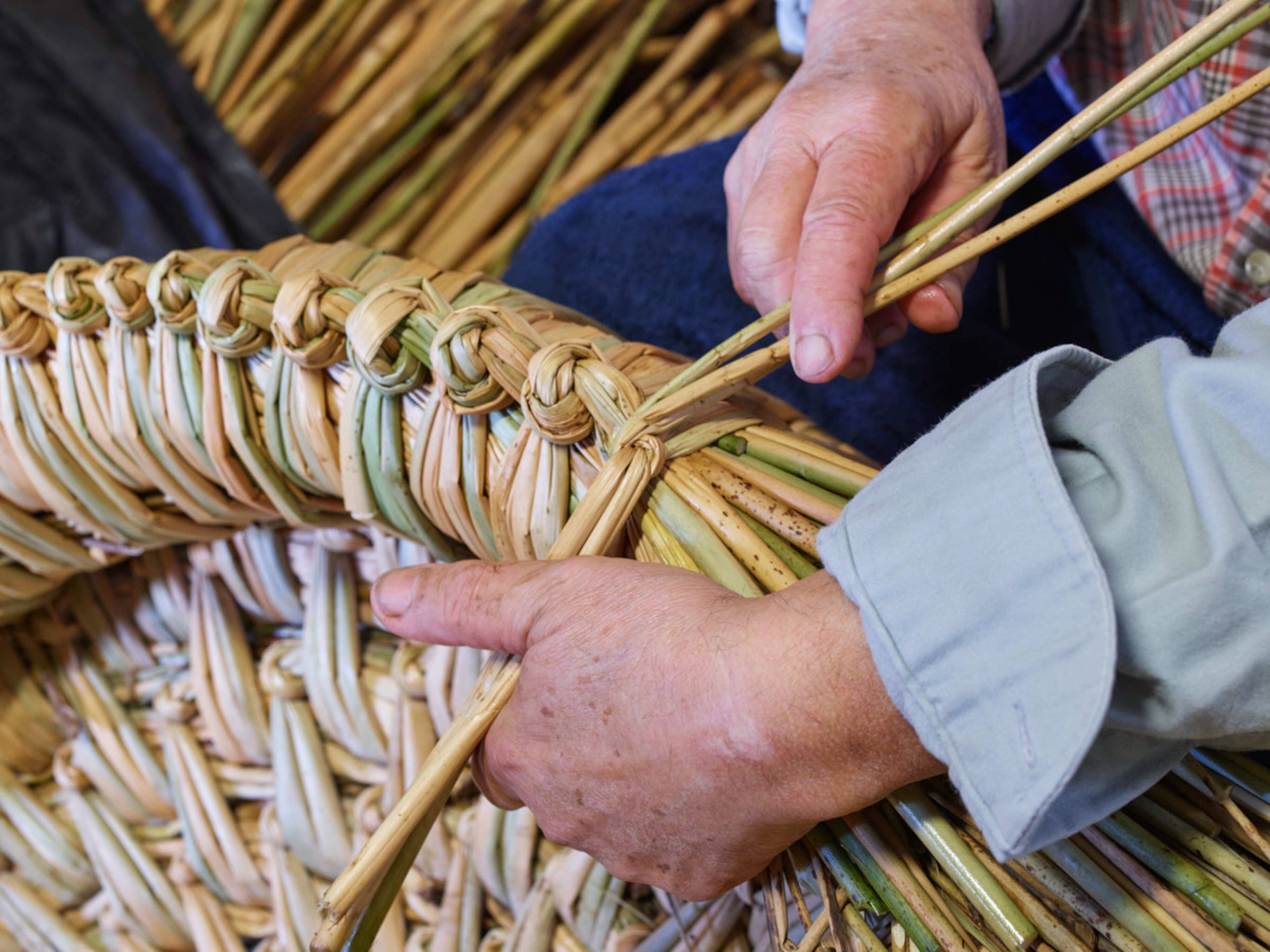
The bulrush is cut using sickles or scythes. After cutting, it is spread out on the ground, where it dries in the sun on both sides for a few days. It is sorted and prepared into bundles tied with twine, also made from bulrush, and is then ready to be worked by the craftsman. During the drying process, it must not be exposed to damp or rain. It must be stored in a very dry place to prevent mould from forming, as it takes around six months to lose all its moisture.
It is essential to master the drying process and know how to recognise the right stage so that the material is neither too soft (which makes production difficult) nor too dry (as it becomes brittle and causes injuries to the hands during production). When dried, bulrush undergoes a slow organic degradation, with the fibres resisting traction for several years.
Bibliography
- Águila Alonso, M. G. (2021). “Para una colaboración horizontal entre diseñadores y artesanos mexicanos” in Economía Creativa (14), 222-255.
- IEFP – Instituto do Emprego e Formação Profissional. (2013). Idades Entrelaçadas. Formas e memórias das artes de trabalhar fibras vegetais.
- MURTEIRA, Jorge. (2022). Artisans' Voices #1 – Arménio Varela e a origem do mobiliário de Bunho. Vídeo: https://vimeo.com/721995858
- O Bunho – Uma Homenagem ao Mestre. http://obunho.blogspot.com/ [Consultado em 14 de Novembro de 2022]
- SANTOS, Estrela de Assunção Branco dos. (2015). Os Artefactos em Bunho. Manufaturas Populares na Zona do Bairro Ribatejano. Santarém: Câmara Municipal de Santarém.
- Esteiras de Bunho. Website da Câmara Municipal de Coimbra. https://www.cm-coimbra.pt/areas/visitar/ver-e-fazer/artesanato/esteiras-de-bunho [Consultado em 14 de Novembro de 2022]
- Schoenoplectus lacustris. In Flora-On Portugal Continental. https://flora-on.pt/?q=Schoenoplectus+lacustris [Consultado em 15 de Novembro de 2022]