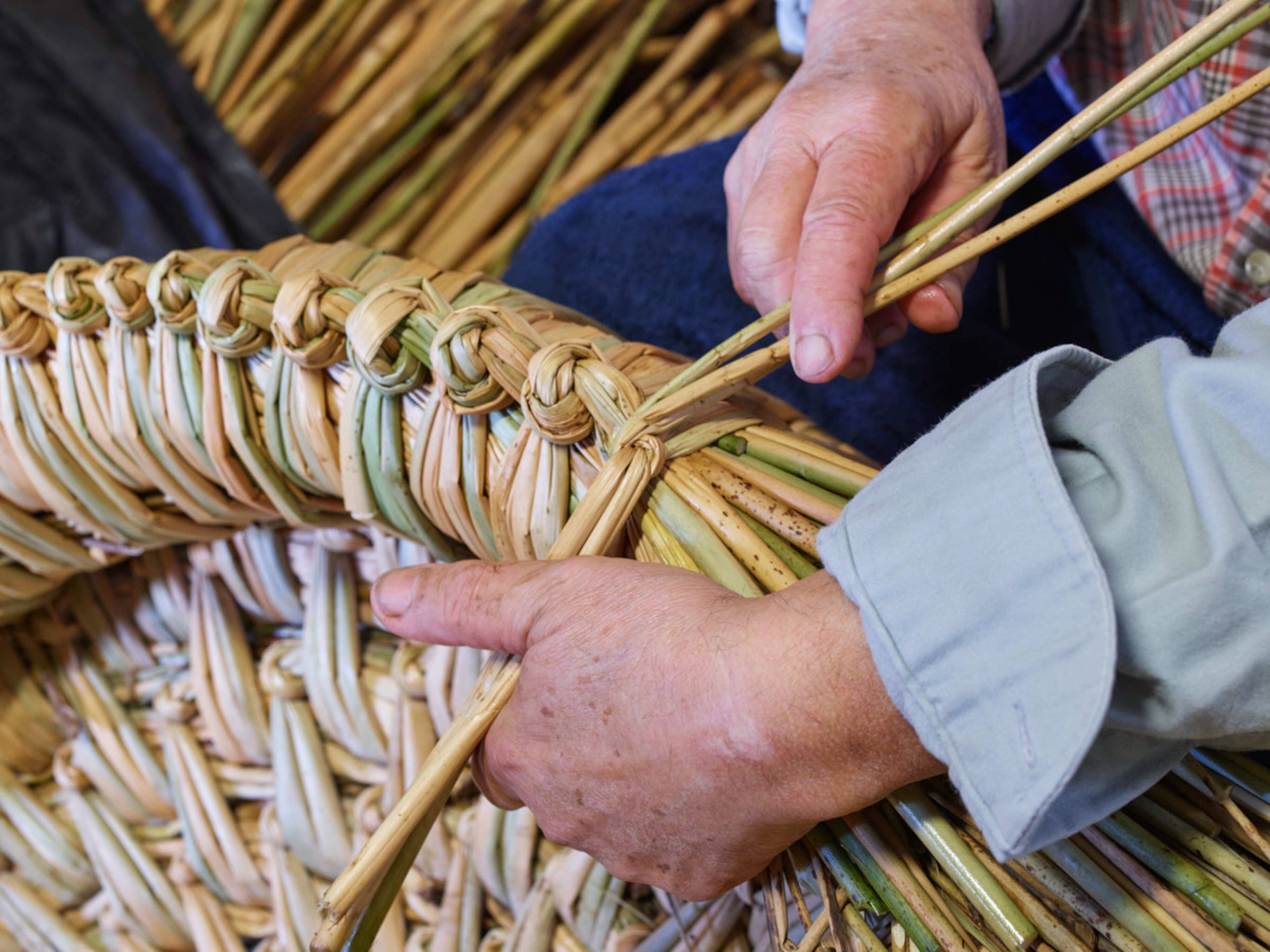
The bulrush plant grows in abundance and is easily accessible in areas where it occurs in the wild. It is softer and more malleable than other plant fibres, while also resistant to wear and tear, resulting in highly durable products. These characteristics make bulrush an ideal material for creating comfortable benches, stools and chairs. Working with bulrush is demanding, starting with the preparation process – from harvesting and drying to the actual weaving of the fibres. To make the fibre pliable, it is soaked thoroughly the day before so that it does not snap or splinter. The upper part of the plant, used for stuffing, is sprinkled merely with a few drops of water to soften it. Once dried and ready for use, the bulrush stems are cut in half. The lower part, which is wider and stronger, is used for weaving, while the thinner upper part (the enchume) is used to stuff the crafted item (PERDIGÃO, 2013: 65-75).
The craftsperson – known as a bunheiro or tanheiro – usually sits on a low stool, holding the object they are working on between their legs. Typically, they place the bulrush strands to be woven on one side, and the enchume on the other; the latter is used to form a spiral known as a caracol (snail) or chouriço (sausage). A mancheia (handful) is the precise amount of bulrush required to form the filling for the coils, which are woven and layered to create a tanho (the traditional name for bulrush stools and benches). The craftsperson keeps a container of water nearby to keep the ends of the strands and the enchume moist. The water also serves to keep their hands wet, making it easier to smooth the bulrush as they work.
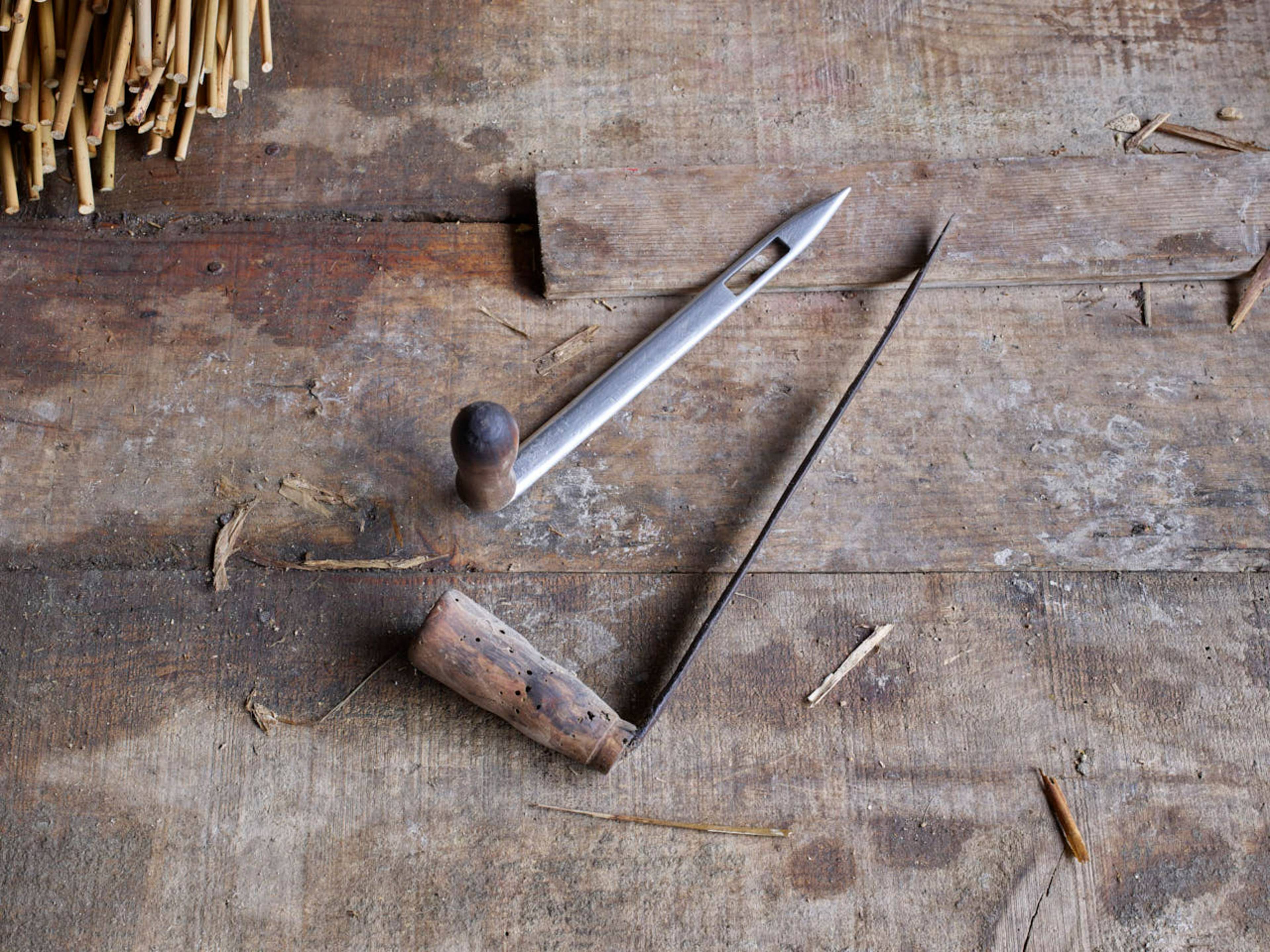
The instruments and tools typically used include a knife (for trimming excess bulrush and cutting away imperfections upon completion of each piece), a pazelha (a wooden wedge used to push excess straw into the body of the piece), a needle (steel with a wooden handle, and an eye for threading the bulrush through) and a watering can (for moistening the bulrush) (O BUNHO, CMS).