map of Almalaguês Weaving
Almalaguês Weaving
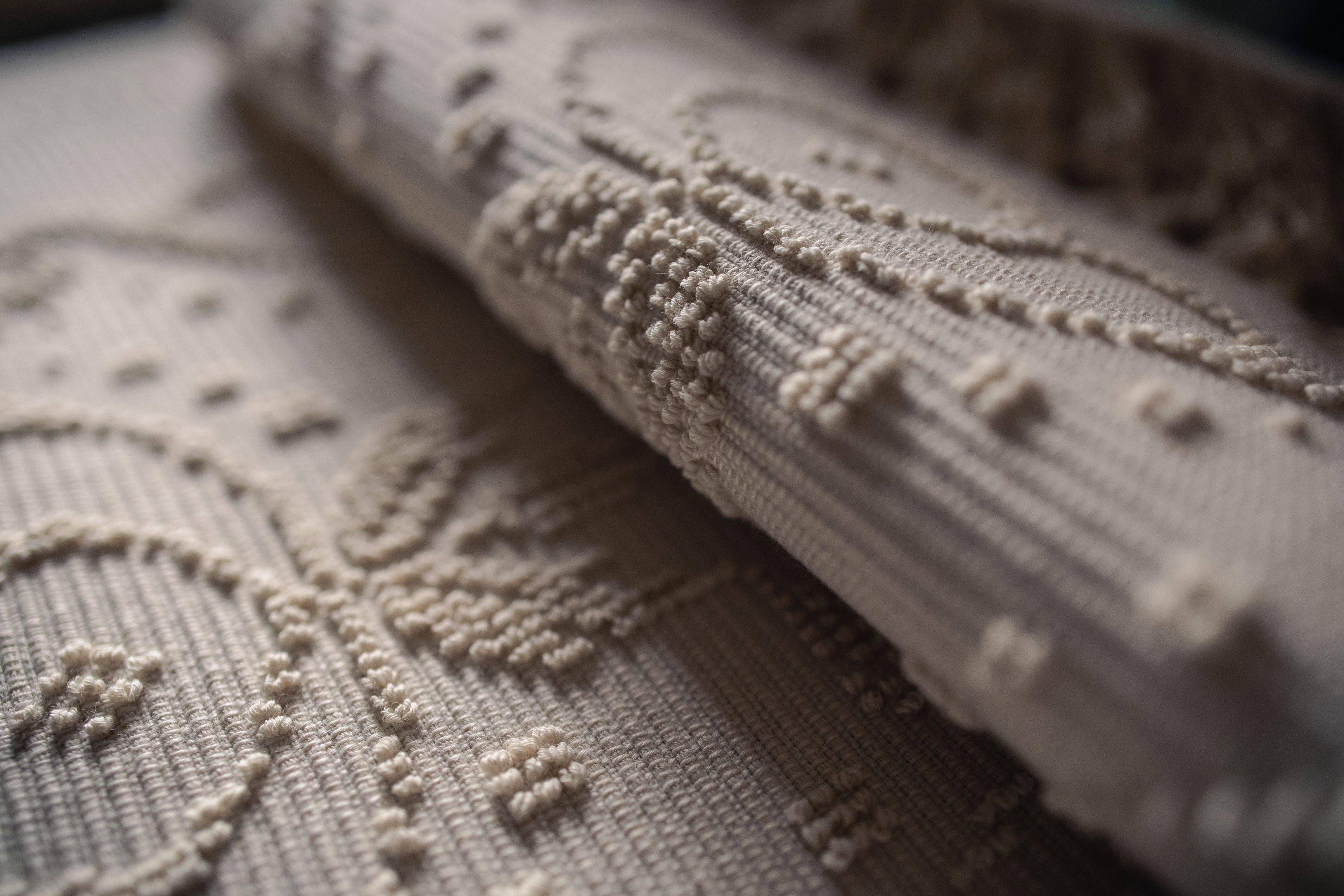
With roots possibly dating back to the 11th century, Almalaguês Weaving has become a cornerstone of the local identity of this parish in the municipality of Coimbra, from which it takes its name.
Many women from the region carry on this craft on traditional looms, a heritage that is an expression of artisanal ingenuity and which transcends the local sphere, making its mark at a regional and national level with undeniable economic and historical value.
The materials used in the pieces created include linen, wool, burlap and rags, to which cotton has more recently been added.
The most iconic pieces, richly decorated, are generally monochromatic, although the ‘Almalaguês rugs’ feature a more diverse palette, with colours such as dry green, brown, burgundy, burnt yellow and blue.
Almalaguês bedspreads, renowned for their quality and tradition, can be woven entirely from cotton or combined with wool, artificial fibres or rags.
In addition to bedspreads and rugs, production includes doilies, tablecloths, tea towels and, more recently, clothing, bags and footwear, demonstrating a subtle adaptation to new trends.
The traditional designs of the rugs have remained virtually unchanged over the last hundred years, adhering to ancient patterns and adaptations that ensure the continuity of the original aesthetic.
The decorative structure is well defined: a central motif (with the exception of repetitive-pattern rugs), a symmetrical field across the four quadrants and borders, sometimes complemented by narrower secondary borders known as ‘gregas’ in reference to ancient Greek carpets.
The decorative elements are varied and classified into four main categories: anthropomorphic, zoomorphic, plant-based and geometric. Notable motifs include the ‘king’s crown’ and garlands, but the most iconic is the ‘church frame’, dating from the 1920s.
The Almalaguês weaving technique is distinguished by its raised elements (‘puxados’), which result from a meticulous interlacing of the weft and warp threads, creating elaborate patterns based on an implicit grid within the fabric. The design can feature different textures: reliefs, small velvety tufts; ‘graúdo’, with slight gaps between the raised threads; or ‘miúdo’, where the threads are interwoven more closely, producing a denser and more uniform effect.
The complexity of Almalaguês weaving requires a refined set of skills and meticulous preparatory tasks, such as the preparation and setting up of the warp on the loom.
The traditional tools used include the ‘dobadoira’ (yarn winder), ‘caneleiro' (bobbin winder), ‘canelões’ (bobbins), ‘espadilha’ (guide board), ‘restelo’ (raddle), ‘urdideira’ (warp frame), ‘ferro’ (iron) and, of course, the loom itself, the instrument at heart of this craft.
The practice of weaving remains deeply rooted among the women of Almalaguês, particularly those aged between forty and eighty. This knowledge has been passed down within the community, mainly from one generation to the next.
Despite the challenges faced by traditional arts, weaving in Almalaguês remains alive, sustained by the dedication of its craftswomen and by institutional and academic recognition, and continues to represent a significant part of the textile and cultural heritage of the Coimbra region.
Text adapted from content provided by Coimbra City Council.
Bibliography
- Almeida, P. C., Chatterjee, A., Gomes, A. J.. "Rediscovering Almalaguês: A Strategic Design Approach to a Traditional Portuguese Hand-Weaving Technique”. Disponível em https://www.tandfonline.com/doi/full/10.1080/20511787.2018.1449075.
- Andrade, A. R. (1896). Chorographia histórico-estatística do Districto de Coimbra [livro eletrónico]. Coimbra: Imprensa da Universidade. Disponível em: https://books.google.pt. p. 12.
- Bandos, A. R. (1968). A freguesia de Almalaguez na 2ª metade do séc. XVII (1560-1599) / estudo demográfico Portuguesa (Tese de Licenciatura). Universidade de Coimbra, Coimbra.
- Baptista, Manoel Dias. Ensaio de huma descripção física, económica de Coimbra e seus arredores, In: Memórias Económicas da Academia Real das Sciencias de Lisboa, t. 1.º, Lisboa.
- Caetano, L. J. (1988). A tecelagem artesanal na freguesia de Almalaguês: elementos para a sua caracterização etnográfica [texto impresso]. Coimbra: Universidade de Coimbra. pp. 30-62.
- Cardoso, L. (1747-1751). Diccionario geografico, ou noticia histórica de todas as cidades, villas, lugares, e aldeas, rios, ribeiras, e serras dos Reynos de Portugal, e Algarve, com todas as cousas raras, que nelles se encontraõ, assim antigas, como modernas [livro electrónico]. Lisboa: Regia Officina Sylviana e Academia Real. Disponível em: https://books.google.pt. pp. 329-330.
- CEARTE (2016). Registo Nacional do Artesanato [internet]. Disponível em: http://www.cearte.pt/custompage/gpaoregisto.html. Acedido em: 2017 fevereiro 16.
- CMC (1997). Catálogo de Exposição Artes & Ofícios de outras eras, 27 set. a 17 Out [texto impresso]. Arquivo Histórico Municipal. Torre de Almedina. Coimbra: Câmara Municipal de Coimbra. p. 16-25.
- Costa, V. (2009). Almalaguês. In Património Edificado com Interesse Cultural. Concelho de Coimbra. Coimbra: Câmara Municipal de Coimbra. pp. 12-13.
- Fachada, C. R. (1998). Monografia de Almalaguês – história, Geografia, Cultura e Arte. Coimbra: Faculdade de Letras da Universidade de Coimbra.
- Fonseca G. & Pires, A. (2007). Tecelagem de Almalaguês – Publicação Técnica. Coimbra: CEARTE/IEFP (não publicado).
- Fonseca, S. M. F. (1994). A tecelagem em Almalaguês (trabalho escrito ao âmbito da disciplina de Arqueologia Industrial). Coimbra: Faculdade de Letras da Universidade de Coimbra.
- Gomes, A. J. L. (2016). Almalaguez: tecer o futuro com os fios do passado. (T. doutoramento). Porto: Faculdade de Belas Artes da Universidade do Porto. Disponível em b0c92395-4638-4156-8d31-3cf97cda01d3.
- Gomes, A. J., Almeida, P, Chatterjee, A. (2017). Cortebel in Almalaguês. Proceedings of Intersections: Collaborations in Textile Design Research Conference, 13 September 2017, Loughborough University London, U.K. Disponível em: www.lboro.ac.uk/departments/aed/intersections.
- Gomes, A. J. (2016) Design, tradition and craft: The case of Almalaguês. Research presentation at PhD Design Forum. UPTEC/PINC, PhD Design International Doctoral Program: University of Porto. April 15.
- Gomes, A. J., Pereira, E. (2017). Certificação da Tecelagem de Almalaguês (em desenvolvimento).
- Gouveia, H. C. (1978). Artesanato: Tecelagem da Região de Almalaguês [texto impresso]. Edifício Chiado. Coimbra: MLAUC.
- Junta de Freguesia de Almalaguês. Almalaguês: o maior centro de tecelagem manual da Europa.
- Pinho, J. C. S. (2024). Almalaguês - A história tecida no tear do tempo : 936 anos de existência e 50 anos de poder democrático). Almalaguês: Junta de Freguesia de Almalaguês.
- Pires, A. & Fonseca, G., A. (2007). Tecelagem de Almalaguês – Publicação Técnica. CEARTE (Centro de Formação Profissional de artesanato).
- Rodrigues, I.C.F. (2020). Design e Artesanato: Implementação da Tecelagem de Almalaguês em novos produtos (Tese de Mestrado em Design Industrial e de produto). Porto: Universidade do Porto. Disponível em: https://repositorio-aberto.up.pt/handle/10216/131986.
- Rodrigues, M. A. T. (1971). A população da freguesia de Santiago de Almalaguês no período de 1641-1680: ensaio de demografia histórica (Tese de licenciatura). Coimbra: Universidade de Coimbra. pp. 23; 235.
- Silva, F. T. (1861). Informações para a estatistica industrial do districto de Coimbra [livro eletrónico]. Lisboa: Imprensa Nacional. pp. 3; 21. Disponível em: https://books.google.pt.
- Silva, P. F. T. L. (2006). Bordados Tradicionais Portugueses (Tese de Mestrado em Design e Marketing Mestrado em Engenharia Têxtil). Braga: Universidade do Minho. Disponível em http://hdl.handle.net/1822/6723.