map of Cutlery
Cutlery
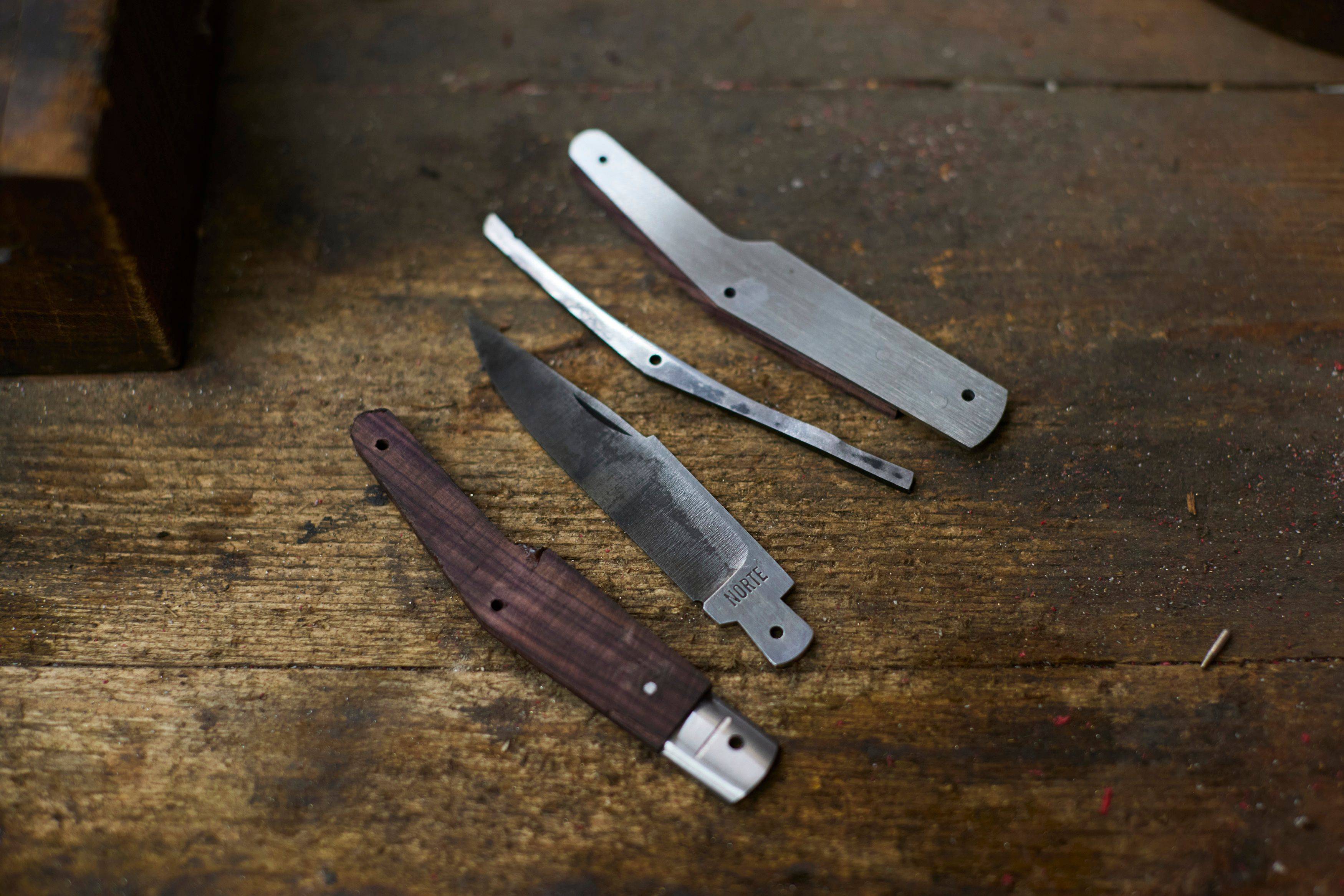
The art of knife-making using ancient techniques has been revived over time. Today, its most active centres are Caldas da Rainha, Verdugal and Palaçoulo. Every knife is a unique piece handcrafted by artisans who have mastered the art of taming fire. Such knives are sought after by everyone from renowned chefs to home cooks looking for a high-quality blade. Traditional pocket razors and folding knives also remain versatile, iconic tools that slip easily into any pocket.
The working and shaping of metal date back to the very earliest human settlements. Besides providing warmth, light, flames for cooking and protection, fire took on a new function: smelting. This technology allowed people to create new artefacts, which in turn are thought to have fuelled the first agricultural revolution. Archaeological excavations conducted at the Lombo do Ferreiro site (Turquel, Alcobaça) in the 1980s uncovered evidence of significant metallurgical activity linked to the Iron Age (BETTENCOURT, 1988), establishing the presence of a deep-rooted metallurgical heritage in the area that endures to this day.
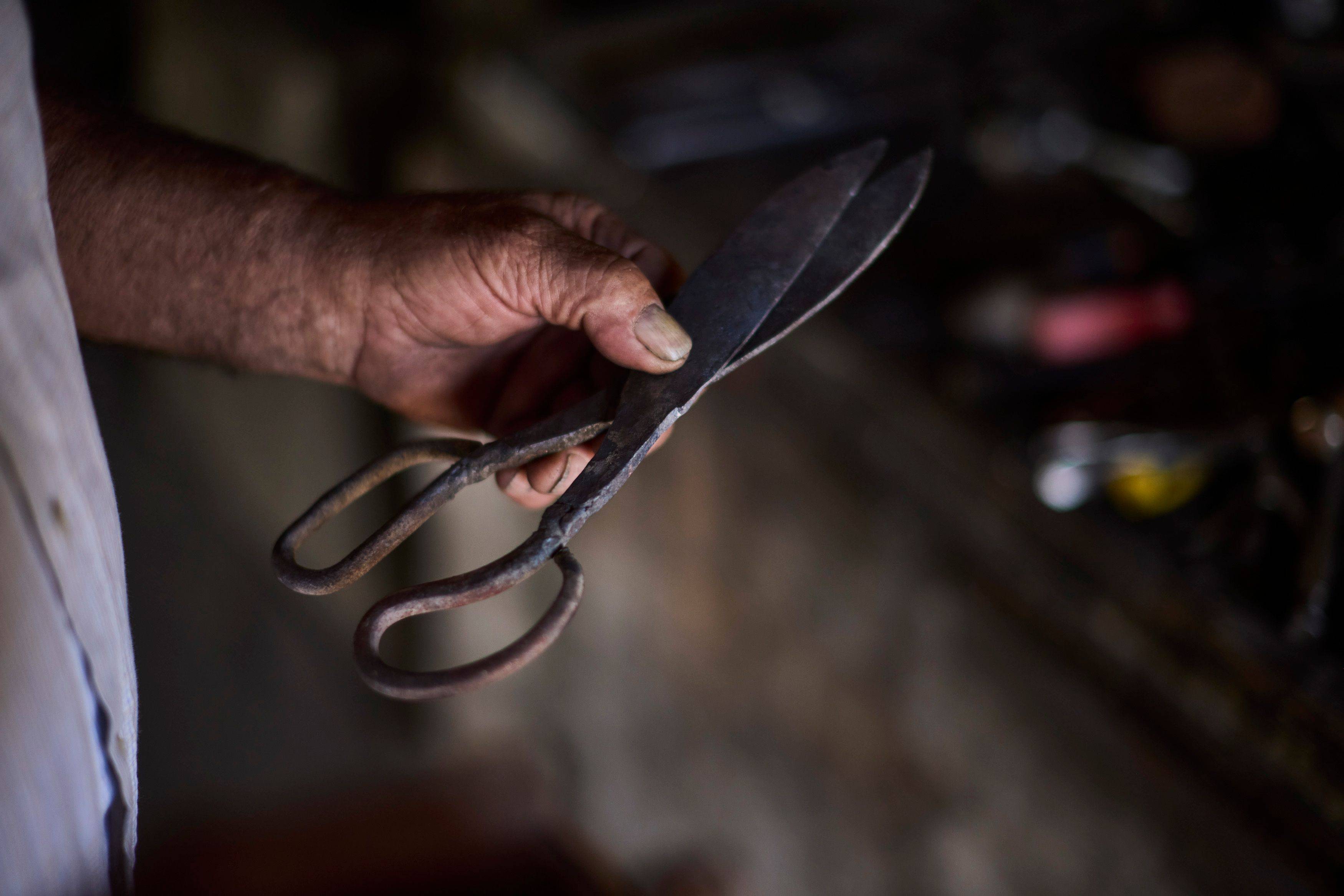
By the medieval age, the trade of the cutler held considerable importance in any urban centre, not least due to the reliance of other trades upon it: tailors, barbers and shoemakers depended on cutlers for scissors; butchers for cleavers; and carpenters and farmers for billhooks. The same was true of the sheath-makers, who crafted sheaths and scabbards of leather, wood and metal for weaponry and other cutting instruments.
One of the towns where the knife-making trade became most firmly established between the 15th and 16th centuries was Guimarães; with eleven workshops, this trade was especially prominent compared to others present here (with the exception of blacksmiths and shoemakers, who existed in large numbers). According to 1552 records, the artisans of the town produced a wide variety of finely crafted cutting tools. A strong and well-established knife-making tradition endures to this day in Guimarães,
Alongside several other key areas renowned for forging. These include Caldas da Rainha, together with Santa Catarina and neighbouring Benedita; Verdugal in Beira Alta; and Palaçoulo in Trás-os-Montes, which is now considered the best place to find traditional Portuguese pocket knives. Many cutlers have emerged from these centres of the craft and gone on to spread the tradition throughout Portugal.
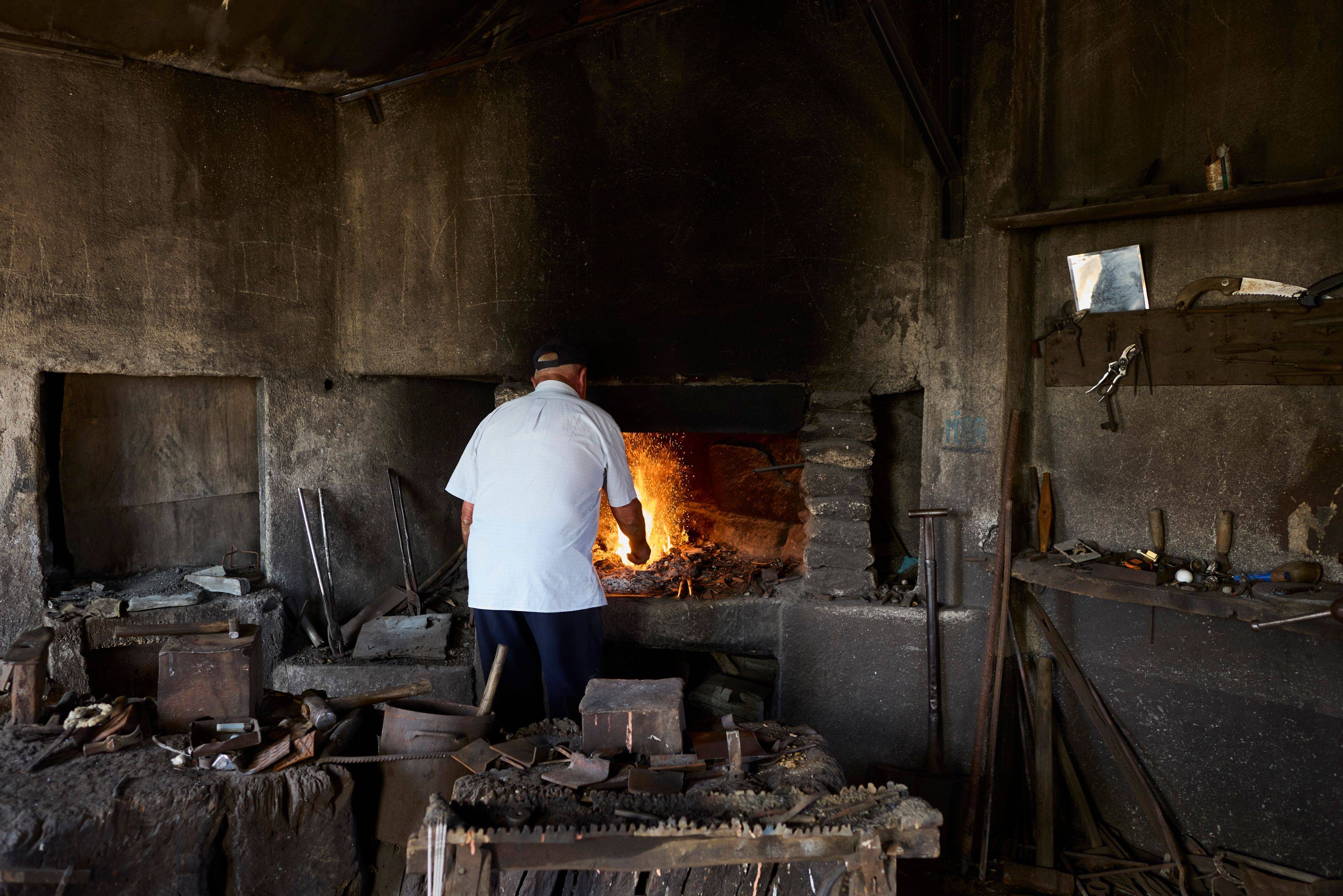
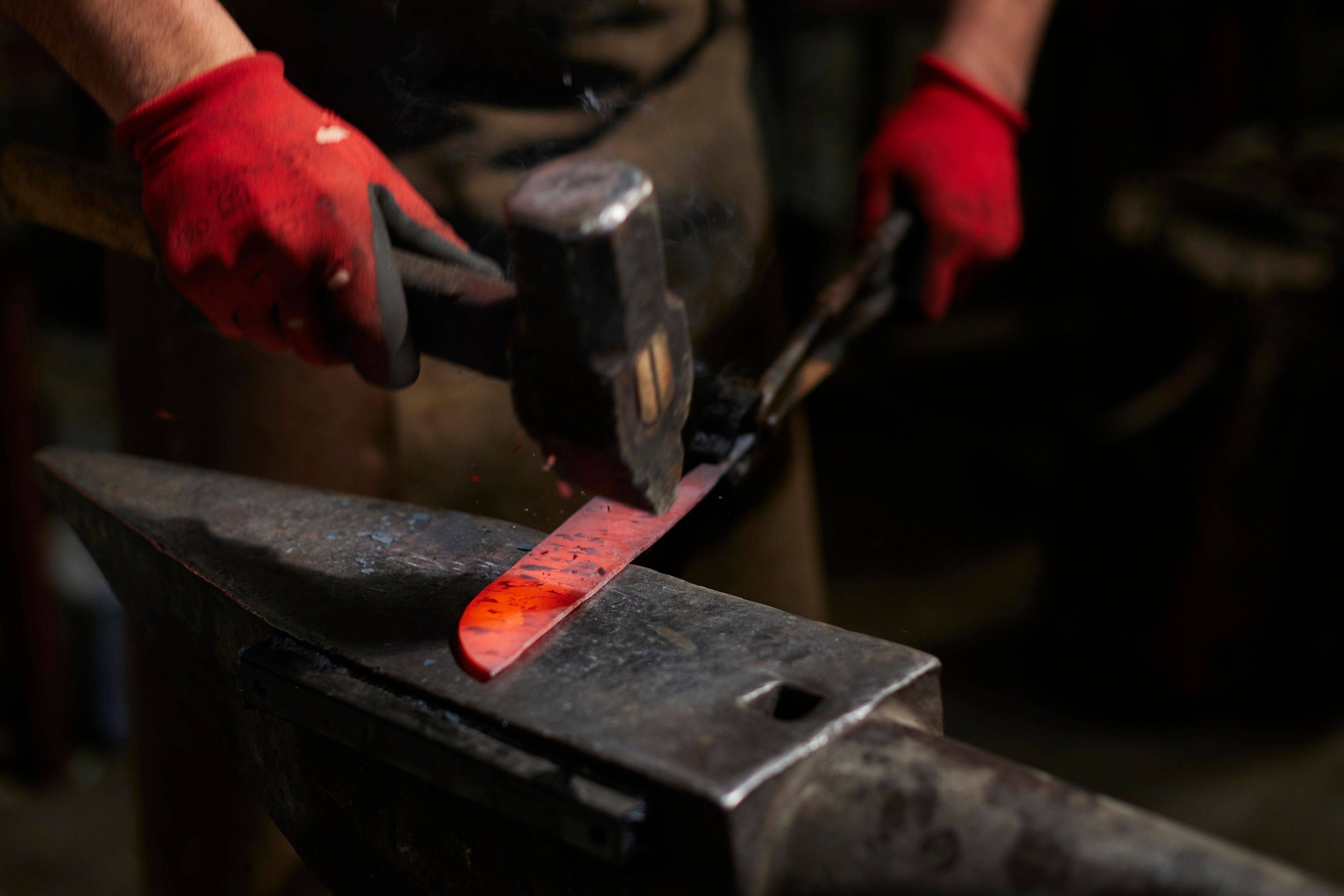
Making a knife involves a series of stages starting with a metal sheet. This is subjected to various exacting processes, which transform it into a unique, handcrafted knife with an exceptionally sharp cutting edge. It is a demanding process – not only for the raw material but also for the cutler, who must contend with the intense heat of the forge and possess the physical strength required to hammer the metal on the anvil. To quote Carlos Norte, a cutler from Lombo do Ferreiro: ‘Extracting and forging iron have always been very hard work – you have to deal with fire and high temperatures, and learn the secrets to achieving a quality piece. Blacksmiths were often viewed as alchemists shrouded in mystery and secrets.’ (NORTE, 2024)
The production process begins by placing the carbon steel piece into the forge at a temperature of approximately 1000°C. While still red-hot, it is then shaped with a hammer on the anvil. This process is repeated until the metal takes on the desired shape. Next, the knife is returned to the forge for hardening and refining the grain, followed by the quenching process – cooling the knife by immersing it in an oil mixture to prevent cracking. The knife is then tempered – heated in a furnace at around 200°C for at least one hour – which gives it the flexibility and durability needed for daily use. Finally, the knife is ready to be polished and sharpened with a grinding wheel or sander.
The process is completed by fitting the handle, which may be made of wood, bone or horn. The unique textures and hues of these materials lend beauty, elegance and originality to the knives.
The Damascus steel technique is another tradition particularly prized by bespoke cutlers. This production method originated over 1,500 years ago in Damascus, Syria, but fell into obscurity over time. It was revived in the 1970s as a new wave of enthusiasts championed the beauty and distinctive character of the finished product. It involves creating a knife from a block composed of multiple pieces of carbon steel. By repeatedly twisting and folding the metal using an anvil and hammer, the craftsperson creates a knife with a unique fingerprint-like finish. As an art form shaped by nature through human intervention, it has an inherent unpredictability that results in a unique piece of inestimable value.
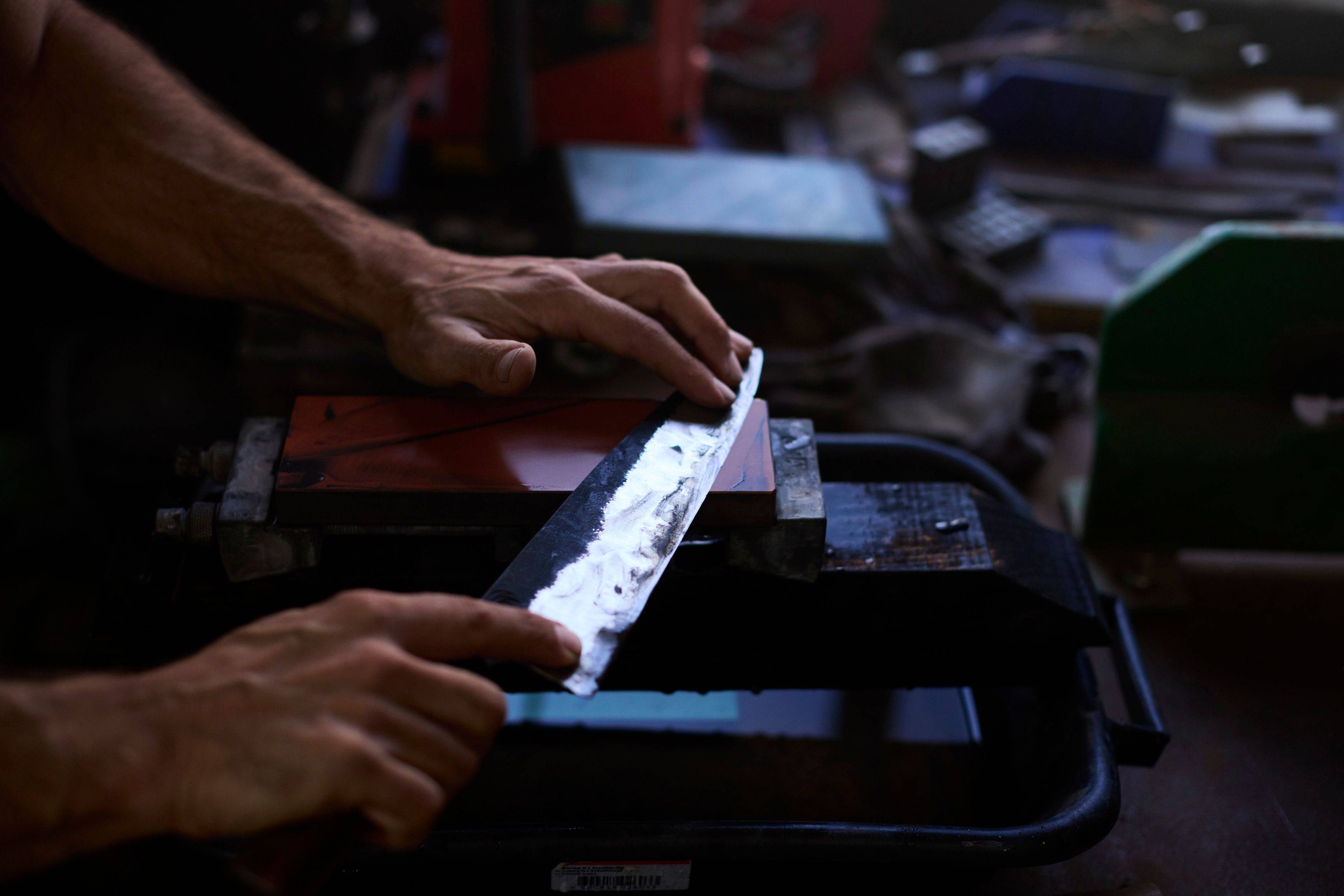
Traditional cutlery is currently experiencing a revival. Distinguishing itself from industrial techniques, artisanal cutlery has revived ancestral wisdom and is now winning over an audience that appreciates unique, bespoke pieces founded upon the maker’s mastery of fire. The forge, hammer and anvil take centre stage, and the cutler wields them all with finesse. This art has given rise to a diverse array of blades: chef’s knives, butchering knives, paring knives, and knives such as the cabriteira and bandido pochet knives, sailor’s pocket knives, grafting knives, capa-grilos and the most quintessentially Portuguese of them all – the Caneças folding knife. Each one has a distinct shape tailored to its specific function.
Ergonomically designed for specific purposes, the various knives and folding knives are superb implements for everyday use or as the tool of choice in a wide range of traditional trades and crafts. In the days before sets of cutlery became standard household items, such knives were essential for preparing simple morsels, and they are still used by those who make carved toothpicks and bulrush furniture, as well as in basketry and woodcarving.
Bibliography
- BETTENCOURT, Ana (1988) A Freguesia de Turquel (Alcobaça): Alguns dados Arqueológicos, Coimbra: Imprensa da Universidade de Coimbra
- MAURÍCIO, Fernando Luís Pereira (2015) Apontamento para a história das Cutelarias, Caldas da Rainha: Cadernos Culturais da Freguesia da Benedita, nº 29
- NOGUEIRA, Marina Eduarda Ribeiro (2005) A «Carrila» do Lombo Ferreiro – Estudos sobre a rede viária romana da Estremadura Portuguesa, Lisboa
- NORTE, Carlos (2017) Canivete Português, Região Oeste – Apontamentos para a sua história. Caldas da Rainha
- NORTE, Carlos (2024) “Oeste como Capital de Cutelaria”. Bordado, cerâmica e cutelaria: diálogos nas Caldas da Rainha. Lisboa: Direção-Geral das Artes, pp. 38-42